
Overview
The government will raise grants for electric vehicle charge points across homes, workplaces and schools, boosting support by 40% and simplifying applications. From April 1, the maximum contribution increases to £500 per socket for renters, flat owners, households without driveways and businesses—up from £350—aimed at covering nearly half of a typical installation. The package runs through March 2027.
What’s changing
- Higher caps: Maximum grant rises from £350 to £500 per charger for key private and business users.
- Simpler schemes: Eight grant types consolidated into five to clarify eligibility and applications.
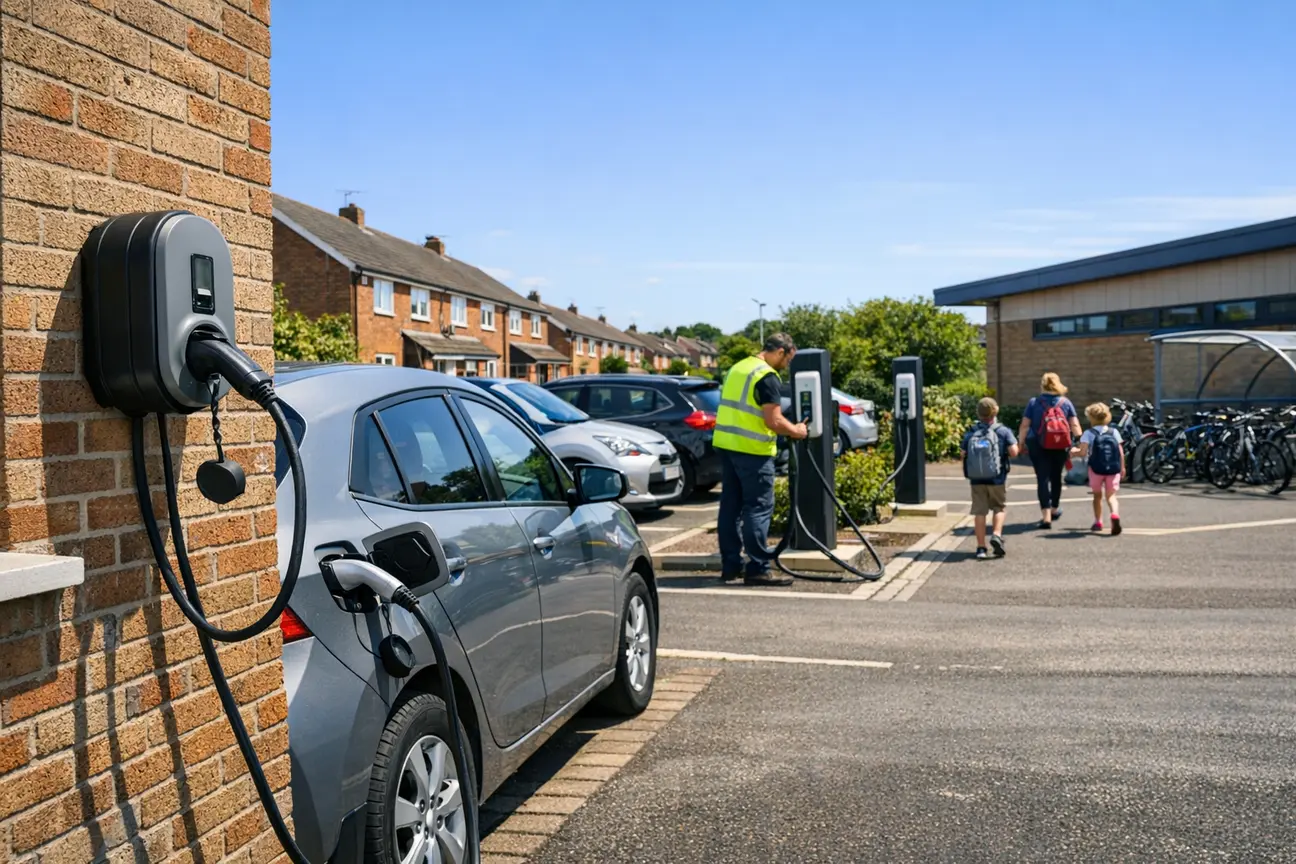
- Schools: Up to £2,000 per socket, building on 3,700 charge points already installed.
- Councils: Additional funding over the next three years to strengthen local public charging networks.
Who qualifies under the streamlined grants
- People living in rented accommodation
- Flat owners
- Residential landlords
- Households with on-street parking
- Businesses
Timing and application
Until the new fiscal year begins, the existing £350 cap remains in place. From April 1, the £500 ceiling applies to the five main groups, with schools eligible for up to £2,000 per socket. The grant structure is being simplified to make it easier to identify the right scheme and apply.
Why it matters
The move targets a key barrier to EV adoption: high up‑front charger costs, especially for drivers without off‑street parking and for smaller businesses. By cutting installation costs and clarifying routes to support, officials aim to widen reliable charging access at home, at work and in community locations such as schools.
Workplaces, landlords and on-street households
Raising the business grant to as much as £500 per socket could help smaller firms install workplace charging. For landlords and tenants—often constrained by shared or street parking—the widened eligibility and higher grants are intended to ease installation barriers. Households relying on on‑street parking are a particular focus to reduce dependence on slower or pricier public options.
Schools and local infrastructure
Schools can access up to £2,000 per socket, supporting multi‑socket sites that can serve staff and, potentially, the wider community outside school hours. A three‑year funding stream for councils is intended to complement private grants by accelerating public charging in areas with limited off‑street parking.
What stakeholders are saying
Vicky Edmonds of EVA England called affordable charging the “make‑or‑break issue” for a fair transition, welcoming the boost for renters and flat owners and the push for more workplace charging. She cautioned that higher grants should be matched by efforts to reduce public charging prices and to speed acceptance of cross‑pavement solutions to prevent a persistent charging divide.
What to watch
- Updated guidance on how to apply under the five streamlined schemes.
- How quickly households, landlords, schools and businesses take up the higher grants after April 1.
- Council deployment plans and whether added funding eases known local charging pinch points.
- Potential policy moves on public charging prices and cross‑pavement solutions.