
Summary
U.S. electric-vehicle registrations fell 0.4% in 2025—the first annual decline since S&P Global Mobility began tracking in 2016—as federal tax credits ended and transaction prices rose. EV market share slipped to 7.8% from 8.0% while total vehicle registrations across all powertrains climbed 2.2%, signaling a relative loss of ground for EVs within a growing market.
Key stats
- EV registrations: -0.4% vs. 2024; market share: 7.8% (down from 8.0%).
- Total vehicle registrations: +2.2% in 2025.
- Before incentives ended (H1 2025): EV registrations +4.6% YoY.
- Federal tax credits eliminated in September 2025.
- Prior growth: +11% in 2024; +52% in 2023.
- December 2025: Tesla -35% YoY registrations; Rivian -44% YoY; Rivian 2025 net loss: $3.6B.
What changed in late 2025
The market was on pace for growth through midyear, but momentum cooled after federal incentives were removed, pushing the annual total into negative territory despite more models and expanding charging infrastructure. The pattern underscores incentives’ ongoing role in converting mainstream buyers who are more price-sensitive than early adopters.
Brand-level impacts
Tesla’s December slump suggests late-2025 conditions weighed even on the segment leader, while Rivian’s steeper drop and full-year loss highlight the pressure on younger manufacturers that depend on growth to progress toward profitability.
Drivers of the slowdown
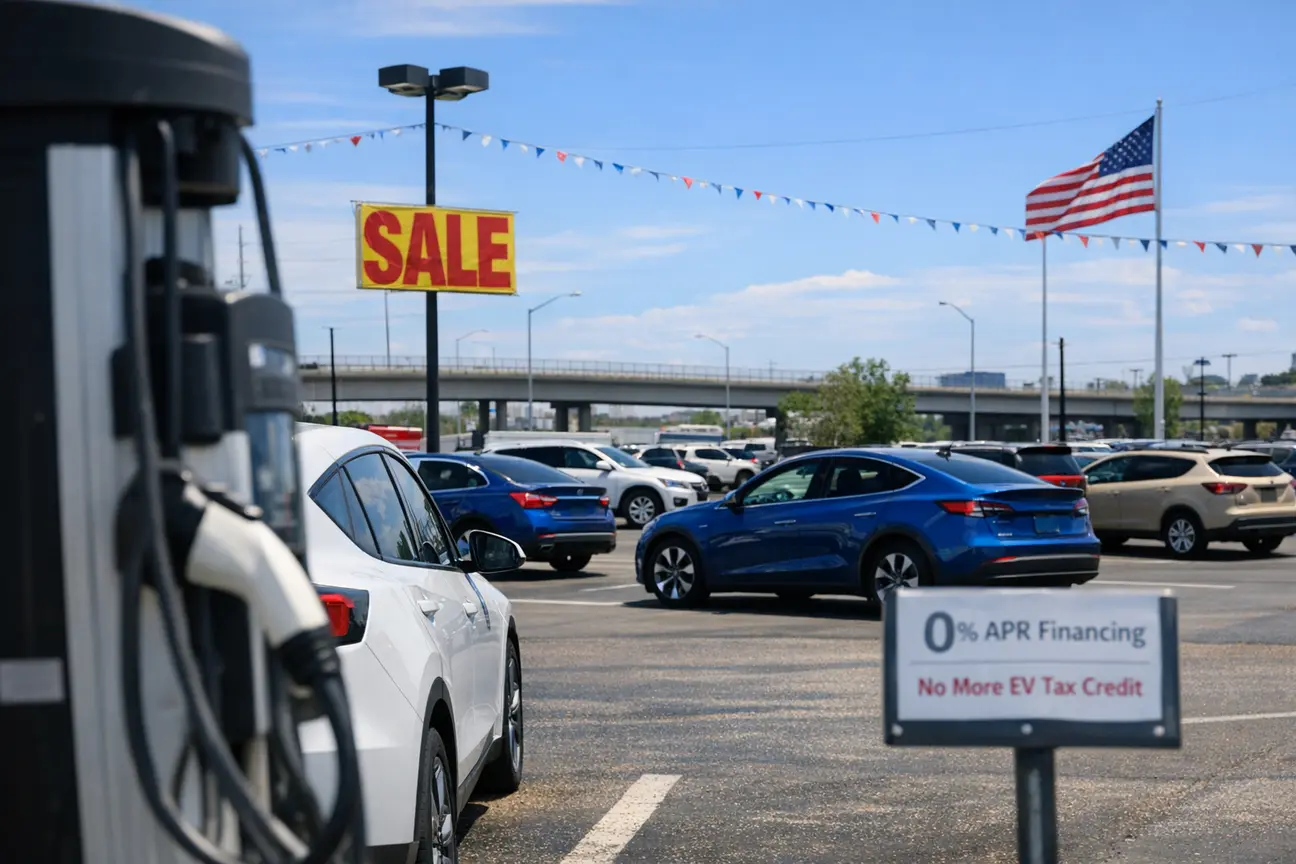
- Elimination of federal tax credits reduced price competitiveness.
- Rising transaction prices and industry cost pressures.
- A maturing market moving past early adopters into a “post‑early‑adopter chasm.”
- Gas and hybrid vehicles benefited from stabilizing inventories and aggressive discounting.
- Higher borrowing costs and tighter household budgets amplified price sensitivity.
- Reported reassessment by some automakers of limited all‑electric models, narrowing choices for buyers.
Why it matters
The slight decline breaks a long growth streak and occurs as mass‑market adoption becomes the priority. With overall vehicle registrations rising, EVs must compete more directly on monthly payments and perceived value, not just on technology and sustainability.
Outlook
A return to growth is possible: early‑year gains show demand when prices align with expectations. The next phase likely hinges on pricing moves, streamlined configurations, and the arrival of lower‑cost models. Upcoming S&P Global Mobility breakdowns and first‑half 2026 results will clarify whether late‑2025 weakness was temporary or the start of a slower‑growth period.