
Summary
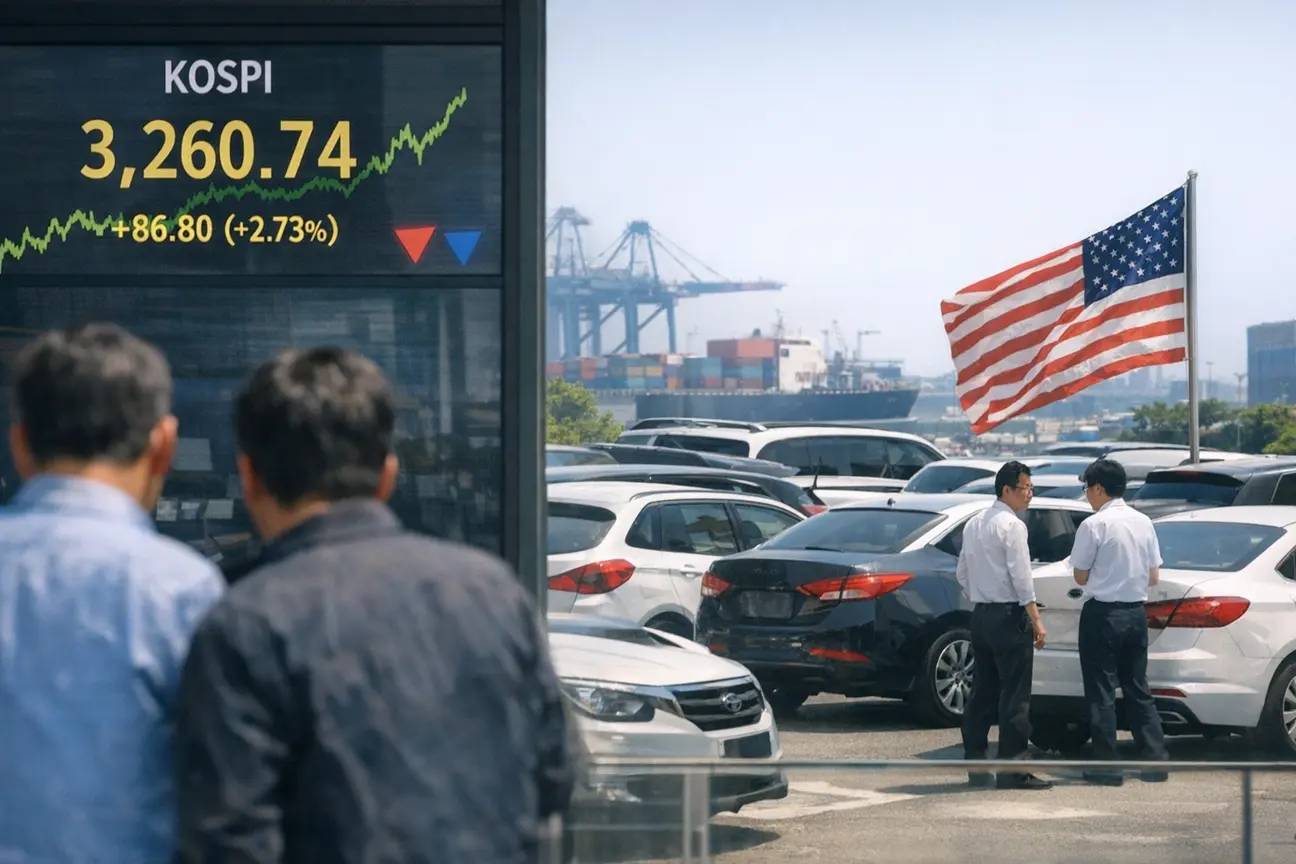
South Korean stocks rebounded sharply after an early slide sparked by U.S. tariff threats, with the KOSPI posting its biggest one-day gain in three weeks as dip-buying and ongoing optimism around AI-driven chip demand outweighed pressure on autos. Currency markets showed caution, while Seoul moved to engage Washington to clarify the scope and timing of potential tariff changes.
Key market moves
- KOSPI reversed an early 1% drop to close up 135.26 points (+2.73%) at 5,084.85, its strongest one-day advance since Jan. 5.
- Tech leaders surged: Samsung Electronics +4.87%; SK Hynix +8.70% to a record close.
- Autos pared steep intraday losses but finished lower: Hyundai Motor -0.81%; Kia -1.1%; Hyundai Mobis -1.1%.
- The won weakened to 1,447.9 per dollar (-0.3% as of 0832 GMT) after an initial -0.6% drop; it had touched a near one-month high on Monday.
Context and drivers
- U.S. President Donald Trump threatened to lift tariffs on Korean imports related to autos, lumber, and pharmaceuticals to 25% from 15%, alleging Seoul’s legislature was not honoring its trade deal.
- Chipmakers absorbed the shock given strong AI-linked demand for high-performance memory, reinforcing Korea’s tech-led market strength; the KOSPI was cited as Asia’s best performer in 2025.
- Investors employed buy-the-dip strategies, with sector divergence: chips rallied while autos, seen as tariff-sensitive, remained volatile.
Policy and diplomacy
- South Korea plans to send a top trade envoy to meet U.S. Trade Representative Jamieson Greer to clarify scope, timing, and enforcement.
- Tariff details remain uncertain, including definitions of “related” imports, product categories, and any grace periods.
Implications and outlook
Near-term volatility is likely, particularly in auto-related names, as policy specifics emerge. Chips may continue to benefit from AI demand and firmer memory pricing, supporting the broader index despite trade noise. A softer won can marginally aid exporters, though higher U.S. duties could offset benefits for autos. Investors are watching Washington’s timeline and guidance alongside earnings from Korea’s tech leaders.