
Overview
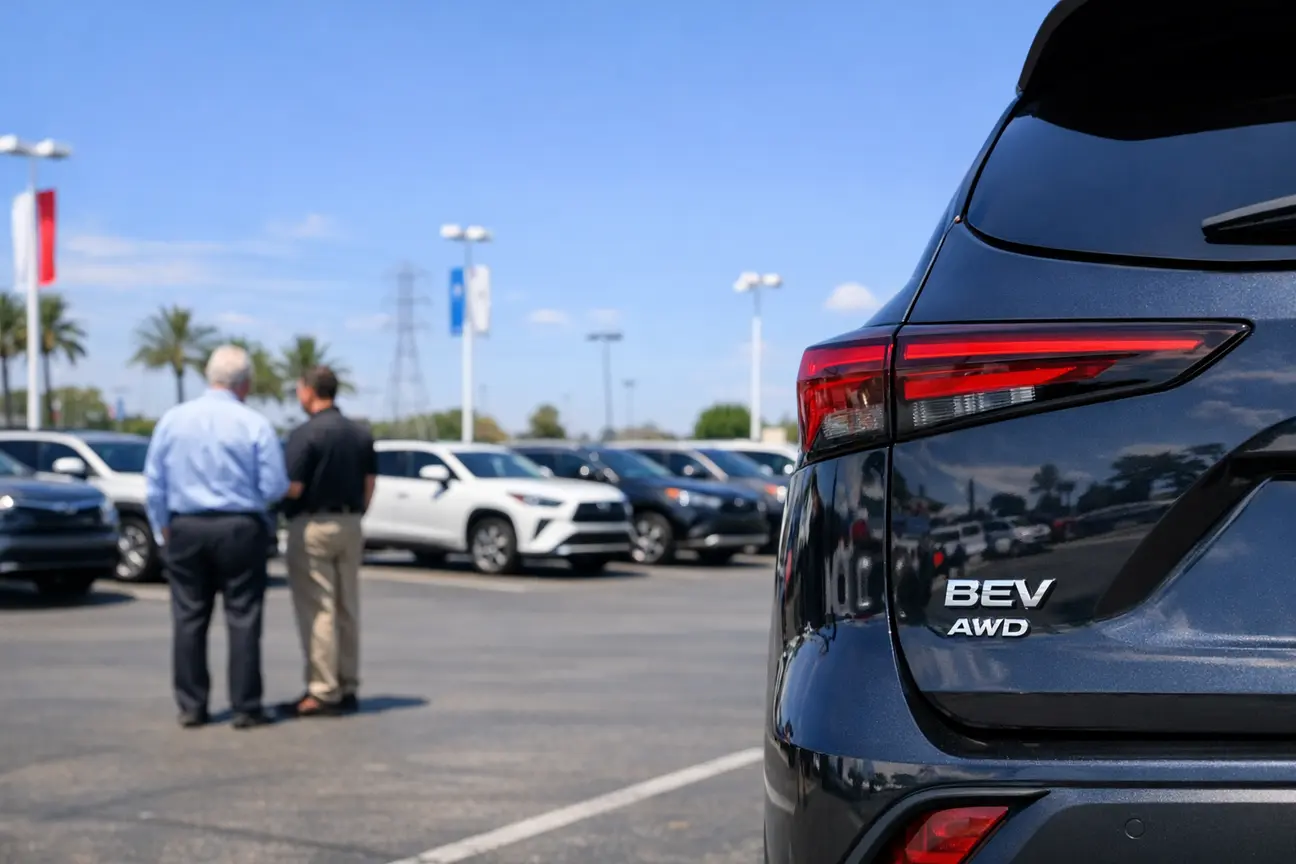
Toyota has teased the next chapter of the Highlander by showing the nameplate alongside BEV and AWD badges on a redesigned crossover’s liftgate, signaling a battery-electric, all-wheel-drive model with a full reveal expected soon. The move suggests Toyota will lean on the high-volume, family-focused Highlander brand as it expands its EV lineup.
Key Takeaways
- The teaser confirms a Highlander-branded electric model with AWD, implying a likely dual-motor setup common in larger EVs.
- Using the Highlander badge (rather than “bZ” sub-branding) indicates Toyota may leverage existing name recognition to accelerate EV adoption.
- The model could enter the growing three-row electric SUV segment, where consumer interest is rising alongside improving charging networks and battery tech.
- The timing aligns with Toyota’s accelerated EV roadmap under CEO Koji Sato, complementing the company’s continued emphasis on hybrids and PHEVs.
What Toyota Hasn’t Shared Yet
- Core specs: battery capacity, estimated range, charging speeds, and tow ratings.
- Pricing, trims, and market positioning versus existing gas and hybrid Highlanders.
- Assembly location and production timing.
- Charging interface strategy (e.g., continued CCS versus adoption of NACS compatibility).
- Whether gas and hybrid versions will be sold alongside the BEV during a transition period.
Why It Matters
The Highlander is a longstanding U.S. bestseller with strong hybrid take rates, making its electrification a significant milestone for Toyota’s retail network and shoppers considering a first EV from a familiar nameplate.
Market and Competitive Context
If configured as a three-row crossover, the Highlander BEV would compete with vehicles like the Kia EV9 and other large electric SUVs aimed at families. This aligns with U.S. trends favoring utility-focused EVs and comes amid tightening federal and state emissions targets.
Manufacturing Questions
Toyota previously announced a three-row EV slated for Kentucky, supported by a North Carolina battery plant, but has not confirmed if the Highlander BEV is that vehicle. The current gasoline Highlander is built in Indiana; the teaser did not specify the BEV’s production site.
Highlander Family Positioning
It remains unclear how the electric Highlander will relate to the larger Grand Highlander introduced for 2024. Dimensions, packaging, and performance tuning (efficiency, towing, or performance emphasis) will shape its competitive set and pricing. Automotive News reports Toyota is “recasting” the Highlander as an EV, though Toyota has not detailed the future of the internal-combustion and hybrid variants.
Customer Considerations to Watch
- Target range (many three-row EVs aim for 250+ miles depending on battery and trim).
- Real-world fast-charging performance and charge-curve behavior.
- AWD system characteristics and tuning for traction, efficiency, and towing.
- Family features: flexible seating, cargo space, roof-rail compatibility, and tow ratings.
- Charging connector choice and network access plans at launch.
Bottom Line
Toyota is anchoring a part of its EV expansion on a widely recognized nameplate rather than a clean-sheet sub-brand. The forthcoming reveal should clarify specifications, manufacturing, timing, pricing, and how the BEV will coexist with the broader Highlander lineup.