
Summary
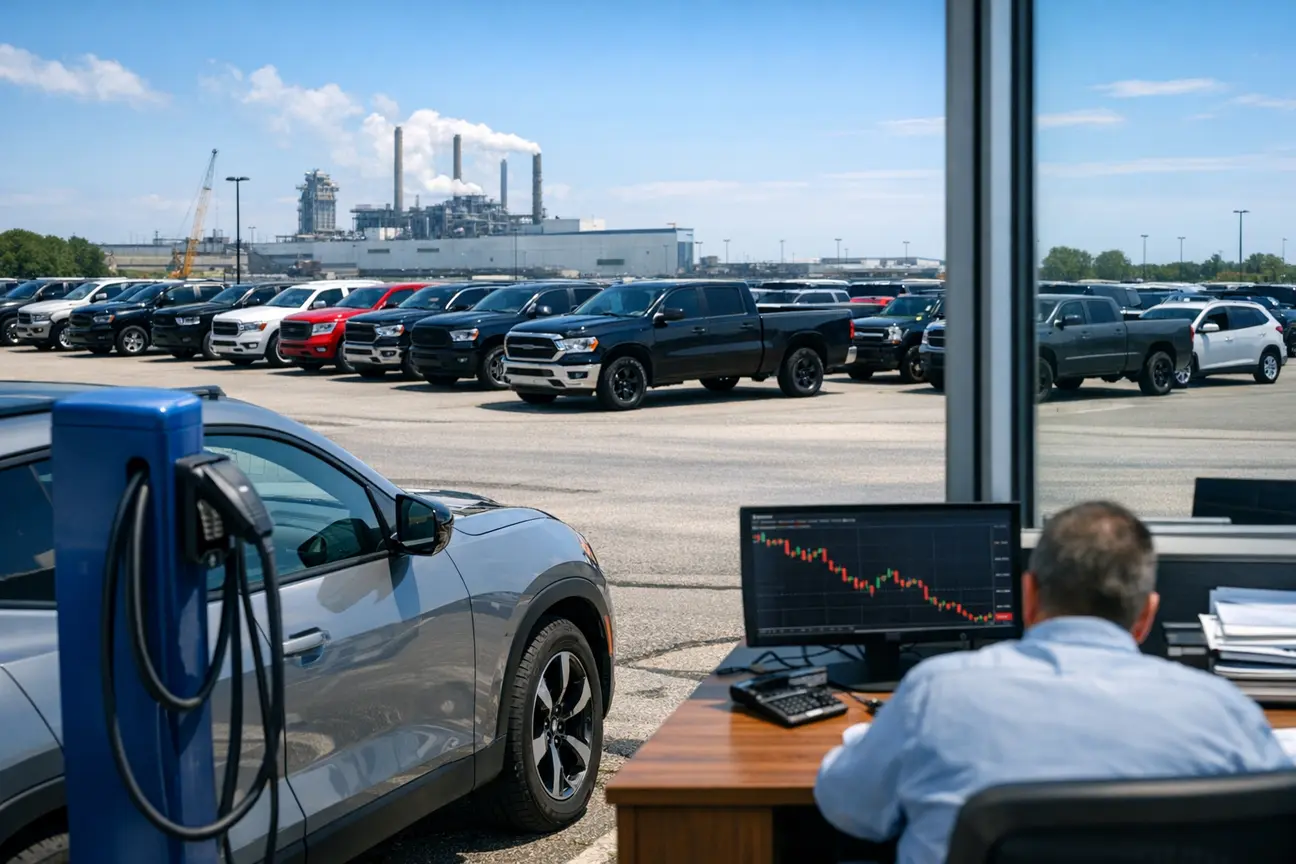
Stellantis reported its first annual loss, driven by large write-downs tied to a pullback from its electric-vehicle strategy, while suspending its 2026 dividend and reiterating guidance for a return to growth next year. Shares rose as management highlighted improving second-half trends and a North America–led recovery focused on higher-margin trucks and SUVs.
Key numbers
- Net loss: €22.3 billion for FY2025 (vs. €5.5 billion profit in 2024).
- Write-downs: €25.4 billion related to scaling back EV ambitions and strategic shifts.
- Adjusted operating loss: €842 million in 2025 (vs. €8.65 billion adjusted operating income in 2024).
- Dividend: Suspended for 2026; up to €5 billion in hybrid bonds issued to fortify the balance sheet.
- 2026 outlook: Mid-single-digit net revenue growth and low-single-digit adjusted operating margin; expected net tariff costs of €1.6 billion.
- H2 2025 shipments: 2.8 million units; North America was the strongest contributor.
- H2 2025 net revenues: €79.25 billion, up 10% year over year.
- Target: Positive industrial free cash flow in 2027.
Strategy shifts
Management is recalibrating around “customers’ freedom to choose,” balancing electric, hybrid, and internal combustion offerings. In the U.S., the near-term mix tilts toward higher-margin full-size trucks and SUVs, including increased production of trucks with Hemi V8 engines, and the cancellation of plug-in hybrid models to support profitability.
Industry context
Stellantis’ reset echoes a broader industry pullback from earlier EV timelines. Automakers including General Motors, Ford, and Honda have taken sizable EV-related charges as high battery costs, uneven charging infrastructure, and price-sensitive demand complicate mass adoption.
Implications
- Profitability levers: Product mix skewed to higher-margin vehicles, operational efficiencies, and tighter commercial discipline.
- Financial stance: Dividend on hold and hybrid bonds underscore a conservative approach while absorbing one-time costs.
- Dealer/supplier impact: Potentially tighter inventories, more selective incentives, and emphasis on profitable configurations.
What to watch next
- Quarterly results indicating whether second-half 2025 momentum persists into 2026.
- Details and timing of 2026 model launches underpinning North American growth.
- Updates on tariff exposure, cost actions, and progress toward 2027 free cash flow goals.
Management perspective
CEO Antonio Filosa emphasized North America as a key profit engine and framed 2026 as a year to close “execution gaps” and build momentum toward a return to profitable growth.