
Overview
Tyre makers and car brands are moving toward tyres with embedded sensors that stream live data on road conditions and tyre health to vehicle control systems. The push is led by Pirelli’s Cyber Tyre, according to Top Gear, with early use on low‑volume performance cars and other manufacturers reportedly developing similar systems.
How the embedded sensors work
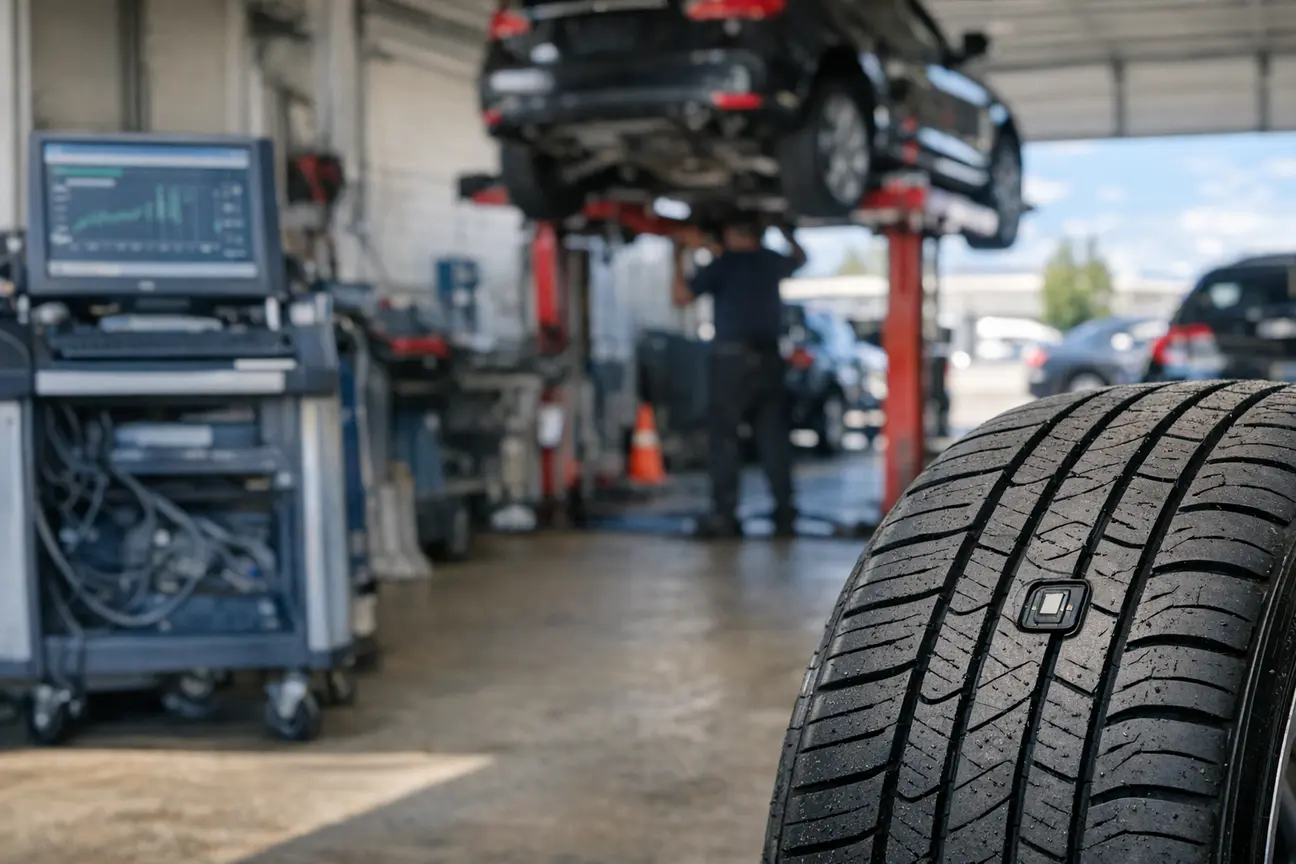
- Chips embedded in the tread (not the valve) measure 3‑axis acceleration and rotational twist, enabling calculations of tyre deformation and the size of the contact patch, alongside pressure and temperature readings (Top Gear reports).
- Top Gear claims the in‑tread location allows faster, more precise readings than conventional valve‑based pressure sensors.
That real‑time view of the contact patch lets the car infer surface conditions—shrinking may suggest aquaplaning, growth a soft surface, and shape changes an abrupt loss of grip. Distinct deformation signatures from lateral grip, traction, and braking can be shared with ABS, traction control, and stability systems for quicker, more accurate responses and earlier hazard warnings, according to Top Gear.
Current deployments
- McLaren Artura: used to identify tyre type (winter/summer, road/track) and apply different slip targets.
- Pagani Utopia Roadster: fitted with the technology in a halo‑car application.
- Aston Martin: reportedly activates acceleration‑sensing tied directly to Bosch stability control, with other chassis components (including an active differential) to be integrated, per Top Gear.
Maintenance, diagnostics, and efficiency
- Post‑impact self‑checks (e.g., after potholes) and derived tread‑depth estimates from sensor data.
- Pressure, temperature, and contact patch data influence rolling resistance; cars can warn of an “efficiency deficit” that Top Gear says benefits fuel economy and EV miles per kWh.
- Overload flags and alerts when a wheel is out of alignment.
Connected and shared data
- Engineers expect uses to expand as interpretation improves and, potentially, via cloud sharing, according to Top Gear.
- Grip changes detected by one vehicle could inform others on the same road; high‑energy shocks could help map potholes for upload and distribution (Top Gear claims).
Implications for dealerships and service
- Data‑driven intake and triage: tyre‑reported alignment issues, overload events, or post‑impact alerts can route cars directly to alignment or inspection.
- Tread‑depth baselines support proactive replacement conversations.
- New calibration steps may be needed after tyre/sensor changes to ensure the control unit recognizes tyre type and applies correct slip targets (as with McLaren’s use case).
- Parts and bay planning could shift with earlier, condition‑based replacements and recurring alignment flags.
EV considerations
- By relating tyre conditions to rolling resistance and range, advisors can emphasize pressure checks, proper load ratings, and tyre types that match software‑defined slip targets; cars may alert drivers to efficiency shortfalls, Top Gear reports.
Availability and outlook
Broad availability is limited. Top Gear says other manufacturers are developing similar tyres but have not launched them publicly. Current applications at the top end suggest a potential trickle‑down to higher‑volume models. If adoption grows, more vehicles will arrive with tyre‑generated health data stored onboard or via connected services, and cloud‑shared grip and pothole insights may follow. Top Gear reports that the set of uses is expected to grow as engineers refine data interpretation and software.