
Overview
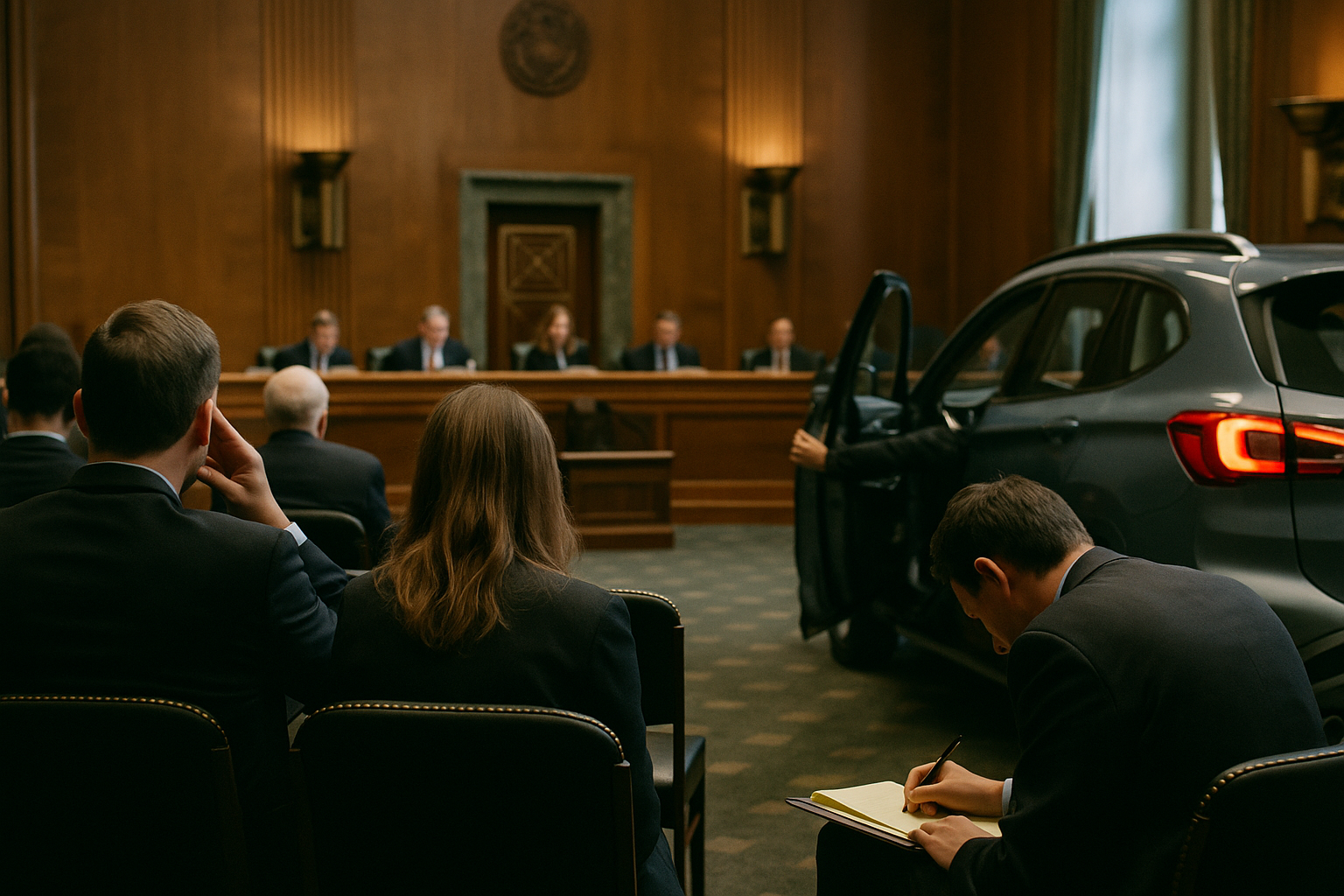
The Senate Committee on Commerce, Science, and Transportation has scheduled a hearing for Jan. 14, summoning the CEOs of GM, Ford, Stellantis, and Tesla to testify on the costs and necessity of vehicle safety technologies. The session follows pressure from Senate Republicans who argue that mandates such as automatic emergency braking (AEB) and rear-seat child reminders are driving up prices without delivering proportional safety benefits.
Affordability backdrop and political tension
Republicans link new safety requirements to higher vehicle prices, citing an average new-vehicle cost near $50,000 versus about $38,000 during the COVID period. California Gov. Gavin Newsom criticized the pushback on X, highlighting the partisan divide over how aggressively to regulate safety versus keeping costs down. The publication frames the hearing as exposing a widening split among lawmakers, regulators, and automakers and claims it underscores the influence the Trump administration is exerting on the auto industry.
Consumer demand vs. mandate skepticism
- AutoPacific (2025) data cited: 43% of potential buyers want hands-off, semi-autonomous highway driving.
- 43% are interested in rear AEB (up 20% from 2024).
- 40% are interested in adaptive cruise control with active lane centering and stop-and-go.
- The report notes rising trust in systems that “prevent accidents automatically” and interest in vehicles that can “safely drive” themselves.
This sets up a central tension: lawmakers question costs and necessity as many shoppers expect modern driver-assistance features as standard.
What the hearing is likely to probe
- How much mandated safety tech adds to base prices and monthly payments.
- Whether features should be standard or optional and timelines for implementation.
- Cost breakdowns and production planning impacts for mass-market models.
- How automakers reconcile regulatory scrutiny with evidence of consumer demand.
Potential industry implications
The publication suggests that if automakers scale back standard safety suites to lower costs, retailers could face more complex trims, tougher customer education, and more selective inventory strategies—practical consequences if regulations shift and companies pursue leaner equipment packages.
Why it matters now
With vehicle prices elevated, the hearing will test how far federal safety requirements should go, the pace of adoption, and who pays. It places top U.S. automakers at the center of a policy fight over technologies that many buyers increasingly expect, even as some lawmakers press to reconsider or delay mandates.