

Overview
A temporary export halt at Nexperia’s Dongguan, China, plant triggered production cuts across multiple automakers and suppliers, exposing how disruptions to low-cost, commodity chips can cascade through global auto manufacturing. Although shipments resumed a few weeks later, new yuan-denominated payments created additional friction, underscoring ongoing vulnerabilities in supply chains still recalibrating after recent shocks.
What happened
- Beijing paused exports from Nexperia’s Dongguan facility after the Dutch government assumed oversight of Nexperia’s Netherlands operations.
- Automakers such as Nissan and Honda cut output; Bosch reduced factory hours.
- Exports restarted in late October, but Nexperia shifted to payments in yuan.
Why it mattered
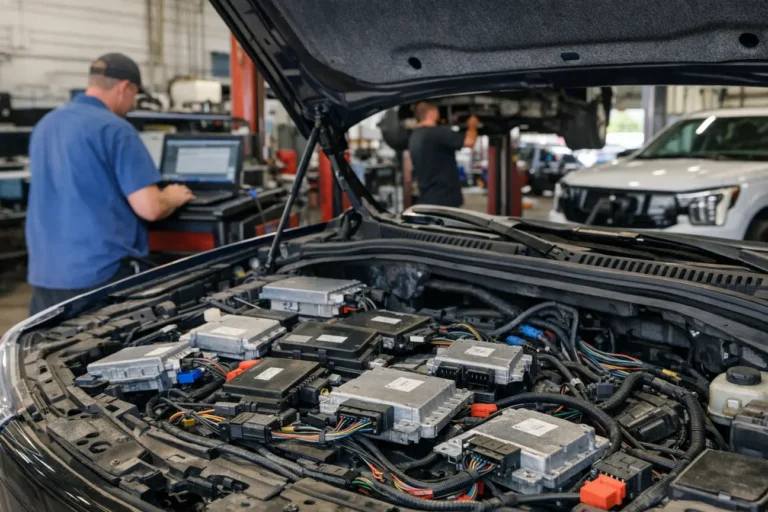
The affected chips power core functions—brakes, power modules, windows—far from the cutting edge but ubiquitous and essential. Automotive systems are validated around specific parts; swapping components typically requires months of testing, making rapid substitution difficult and risking line stoppages even for the cheapest parts.
Operational ripple effects
- Just-in-time inventories left many OEMs without immediate alternatives.
- Module-level soldered components constrained quick redesigns or substitutions.
- Some suppliers (e.g., Melecs, Jabil) routed transactions through Chinese entities to keep deliveries flowing under new payment terms.
Governance split and geopolitics
The Dutch oversight applied to Nexperia’s Netherlands operations but not the Dongguan plant, which remained under Chinese jurisdiction. That split created a policy chokepoint and highlighted how globalized supply chains straddle different legal regimes that can rapidly influence upstream availability.
Payments as a chokepoint
The shift to yuan-based payments introduced banking and compliance hurdles, slowing procurement for buyers without established Chinese entities. Even minor financial frictions can delay physical shipments and complicate production planning at high-utilization plants.
Lessons for resilience
- Diversify sources for standard chips where feasible, even if it requires redesign and revalidation.
- Build targeted inventory buffers for low-cost, high-criticality parts; Toyota-like strategies can hedge near-term shocks.
- Pursue more modular, multi-vendor designs to reduce requalification timelines.
- Strengthen financial and logistical pathways (e.g., multi-currency payment capabilities, alternative distributors).
- Map critical dependencies and establish qualified substitutes before crises emerge.
Outlook
With exports restored, production constraints have eased, but exposure remains. Automakers and suppliers are likely to reassess purchasing strategies, validation timelines, and buffer policies, balancing cost efficiency against resilience. The episode reinforces that planning must extend to the least expensive yet mission-critical components that can still halt an entire assembly line.