
Overview
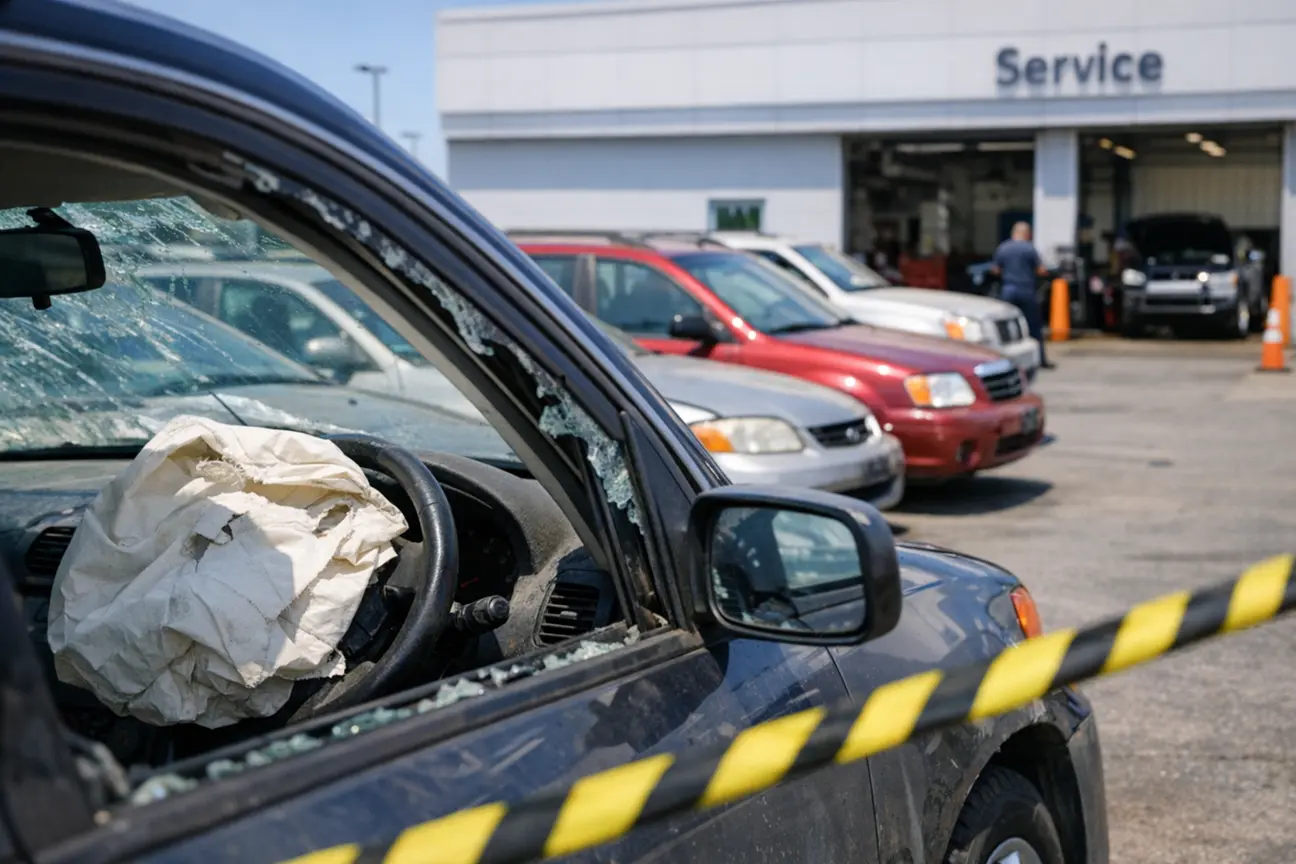
Federal safety officials and several automakers have renewed “Do Not Drive” warnings for a group of older, high-risk vehicles with defective Takata airbag inflators. Stellantis issued a fresh alert covering about 225,000 unrepaired vehicles. The National Highway Traffic Safety Administration (NHTSA) says the broader Takata recalls—active since 2008—cover an estimated 67 million airbags in the United States.
Why the warning matters
Years of exposure to heat and humidity can degrade certain Takata inflators. When they deploy in a crash, they can rupture and send metal fragments into the cabin, causing severe injuries or death. Vehicles under a “Do Not Drive” alert should not be operated until the airbag is replaced due to the immediate risk.
High-risk vehicles listed by Car and Driver
NHTSA’s website hosts the current list of vehicles under “Do Not Drive” warnings. Car and Driver compiled the following high-risk models by brand and model year. In many cases only certain vehicles within these ranges are affected; owners should verify status using the vehicle identification number (VIN) on NHTSA’s lookup tool.
- Acura
- 2002–2003 3.2 TL
- 2003 3.2CL
- BMW
- Certain 2000–2006 3-series (E46), including M3
- Certain 2000–2003 5-series (E39), including M5
- Certain 2000–2004 X5 (E53)
- Chrysler
- 2007–2009 Aspen
- 2005–2015 300
- 2007–2008 Crossfire
- Dodge
- 2005–2012 Dakota
- 2005–2008 Magnum
- 2006–2015 Charger
- 2008–2014 Challenger
- 2004–2009 Durango
- 2003–2016 Ram 1500
- 2003–2016 Sprinter
- Ford (including Lincoln and Mercury)
- Certain 2004–2011 Ranger
- 2005–2006 GT
- 2005–2014 Mustang
- 2006–2012 Fusion
- 2006–2012 Lincoln MKZ/Zephyr
- 2006–2012 Mercury Milan
- 2007–2010 Edge
- 2007–2010 Lincoln MKX
- Honda
- 2001–2002 Accord
- 2001–2002 Civic
- 2002 CR-V
- 2002 Odyssey
- 2003 Pilot
- Infiniti
- Certain 2002–2003 QX4
- Jeep
- 2007–2016 Wrangler
- Mazda
- Certain 2004–2009 B-series
- 2003–2013 Mazda 6
- 2006–2007 Mazdaspeed 6
- 2004–2011 RX-8
- 2004–2006 MPV
- 2007–2012 CX-7
- 2007–2015 CX-9
- Mitsubishi
- 2006–2009 Raider
- Nissan
- Certain 2002–2006 Sentra
- Certain 2002–2004 Pathfinder
- Pontiac
- Certain 2003–2004 Vibe
- Toyota
- Certain 2004–2005 RAV4
- Certain 2003–2004 Corolla, including Matrix
What owners should do now
- Do not drive a listed vehicle until the airbag is replaced.
- Use NHTSA’s VIN lookup to confirm recall status and any “Do Not Drive” alerts.
- Contact your dealer to arrange the free repair as soon as possible.
- Check periodically for updates, especially in hot and humid regions or if your vehicle is from the early-to-mid 2000s.
Context and ongoing challenges
The Takata recalls are among the largest and most complex safety actions in U.S. automotive history, spanning dozens of brands and model years since 2008. Despite years of outreach by regulators and manufacturers, many older vehicles remain unrepaired—complicated by ownership changes and difficulty reaching current owners. As risk assessments evolve, regulators continue to update urgent warnings to prioritize vehicles most likely to experience an inflator rupture.
How to check your vehicle
Visit NHTSA’s recall search and enter your 17-character VIN, or search by year, make, and model. The tool returns active recalls and any “Do Not Drive” warnings, and the database updates as new notices are issued and repairs are completed.