
Executive summary
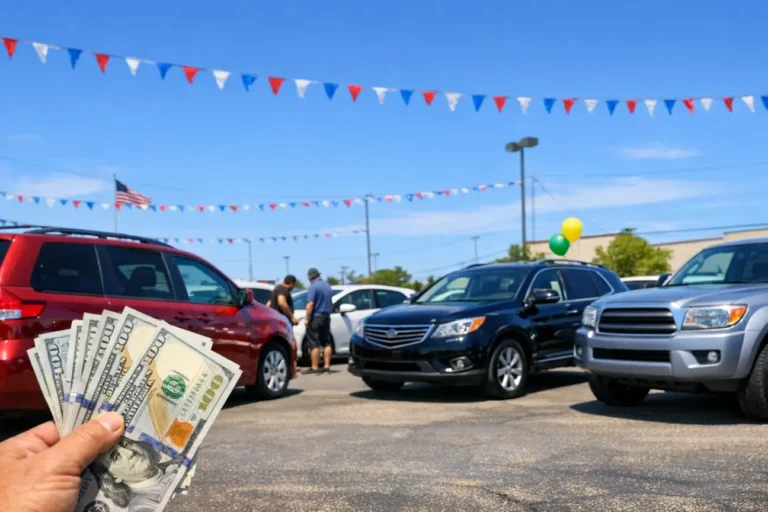
Veteran dealer Michael Maroone argues that pricing transparency has commoditized new-car sales, pushing profit into finance and insurance (F&I), parts and service, trade-ins, and credits. He urges dealers to prioritize pre-owned acquisition/retailing and manage every transaction by total profit, not a single metric, while building cultures and ownership models that align operators with long-term outcomes.
Why new-car margins are thin
- New-vehicle pricing visibility has eroded reliable frontend gross.
- A “lost generation” of OEM capex heavily tilted to EVs (driven by mandates) limited investment in what customers want now.
- Commoditization will persist until product development better matches current consumer demand.
Dealer playbook Maroone recommends
- Get “obsessed” with pre-owned acquisition and retailing—make it a daily, measured habit; some stores approach a 3:1 used-to-new ratio.
- Judge deals by “super PVR”: aggregate frontend gross, F&I income, floorplan credits, OEM/marketing/CSI programs, and trade-in contribution.
- Stop passing on deals due to any single number; optimize the whole profit stack.
- Maximize F&I penetration, tighten fixed ops, and buy trades aggressively.
Culture, incentives, and operating structure
- Avoid running the business by compensation levers alone; focus on ROI, guest care, retention, and long-term success.
- Use a “freedom frame”: clear rules plus local autonomy to build teams and processes.
- Align incentives via operator buy-ins after one year, funded through profit share and without personal guarantees.
- Model works at reasonable valuations; becomes difficult when goodwill multiples reach 8–10x.
Industry dynamics to watch
- Chinese automakers likely to enter the U.S., potentially via JVs or U.S. factories; nimble, well-capitalized dealers can adapt.
- OEM framework agreements are often one-sided and can restrict growth; state law can take precedence—proceed cautiously.
Path for aspiring owners
- Solo ownership is increasingly difficult given high valuations.
- Partner with a capitalized, experienced operator willing to share equity and autonomy.
- Success depends on deal math, reasonable multiples, and leadership fit.
What to measure and manage now
- Total profitability per deal (the full stack), not isolated line items.
- Daily used-car acquisition and turn metrics.
- F&I attachment, service/parts efficiency, and aggressive trade sourcing.
Bottom line
Assume ongoing commoditization in new cars and organize around controllable levers: scale and measure used, capture the full profit stack, and build operator-aligned cultures to drive sustainable growth.