
Survey Snapshot
A new Spyne survey indicates that 76% of U.S. dealerships plan to increase AI spending in 2026, signaling a shift from pilots to broader operational deployment. Spyne frames 2026 as “the first true AI Operations Year,” with dealers prioritizing tools that speed response times, reduce manual work, and protect margins.
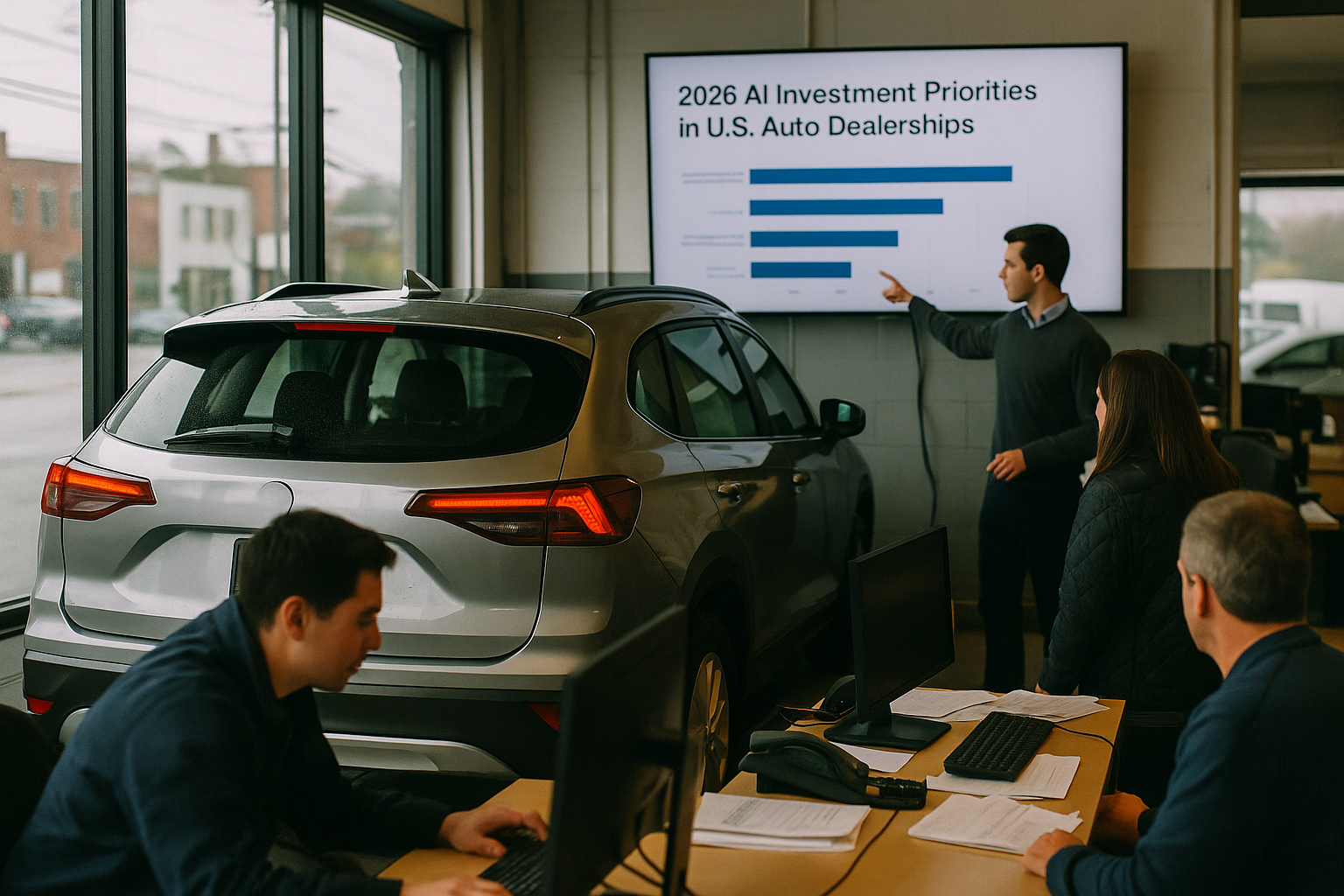
Top Investment Priorities
- AI voice agents (74%): Automating lead response, managing inbound calls, and scheduling service.
- Merchandising and inspection automation (68%): Faster vehicle photography, descriptions, and reconditioning to cut time-to-list.
- Pricing and analytics (62%): Better used-vehicle valuations and real-time decision support.
- Sales and after-sales applications (54%): Appointment setting, follow-ups, and service communications.
Reported Results From Early Deployments (2025)
- 25%–30% increase in showroom appointments.
- 33% reduction in BDC operating costs.
- 67% increase in online listing engagement.
- 12–15 hours saved per week in operations.
Why It Matters
Dealers cite operational bottlenecks—missed/slow lead handling, inefficient call routing, and manual listing workflows—that erode margins when demand is uneven. Emphasis on voice agents and merchandising & inspection automation reflects where AI can rapidly improve speed, consistency, and customer experience. Pricing & analytics aims to tighten valuations and enable faster market moves.
Adoption Landscape
Spyne segments dealers into “early majority,” “fast followers,” and “laggards.” As more stores embed AI into core workflows, competitive pressure is expected to rise for holdouts—especially on response speed and presentation quality.
Methodology and Caveats
- Nearly 1,200 dealership executives across 34 states surveyed July–October.
- No margin of error or breakouts by store size/brand provided in the overview.
- Spyne both conducted the research and markets AI solutions to dealers, which is relevant context when interpreting the findings.
Expected Operational Impact in 2026
- Faster triage and response to consumer inquiries; more efficient inbound call routing.
- Smoother service scheduling and higher lead conversion potential.
- Reduced lag from acquisition to online listing via automated visuals and descriptions.
- More precise, real-time pricing decisions to support margin protection.
- Shift from isolated pilots to embedded AI capabilities across front- and back-office functions.
Notable Quote
“Demand was there, but operational bottlenecks held too many stores back. That’s why 2026 has to be the year dealerships treat AI as core infrastructure, not an experiment.” — Sanjay Kumar Varnwal, Spyne co-founder and CEO (via Auto Remarketing).
Bottom Line
Most U.S. dealers plan to boost AI budgets in 2026, with voice agents, merchandising and inspection automation, and pricing analytics leading the way—targeting tangible gains in speed, efficiency, and margin discipline.