
Summary
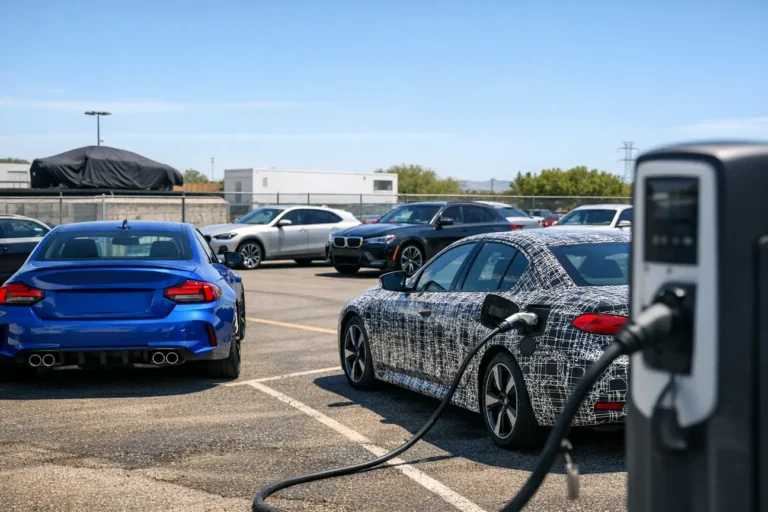
Hydrohertz says its patented Dectravalve battery thermal system can enable roughly 10-minute fast-charging sessions while improving range and safety by managing temperature at the module level instead of treating the whole pack uniformly. The company frames this precision control as key to sustaining higher charging power without overheating, potentially narrowing the gap between EV fast charging and internal-combustion refueling times.
How the system is described to work
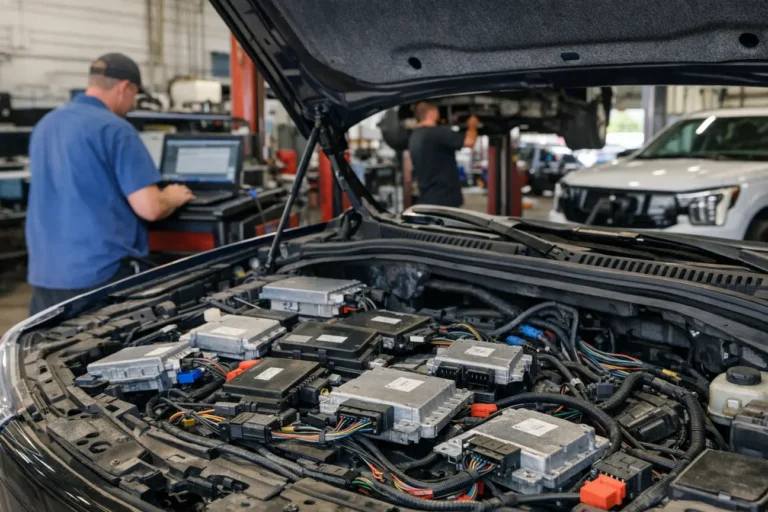
- Compact, intelligent multi-zone valve that coordinates heating, cooling, and energy recovery at the module level.
- Targets hot spots directly to keep every module within tight temperature limits during high-load events (e.g., 350-kW charging).
- Intended to reduce temperature-driven throttling that typically forces charge rates to taper as cells heat up.
Key data points and claims
- In testing cited by the company, a 100-kWh LFP pack with Dectravalve kept the hottest cell under 44.5°C and limited pack spread to 2.6°C during ultra-fast charging; “typical” EVs were said to reach ~56°C peaks with >12°C spread.
- Up to 68% reduction in charging time on a 350-kW charger, with some sessions around 10 minutes (dependent on pack size, charger capability, SOC, and vehicle limits).
- Lower peak temperatures aim to avoid hitting ~50°C thresholds associated with risks like lithium plating, allowing sustained high power longer.
- Claims up to 10% range improvement by avoiding unnecessary pack-wide conditioning and achieving faster thermal setpoint attainment.
- Improved safety by reducing overheating risk and temperature gradients across the pack.
- Described as chemistry-agnostic (including LFP and other common chemistries).
- Evaluation during ultra-fast charging attributed to Warwick Manufacturing Group (WMG), which the company describes as an independent battery expert.
Context and implications
As charging power rises, heat must be extracted quickly to protect cells and preserve performance. Many current EVs moderate charge rates at pack level; module-level control could prevent a few hot cells from capping the whole pack’s charge power, potentially shrinking charge times while supporting longevity.
Caveats and unknowns
- Most results cited are company-provided; independent validation details beyond the WMG mention are limited in the described material.
- Data provided centers on LFP; results for other chemistries were not included.
- No automaker partners, vehicle programs, or production timelines were disclosed.
- Control algorithms and implementation specifics were not detailed.
- Real-world outcomes will vary with vehicle design, thermal limits, charger availability, ambient conditions, and SOC at plug-in.
Bottom line
Hydrohertz positions Dectravalve as a precision, module-level thermal solution that could materially shorten fast-charge times and improve efficiency and safety. While the reported numbers are promising, broader validation, integration details, and production plans remain to be seen.