
Summary
Video walk-arounds for multipoint inspections (video MPIs) help dealership service departments secure repair approvals faster by giving customers clear, visual explanations of what needs attention. Guidance from sales trainer Jen Suzuki emphasizes planning, clarity and tone to build trust and streamline decisions. The segment reports approval outcomes can improve by nearly 30% (claim), while also supporting higher customer satisfaction and reducing back-and-forth (claims).
Why video MPIs boost approvals
- They replace verbal descriptions with visual proof, making recommendations easier to understand and justify.
- Messaging centers on customer priorities: safety, reliability and cost avoidance.
- Customers can rewatch and share the video, reducing repeat explanations and speeding authorization (claims).
- Shifts communication from only advisors to include technicians, demystifying findings and expectations.
- Advances transparency within fixed operations beyond electronic MPI forms by showing conditions in real time.
How to plan and record an effective video MPI
- Preparation: Review the MPI, organize key points and ensure a quiet, uncluttered bay. Keep the recording short and focused.
- Open professionally: Warm greeting using the customer’s name, then your name and credentials (e.g., “master-certified technician”). Confident, friendly tone.
- Lead with good news: Start with what’s working well to build rapport and reduce defensiveness before concerns.
- Personalize briefly: Reference relevant details from check-in to show you listened.
- Explain in plain language: Use simple analogies for complex systems; generative AI tools like ChatGPT can help craft clear comparisons.
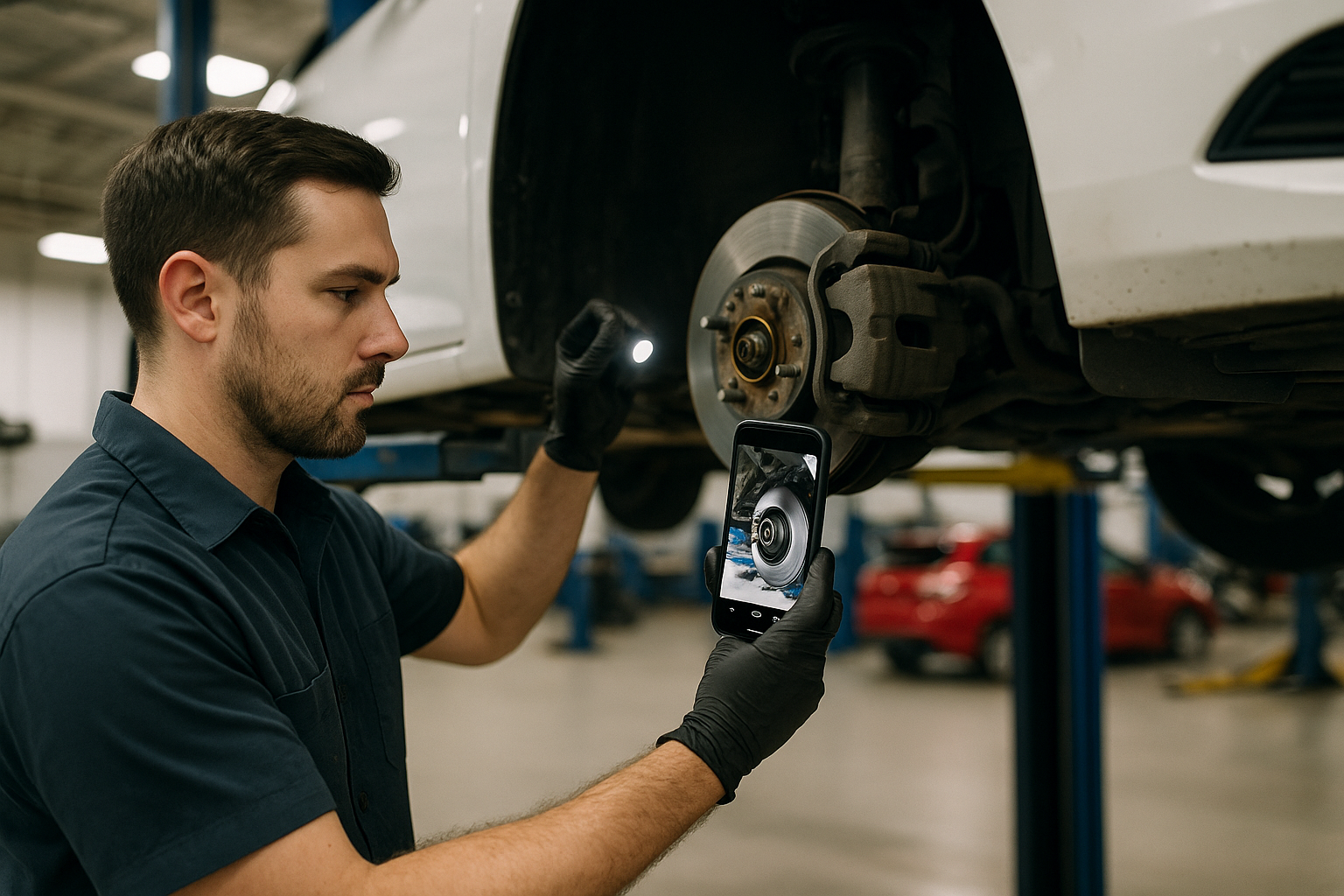
- Show, don’t tell: Move the camera to the concern, use lights and gauges, and include side-by-side comparisons (e.g., worn vs. new tire). Use pause to avoid filler footage.
- Frame benefits: Keep statements concise and benefit-focused, e.g., “Fixing this now helps avoid bigger repairs later,” or “This keeps your car safe and reliable.” Avoid scare tactics.
- Close with gratitude: Thank the customer, invite calls or texts with questions and position yourself as a partner in their decision.
Practical on-camera tips
- Keep the shop quiet and the camera steady to minimize distractions.
- Speak naturally, avoid robotic delivery and look into the lens when addressing the customer.
- Show measurement tools on camera (tread depth gauges, brake thickness indicators) to quantify findings.
- Pause between segments to maintain a crisp pace and remove dead air.
Results and caveats
The episode positions video MPIs as a path to “easier and faster” approvals and higher CSI (claims), with fewer disputes and callbacks (claims). However, technique matters as much as technology: unedited, noisy or overly long videos can undermine credibility, while organized, concise and empathetic presentations build trust.
Bottom line
Video MPIs can accelerate approvals and strengthen customer trust when technicians prepare thoughtfully, lead with positives, explain concerns in plain terms and support recommendations with visible evidence.