
Summary
Honda’s 50-year U.S. milestone is paired with a measured strategy focused on steady sales, a larger electrified mix, and new dealer revenue streams. The approach leans on design, motorsports, and adjacent lifestyle products, with hybrids carrying near-term growth while hydrogen research remains a longer-horizon bet.
Strategy Highlights
- Experience-led, consumer-centric design underpins the plan, building on five decades of U.S. R&D and local market study.
- Honda’s North American footprint now includes 21 R&D facilities, 12 major manufacturing sites, roughly 30,000 employees, and a dealer network across 1,300+ rooftops; about two-thirds of vehicles sold in North America are built there.
- A “reset” emphasizes expanding where mobility fits into daily life rather than chasing short-term trends.
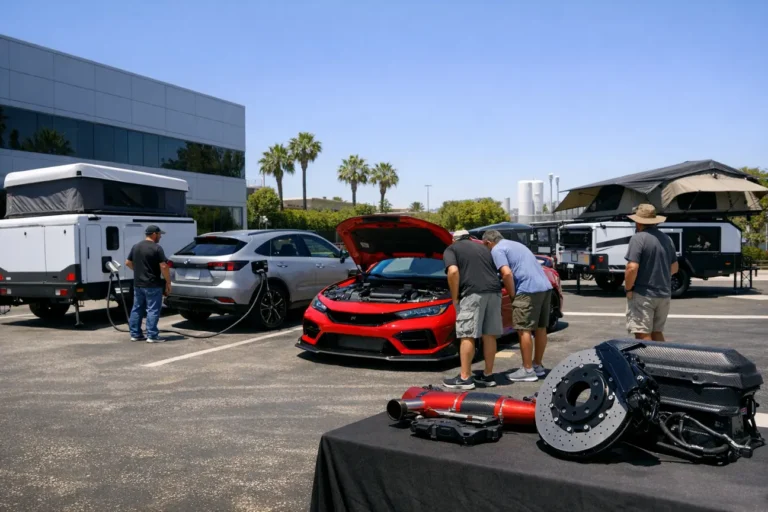
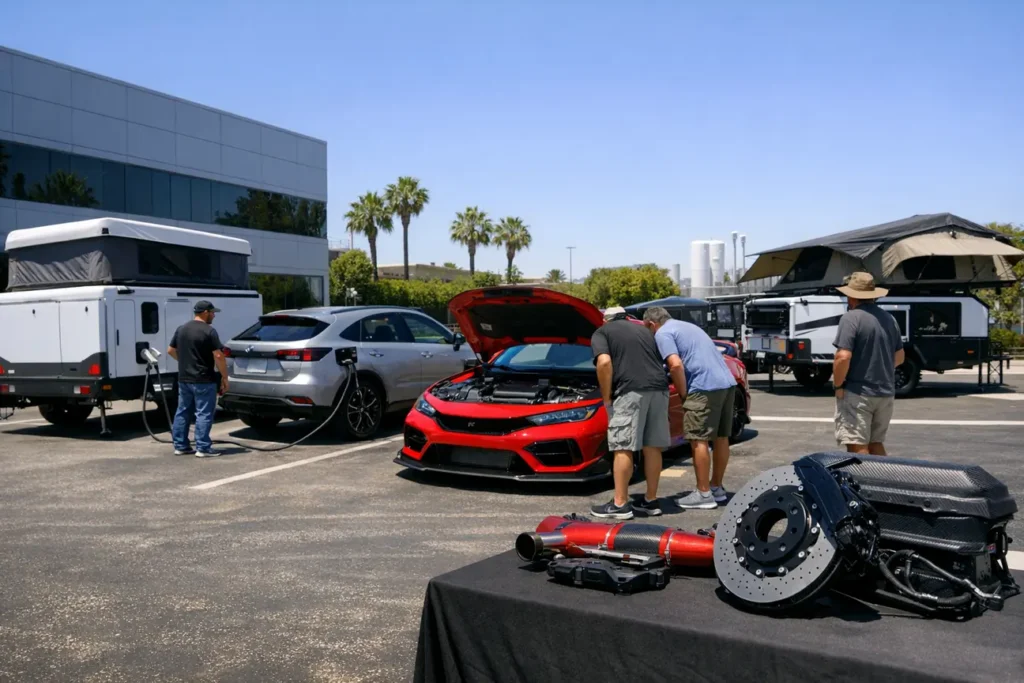
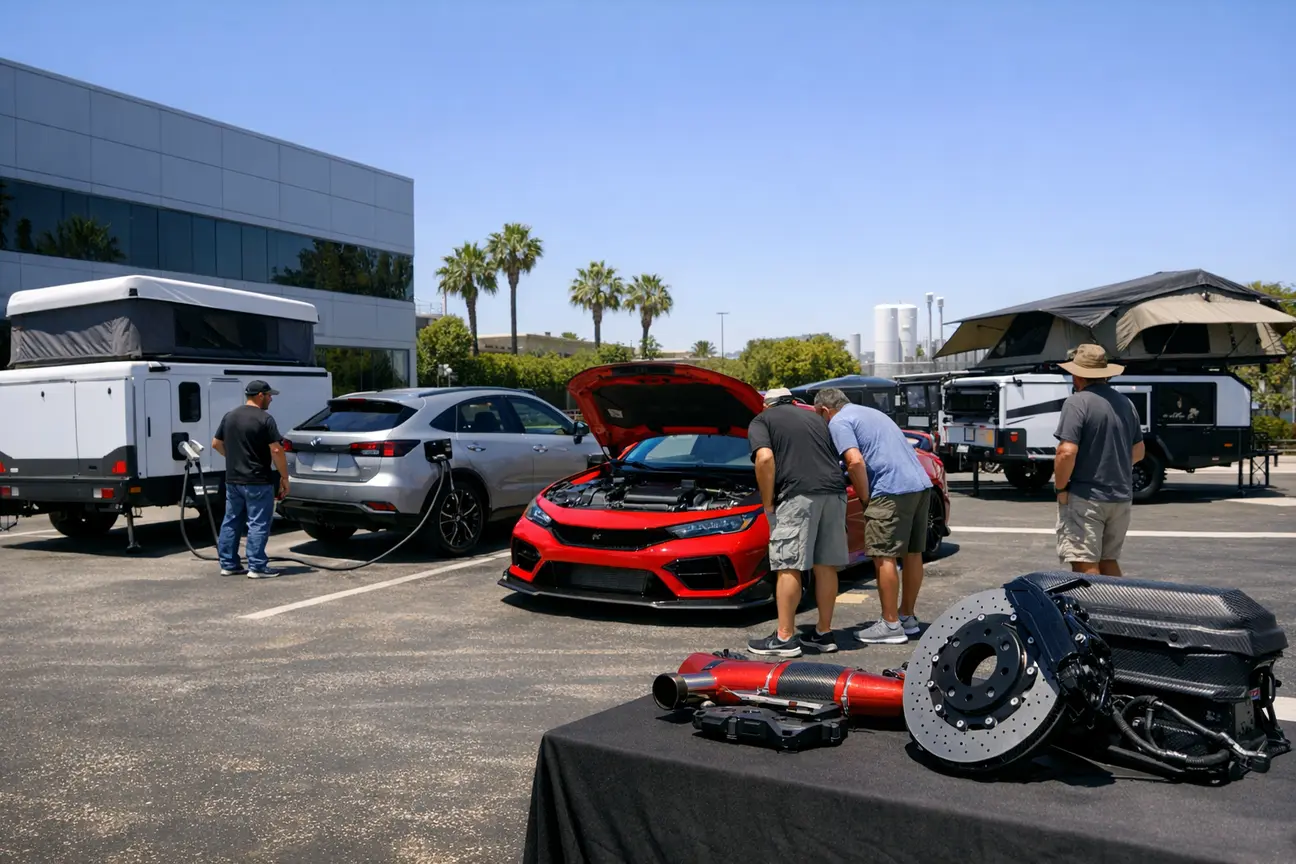
- Tighter track-to-showroom loop: race-inspired performance parts will flow through U.S. dealers beginning with 2026 model-year vehicles.
- Off-road as performance: concepts like the Passport TrailSport HRC frame capability and durability as core attributes for outdoor-oriented buyers.
- Adjacent lifestyle move: the lightweight, modular Base Station camping trailer aims to democratize outdoor access for younger buyers and can be towed by vehicles as small as a CR‑V or by future EVs.
Sales and Market Position (2025)
- About 1.3 million U.S. vehicle sales with modest year-over-year growth despite affordability and inventory headwinds.
- Light trucks led volume (CR‑V, Pilot, Passport, HR‑V); hybrids grew across nameplates.
- Passenger cars rebounded, with Civic and Accord buoyed by hybrid adoption and value positioning.
- Emphasis on consistency, disciplined mix, and long-term brand equity over headline growth.
- Brand recognition: more 2025 Kelley Blue Book Consumer Choice Awards than any automaker, including Best Overall Brand, Most Trusted Brand, and Best Value Brand; Civic named KBB’s Best Compact Car for 2026.
Product and Brand Direction
- Revival of the Prelude signals attainable, emotional performance within an electrified, flexible architecture strategy prioritizing engagement without excess.
- Design remains connective tissue across cars, motorcycles, aircraft, and now campers, focused on intuitive usability.
Electrification Cadence
- Hybrids will do most near-term work amid affordability and charging constraints.
- Hydrogen and advanced energy systems (including fuel cells) stay in the background as longer-term bets.
Dealer Network and Accessories
- Race-inspired performance and overlanding accessories, sold through U.S. dealerships starting with 2026 model-year vehicles, are positioned to extend customer relationships and add revenue.
Infrastructure and Resilience
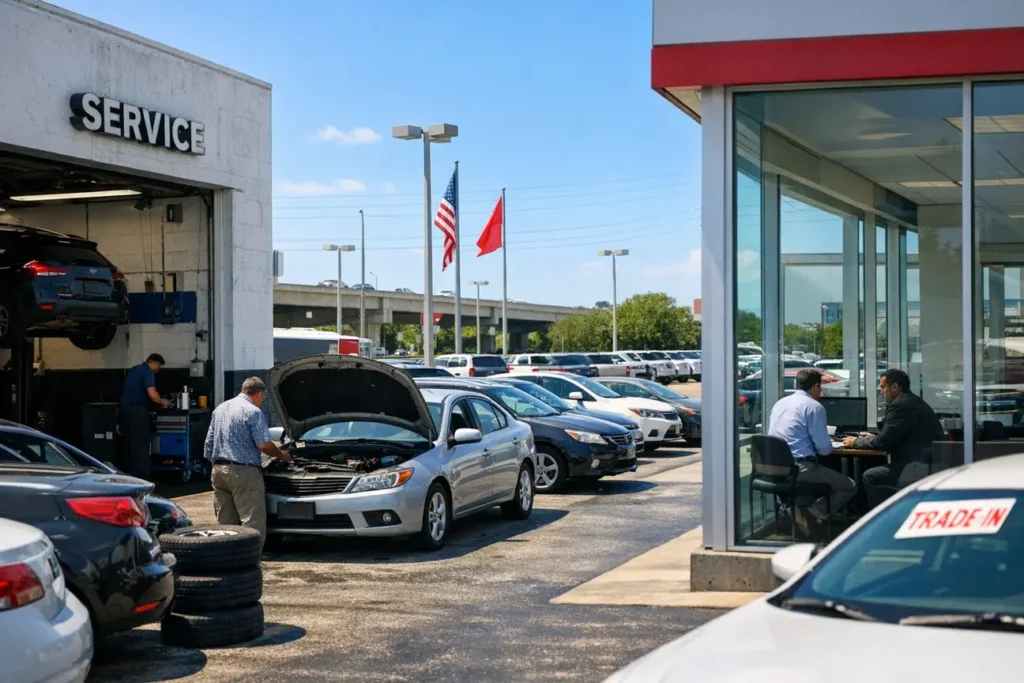
- Localized R&D and production (with two-thirds of North American sales sourced from regional plants) and a 1,300+ dealer body support a diversified product-and-accessory strategy and supply resilience.
Milestones to Watch
- Rollout of dealer-installed performance parts with 2026 model-year vehicles.
- Return of the Prelude.
- Continued expansion of hybrids across core nameplates.
- Progress on the Base Station camper concept and dealer accessory ecosystems around outdoor use.
Overall, Honda is prioritizing patience over rapid reinvention—protecting share in core segments, leaning into light trucks, expanding hybrids, and translating competition credibility into retail through parts and accessories—to convert brand loyalty into steady volume as the electrified market evolves.