
Summary
A large telematics analysis from Geotab, reported by Top Gear, finds that electric vehicle batteries typically lose about 2% of capacity per year on average, with charging habits and operating conditions strongly influencing degradation.
Topline results
-
Average capacity retention after 10 years: about 82%.
-
Example: a 320-mile new range would be roughly 262 miles after a decade, assuming similar use.
-
Dataset: 22,700 battery-electric cars and vans across 21 models; includes demanding commercial duty cycles.
-
Commercial vans averaged about 2.7%/year loss, skewing overall results downward due to shorter ranges and more frequent, higher-power charging.
Charging behavior and degradation
-
DC fast charging used sparingly (less than 1 in 8 sessions): ~1.5%/year average degradation.
-
More than 1 in 8 sessions on DC fast charging at < 100 kW: ~2.2%/year.
-
More than 1 in 8 sessions on DC fast charging at ≥ 100 kW: ~3.0%/year.
-
Rule-of-thumb example: Driving 8,000 miles/year with ~250 miles per charge equals ~32 charges/year. Four long trips with one rapid stop each puts a driver at the “1 in 8” threshold, aligning with lower wear in the data.
State of charge extremes
-
Brief trips to 100% or 0% did not show a large independent effect.
-
Parking for extended periods at 100% or 0% did: if a vehicle spent ~80% of time at either extreme, average degradation increased by about 0.5%/year.
Climate and usage intensity
-
Very hot climates added roughly 0.4%/year to degradation; simple steps like parking in the shade can help, Top Gear reports.
-
Lower cycling (fewer than one full cycle per week; ~13,000 miles/year at ~250 miles/charge): ~1.5%/year.
-
Higher cycling (about once every 1–2 days): ~2.3%/year, consistent with many commercial van duty cycles.
Why charging power matters
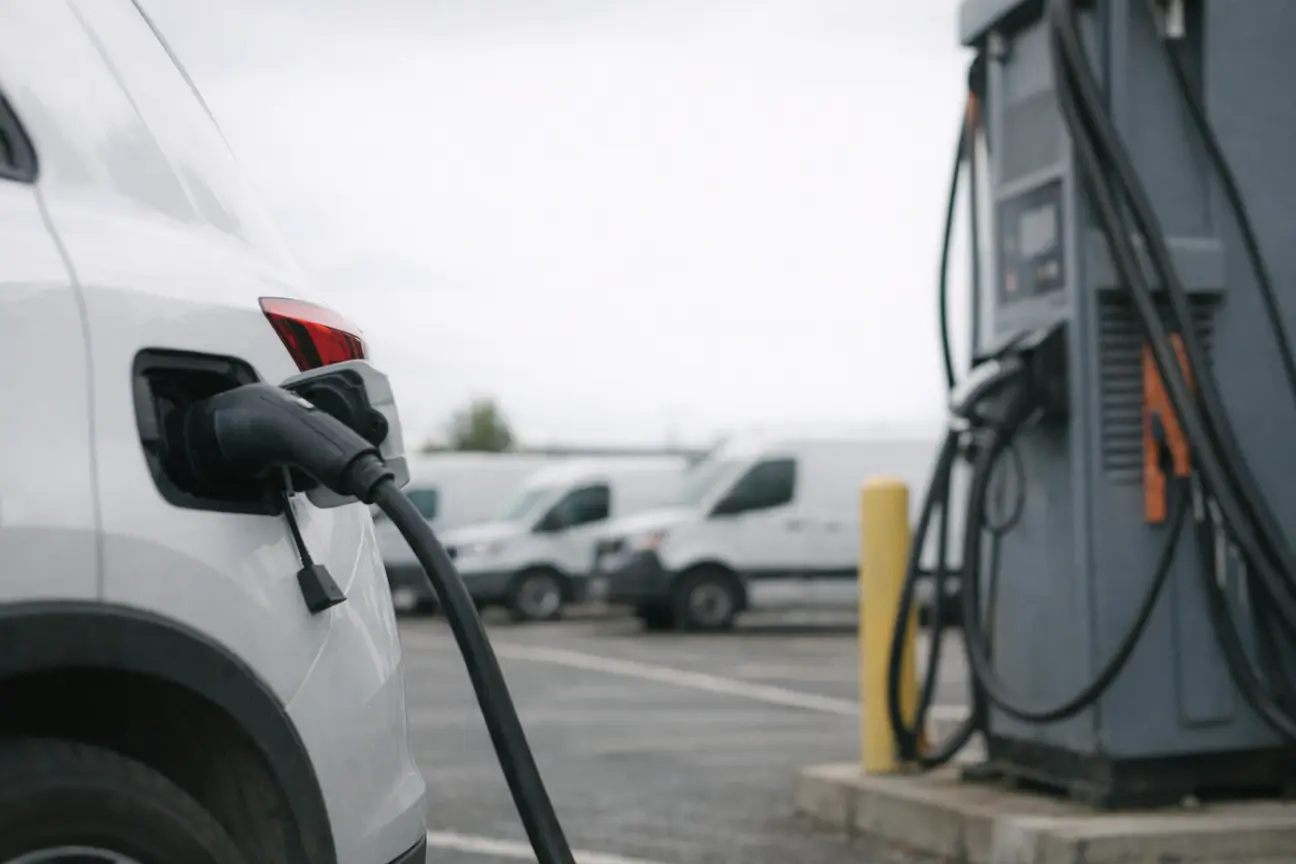
Higher-power DC sessions expose cells to greater currents and temperatures than typical AC charging, accelerating wear. The Geotab dataset quantifies this across diverse vehicles and use patterns, indicating that planning around slower or less frequent DC fast charges can reduce capacity loss.
Guidance for fleets and private owners
-
Fleets: Geotab characterizes the findings as reassuring and suggests prioritizing utilization; productivity can outweigh incremental battery wear, according to the article.
-
Private owners: Charging mainly on AC (home/work), minimizing frequent high-power DC fast charging, and avoiding long parking spells at 100% or 0% are associated with slower degradation. Top Gear reports the data suggest an average-mileage EV mostly charged at home could retain about 90% of original capacity after 10 years.
Caveats
-
Findings are averages across 21 models and mixed use (cars and vans); individual outcomes vary by climate, chemistry, thermal management, and daily use.
-
Telematics reflect real-world behavior rather than controlled lab conditions; many variables differ between vehicles and duty cycles.
-
Degradation often happens faster early in life, then slows; the study’s averages capture the longer-term trend.
Bottom line
Across a large real-world sample, EV batteries typically degrade by about 2% per year. Keeping DC fast charging to less than one in eight sessions, favoring sub-100 kW when possible, avoiding extended parking at full or empty, and mitigating heat exposure were all associated with meaningfully lower capacity loss.