
Overview
Ford plans to launch a mid-size electric pickup in 2027 (as a 2028 model year) with a targeted starting price around $30,000, according to an advance technical briefing reported by Car and Driver. It will be the first vehicle on Ford’s new Universal Electric Vehicle (UEV) platform, a dedicated EV architecture. The name, final on-sale timing, range, battery capacity, charging rates, and powertrains have not been disclosed.
Key takeaways
- Target launch: 2027 on-sale (2028 model year); design reveal expected later this year.
- Price goal: ~$30,000, with efficiency and manufacturing simplicity as core priorities.
- Platform: New dedicated UEV architecture; no internal-combustion support; scalable from B-segment cars to small commercial vans.
- Battery: Prismatic LFP cells initially, with flexibility for other chemistries and formats in future variants.
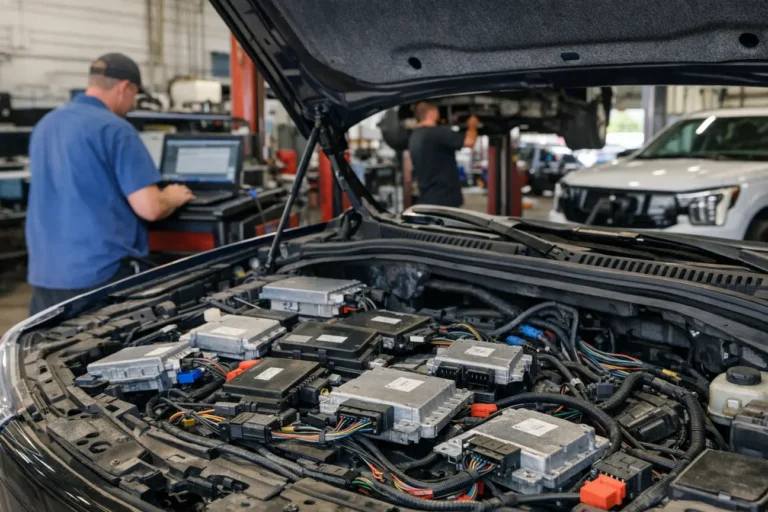
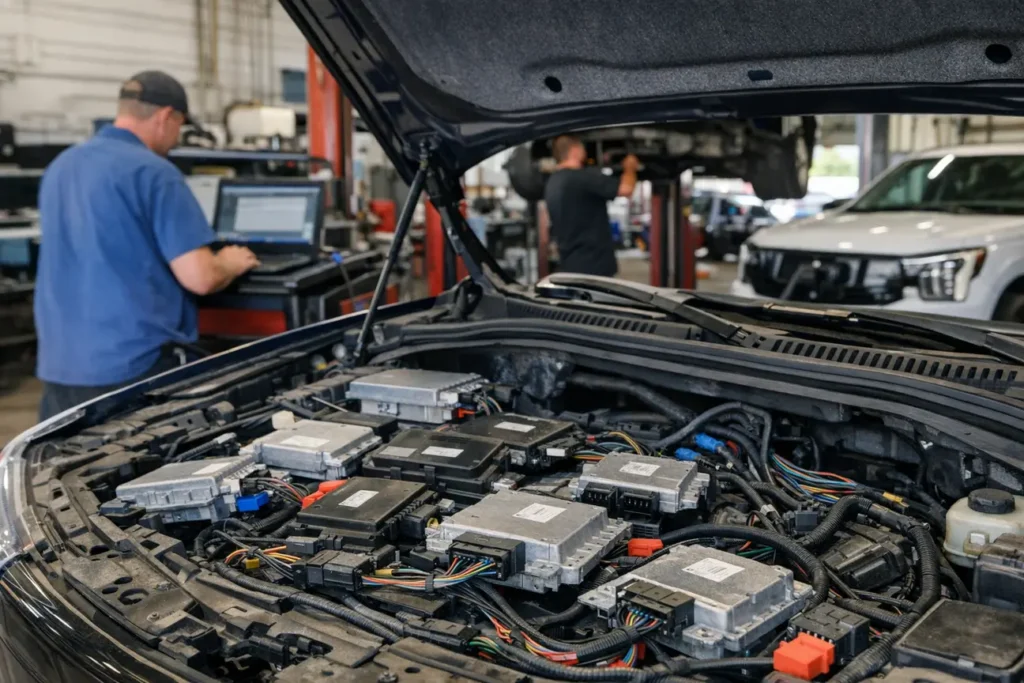
- Electronics: Zonal architecture with five Ford-designed CPUs; new 48‑volt system alongside 12‑volt accessories; integrated “E‑box” power electronics; bidirectional charging.
- Structure: Large front and rear “unicastings” with a structural battery pack forming the core body-in-white.
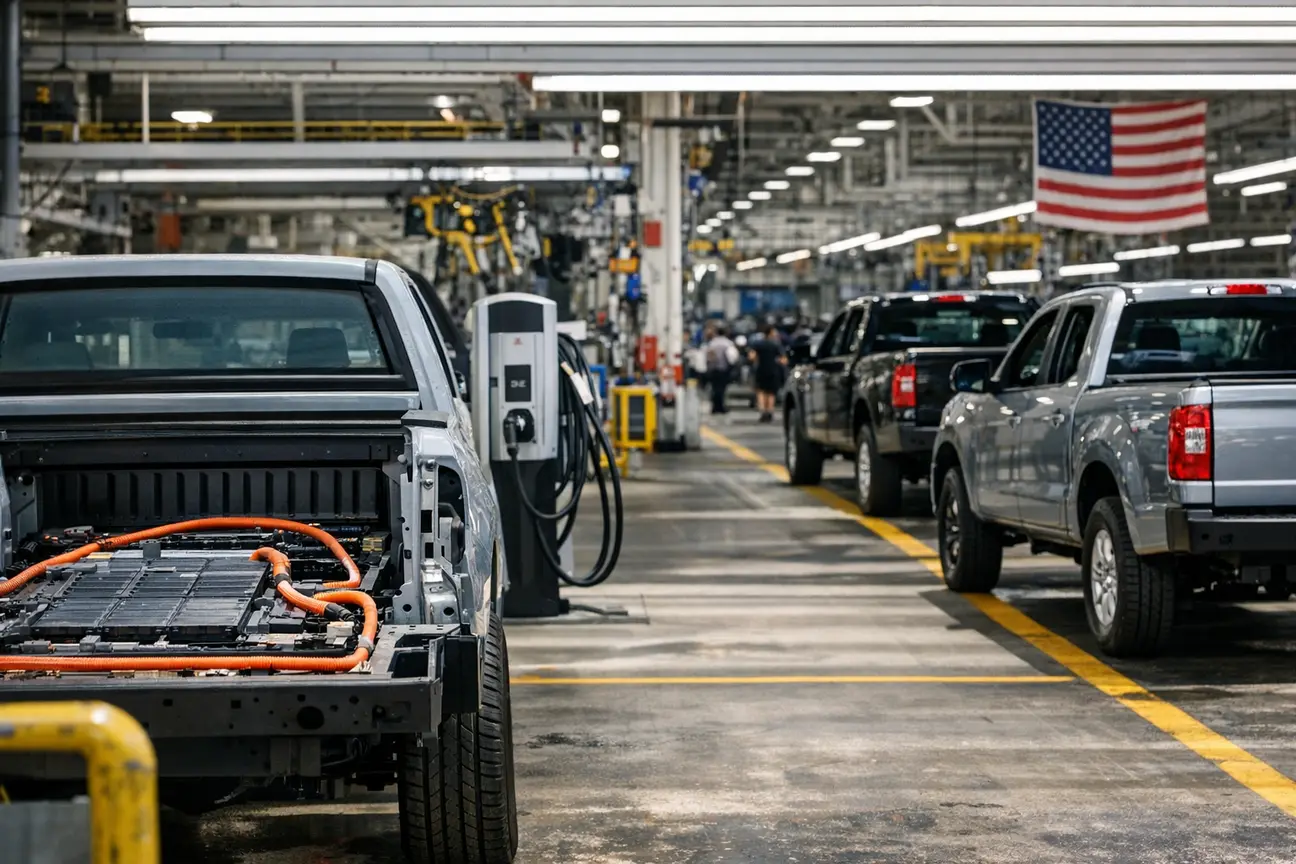
- Manufacturing: Planned at a dedicated Louisville, Kentucky plant.
- Naming: Unconfirmed; a Ranchero revival is possible based on a prior trademark filing (Ford declined comment).
Engineering and cost focus
A small, skunkworks-style team led by Alan Clark (ex-Tesla) prioritized cost and efficiency, using an internal “bounty system” to quantify savings from changes to weight, drag, rolling resistance, and assembly steps. Ford says the simplified wiring and new electrical architecture are intended to reduce parts, copper, and assembly time.
- Wiring harness: About 4000 feet shorter and 22 lb lighter than Mustang Mach‑E’s, and no oven preheating needed before installation (per Ford).
- Computing/electrical: Five centralized controllers, 48‑volt subsystem to cut current and heat, with 12‑volt retained for accessories.
- Power electronics: In-house energy management, charging software/hardware, and a compact “E‑box” integrating multiple functions.
Battery strategy and projected efficiency
Ford chose LFP cells to lower pack cost, noting LFP typically runs 20%–30% cheaper per kWh than NMCA but with roughly 30% lower volumetric energy density. The team aims to minimize battery size without sacrificing usable range via reduced mass, drag, and rolling resistance.
- Range efficiency claim: Ford projects almost 50 miles (about 15%) more range from the same battery capacity versus today’s lowest-drag mid-size pickup; validation is ongoing.
- Chemistry flexibility: The architecture can accommodate other cell types and formats for future trims or use cases (e.g., fleet vs. consumer).
Aerodynamics
Engineers prioritized aero early, testing thousands of 3D-printed parts and mapping forces up to 87 mph. The goal was a streamlined, teardrop-like flow past the bed.
- Drag claim: Ford says the design cuts aerodynamic drag by more than 15% compared with any pickup currently on sale.
- Detail example: Combining mirror fold/adjust motors into one unit enabled a smaller assembly, reduced frontal area and mass, and an estimated 1.5 miles of added range.
Vehicle layout and packaging
The truck will have a structural battery between front and rear unicastings, with subframes attaching the suspension and wheels. As a dedicated EV, it is expected to feature a front trunk in addition to the bed. Ford also says interior volume is projected to exceed that of the 2025 Toyota RAV4 (claim).
Market context and strategy
The project aligns with Ford’s EV strategy reset. Car and Driver reports Ford ended F‑150 Lightning production last year after four model years due to heavy losses. Today, the Mustang Mach‑E is Ford’s only ongoing BEV. Prior EV efforts (Ranger EV, Transit Connect Electric with Azure Dynamics, Focus Electric, and Lightning) largely adapted combustion platforms. The UEV program is designed for EV-only packaging and mainstream pricing, with Ford citing batteries as 30%–40% of total EV manufacturing cost (per McKinsey analysis referenced by Ford).
Open questions
- Undisclosed specs: Battery capacity, official range, charging rates, powertrains, trims, and final pricing.
- Truck capabilities: How towing, payload, and off-road performance will balance against aggressive efficiency targets.
- Scale and cost: Whether Ford can meet the price target at volume, given battery and materials costs.
What’s next
Ford says it is validating its efficiency projections now. A public design reveal is expected this year, followed by detailed specifications and pricing within the next 12 months, ahead of the planned 2027 sales launch from the Louisville plant.