
Overview
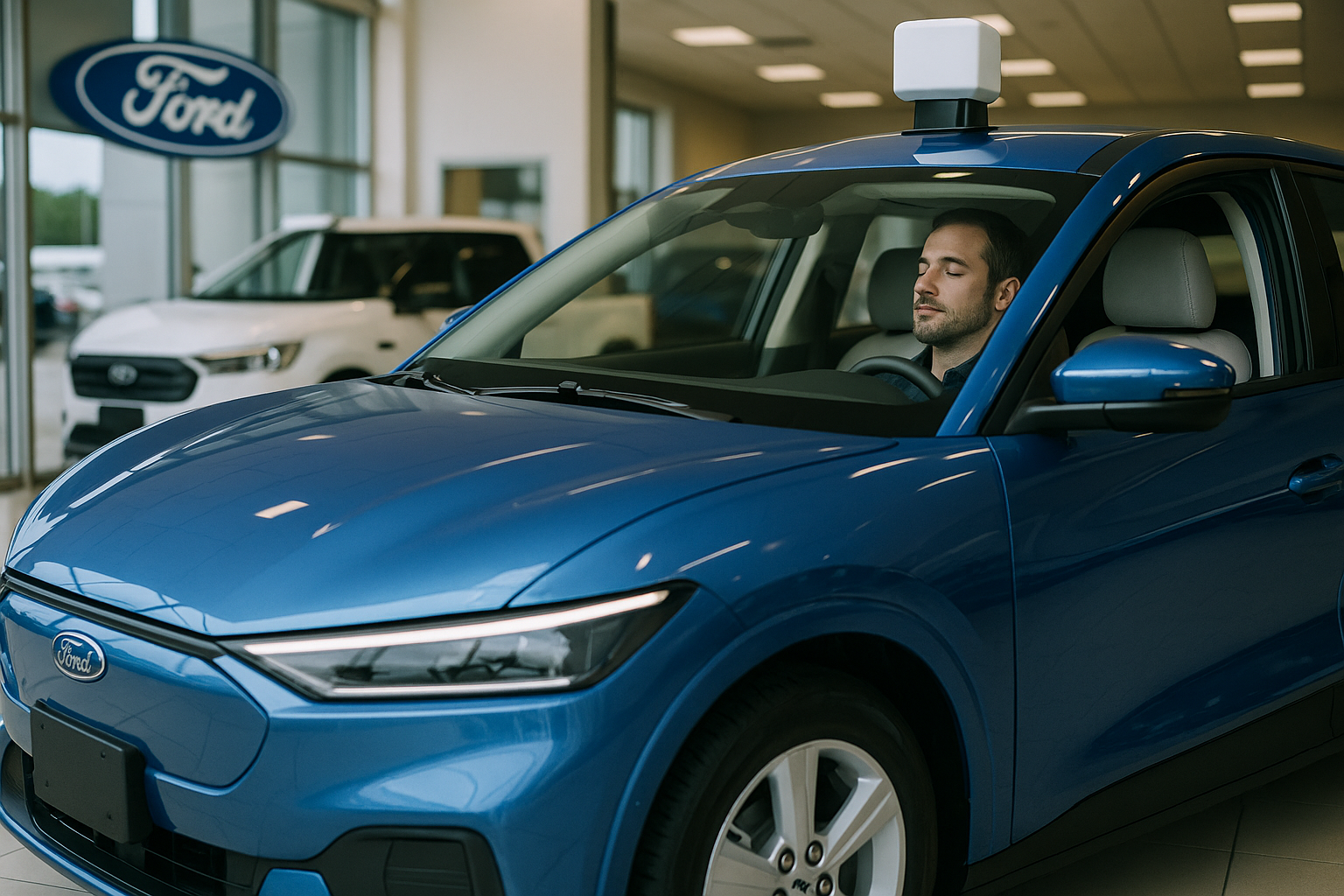
Ford plans to introduce “eyes-off” Level 3 autonomous driving in 2028 on the first vehicle built on its new Universal Electric Vehicle platform, following a compact electric pickup slated to enter production in 2027 with a target starting price of about $30,000. The company says it is developing the platform’s hardware and software in-house, but has not disclosed the operating scope, sensor suite, or pricing model for the higher-level capability.
Key takeaways
- Level 3 “eyes-off” capability targeted for 2028, one year after the platform’s 2027 debut.
- Initial vehicle: a small electric pickup on the Universal EV platform, aiming for ~<$30,000.
- Current BlueCruise is hands-free but eyes-on, approved on ~130,000 miles of divided highways; it does not operate in urban environments.
- Sensor and compute details remain undisclosed; lidar is reported as “likely” by Automotive News but unconfirmed by Ford.
- Ford frames the goal as to democratize autonomous driving by putting advanced features into more affordable, higher-volume vehicles.
Timeline
- 2027: Launch Universal EV platform with new in-house hardware/software; start production of the compact electric pickup.
- 2028: Enable Level 3 “eyes-off” functionality, with exact operating domain to be defined.
What remains unknown
- Operating domain: whether Level 3 extends beyond limited-access highways to city streets, and any expansion beyond the ~130,000 miles mapped for BlueCruise.
- Technical stack: final sensor suite (e.g., lidar confirmation), compute platform, reliance on high-definition maps vs. onboard sensing, and handoff protocols.
- Performance boundaries: behavior in adverse weather and complex road conditions.
- Commercial model: subscription vs. one-time purchase, OTA unlocks, trim/package requirements, and market rollout sequence.
- Manufacturing and portfolio: production location for the pickup and the number/timing of additional models on the Universal EV platform.
Context and implications
Ford is refocusing its EV strategy toward smaller, lower-cost models and aims to make higher-level driver assistance more accessible. Moving from hands-free, eyes-on supervision to conditional eyes-off capability would shift more responsibility to the vehicle within defined conditions, but successful deployment will hinge on cost-effective sensor integration, compute, and mapping at scale.