
Overview
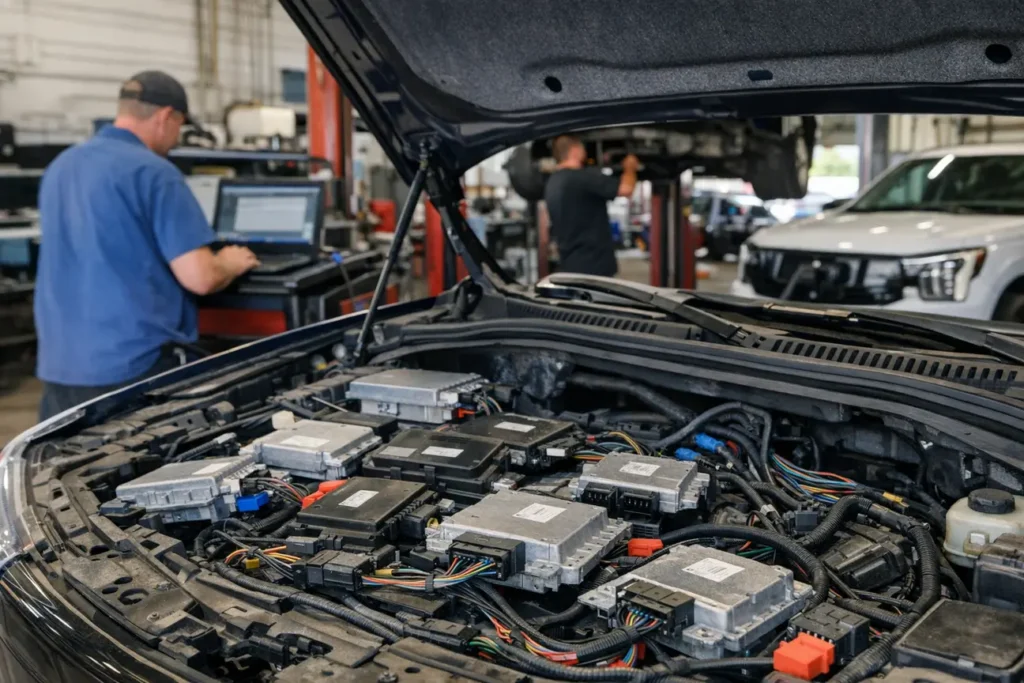
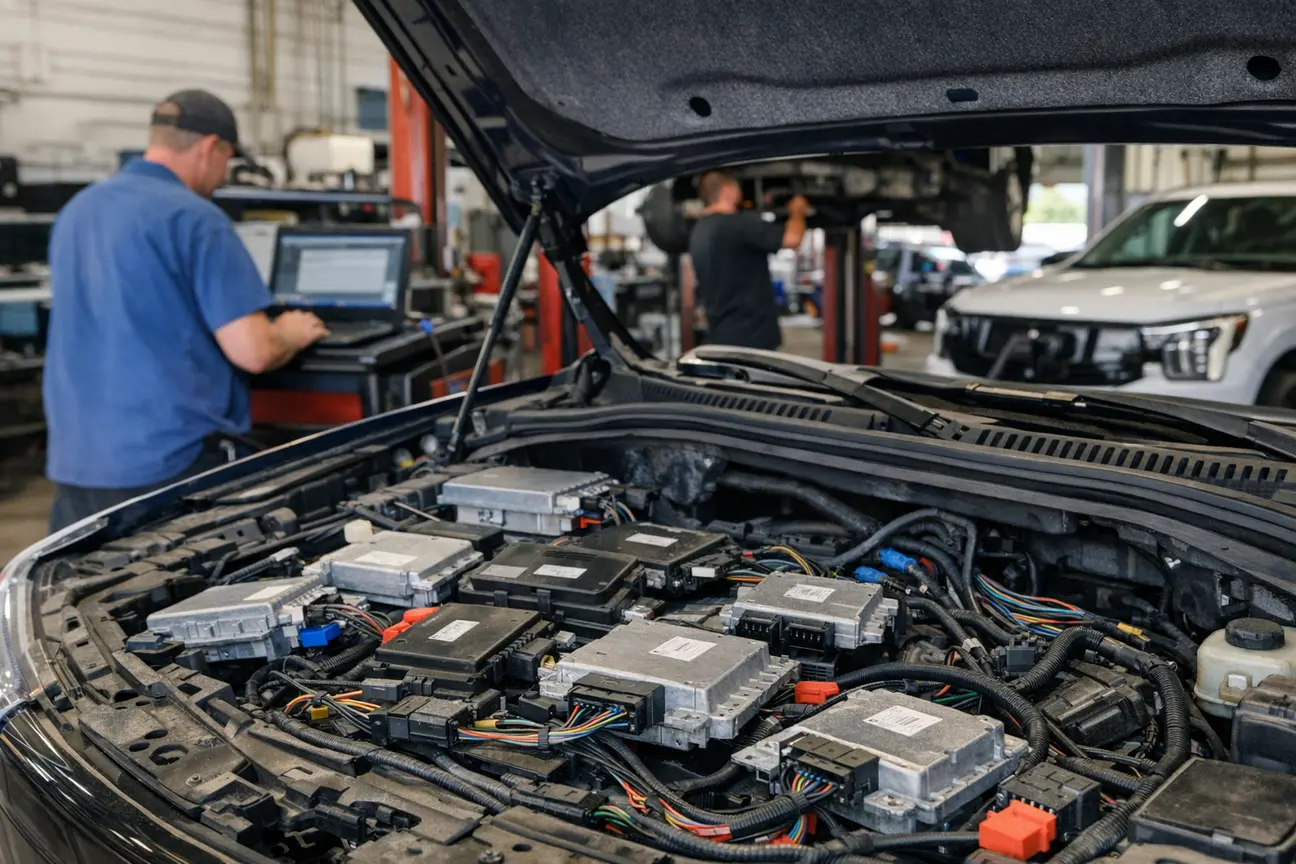
Ford says the fragmented electronics in its current EVs (like the F-150 Lightning and Mustang Mach-E) slow down software updates and complicate service. The company plans to move to an in-house, software-defined, zonal architecture with a small number of master controllers to simplify integration, testing, and over-the-air updates.
What’s wrong with the current setup
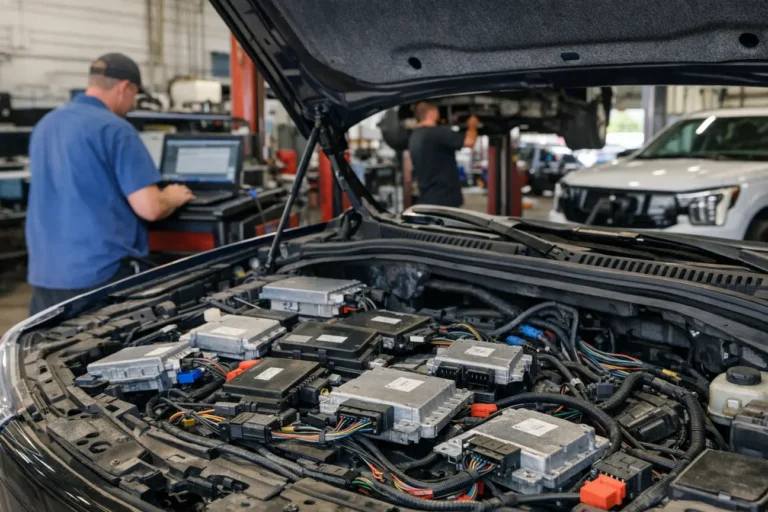
- Electronics are spread across 70+ modules from many suppliers, creating complex dependencies.
- Major over-the-air updates require cross-vendor coordination, adding risk and delays.
- Service burdens rise due to parts variation and interoperability issues, slowing diagnostics and repairs.
- Engineers describe relying on “people putty” — human coordination to bridge disparate systems.
What Ford plans to change
- Adopt a homegrown zonal electrical architecture with only a handful of master controllers.
- Consolidate functions, cut supplier count, and standardize hardware across vehicles.
- Use software to enable/disable features, update functionality, and streamline validation and deployment.
- Establish clearer accountability across the stack and reduce integration friction.
Why it matters
- Faster, more reliable updates without dealership visits, improving safety and feature rollout.
- Lower manufacturing and service complexity, with smaller parts catalogs and simpler training.
- Potential for post-sale feature enablement — but also the risk of features gated behind paid activations.
Status and timeline
The report indicates Ford’s current Lightning platform is on “borrowed time,” with the Lightning and Mach-E characterized as discontinued in their current form as Ford pivots to a clean-sheet platform. The Drive also asserts that even in a scenario with different U.S. EV incentives, the existing architecture would still force a change. Ford has not provided a detailed rollout timeline in this report nor specifics on supporting existing owners through the transition.
Implications for drivers, dealers, and engineers
- Drivers: quicker updates, fewer software-related service visits, potential new features after purchase.
- Dealers: simpler inventories and diagnostics due to standardized, centrally controlled components.
- Engineers: building cohesive software platforms instead of stitching together siloed subsystems.
Challenges ahead
- Designing, validating, and scaling a unified architecture requires rigorous testing and version control.
- Navigating the transition plan for current owners remains an open question.