

Overview
Germany’s auto industry lobby VDA said its cross-industry collaboration to develop open-source software for next‑generation vehicles has expanded to 32 participants, up from 11, aiming to cut costs and speed up software development across the automotive supply chain.
Key Moves
-
Participants signed a memorandum of understanding to co-develop open-source code reusable across brands and systems.
-
Co-led by the Eclipse Foundation, which will help govern projects, contributions, and roadmaps.
-
Announcement timed with CES to underscore the convergence of automotive and consumer tech.
Who’s Involved
-
Automakers: Volkswagen, BMW, Mercedes‑Benz, Stellantis, Traton.
-
Suppliers: Schaeffler and others across components and systems.
-
Chipmakers: Infineon, Qualcomm, among multiple semiconductor firms.
Targets and Expected Benefits
-
Up to 40% reduction in development and maintenance effort.
-
Up to 30% faster time to market.
-
Less duplicated engineering via shared middleware, communication stacks, and common services.
-
Improved compatibility, quality, and security through broader community review and testing.
Why It Matters
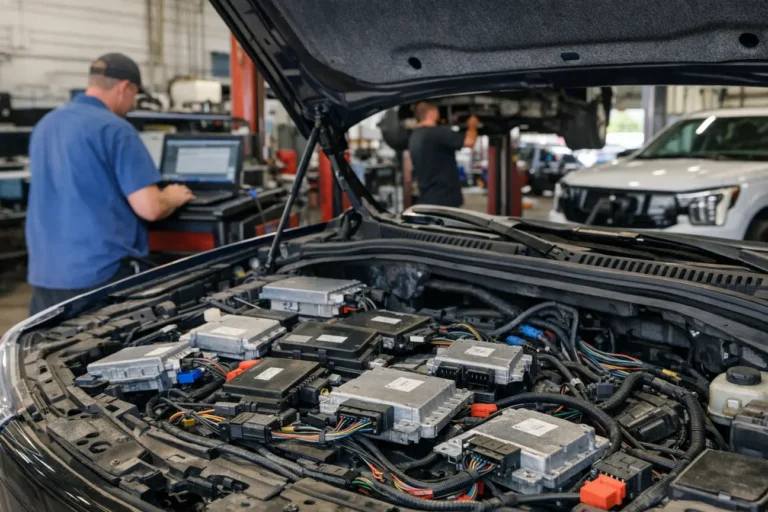
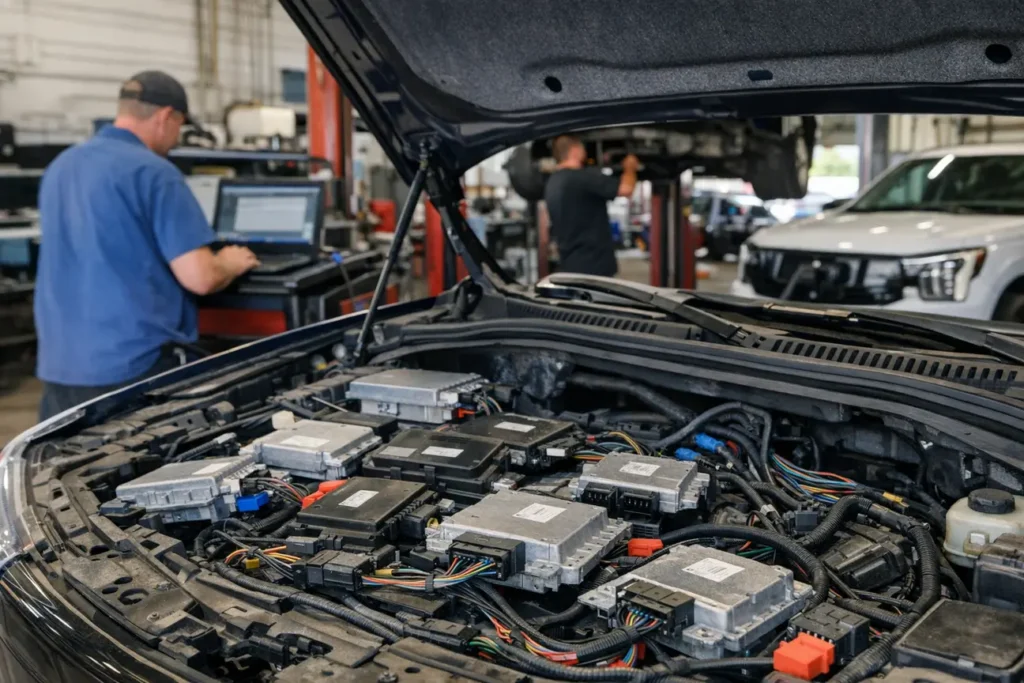
Modern vehicles rely on vast codebases, dozens of ECUs, and an expanding set of sensors and connectivity functions. Pooling resources on common software foundations lets companies focus engineering on differentiating features—such as AI-enabled driver assistance, connected services, and over‑the‑air updates—while reducing long‑term support costs.
How Collaboration Will Work
-
Open-source licensing to enable broad reuse and contribution across the ecosystem.
-
Eclipse Foundation to steward governance, contribution guidelines, and technical working groups.
-
Companies retain control over proprietary products layered atop shared components.
Scope, Momentum, and Gaps
-
Expansion from 11 to 32 participants signals growing alignment across OEMs, suppliers, and chipmakers.
-
No specific projects, deliverables, or timelines disclosed; these typically emerge within working groups.
-
Success hinges on translating goals into production-grade code and standards, and on measurable adoption and savings.
What to Watch Next
-
Formation of concrete projects and reference implementations under Eclipse governance.
-
Evidence of de facto standards that ease integration and supplier interchangeability.
-
Documentation of realized cost and time-to-market improvements versus targets.
-
Safety-critical readiness and alignment with automotive-grade hardware constraints.