

Overview
European automakers are shifting from fully in-house software development to partnerships with technology providers. Automotive News reports that Volkswagen Group, BMW and Stellantis are reassessing software independence after delays, rising costs and talent constraints. This pivot is reshaping how vehicles are sold, delivered and serviced, moving retailers closer to the intersection of car sales and tech support.
Why it matters
Modern vehicles depend on software for infotainment, connected services, driver assistance and over-the-air (OTA) updates. Partnering with established operating systems, cloud providers and chipmakers promises faster delivery and shared costs, but introduces trade-offs such as reduced control, licensing complexity and long-term dependencies.
Context: From “lone-wolf” to partnered platforms
Volkswagen Group’s experience with its Cariad unit illustrates the course correction. Launched to build a common digital platform—and ambitiously compared to becoming a “second SAP”—the effort faced delays that impacted vehicle launches. The company has since broadened its use of external suppliers, reflecting the difficulty of designing, validating and maintaining a complete vehicle software stack across infotainment, driver assistance, connectivity and cybersecurity.
Across the industry, consumer expectations shaped by smartphones, stringent safety validation, rapid semiconductor cycles and competition for engineering talent have made go-it-alone strategies harder to sustain.
What partnered platforms look like
- Infotainment OS: Increased use of mainstream systems such as Android Automotive OS, with brand-specific interfaces.
- Compute platforms: Qualcomm and Nvidia provide standardized hardware/software stacks for cockpit and ADAS features.
- Cloud back ends: Hosting data, analytics, OTA pipelines, digital twins and fleet learning.
- Middleware: Vendors integrate legacy modules with new services.
The promise is faster time to market and shared development costs; the trade-off is less control and the need to manage vendor dependencies over the vehicle lifecycle.
Implications for Dealers
1) OTA updates change service flow
More fixes and enhancements will be delivered remotely. Dealers must manage failed updates, schedule safety-critical campaigns, guide customers on preparation (connectivity, battery state) and verify completion when needed.
2) Features, subscriptions and revenue sharing
Activation of software-defined features becomes part of sales and F&I. Retailers will handle trials, renewals, refunds and explain bundles, durations and pricing—while understanding revenue splits among automaker, platform provider and dealership.
3) Diagnostics, tools and escalation paths
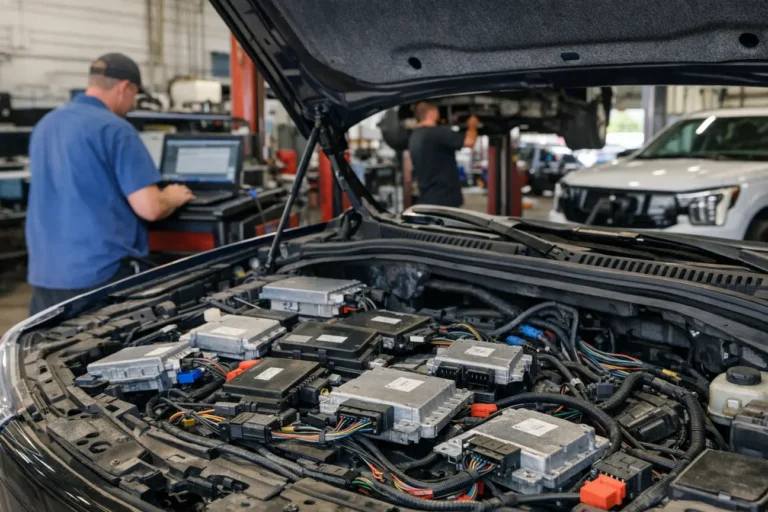
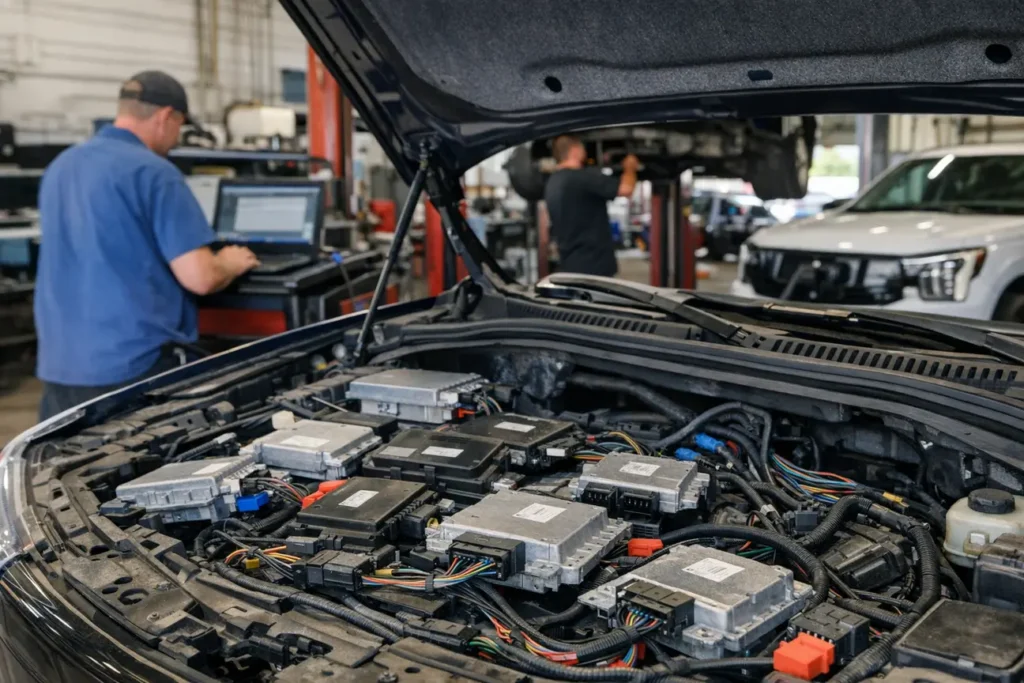
Access to secure gateways, logs and remote telemetry increasingly runs through platform portals. Service teams need updated equipment, credentials for secure flashing/coding, and clear rules for when to escalate to automaker vs. platform support.
4) Data governance and consent
Dealers will help customers manage privacy settings and consent under European rules. Integration between platform portals and dealer management systems is essential for audit trails and to support emerging standards for third-party data access.
5) Warranty, recalls and version control
Software-only recalls and supplier-issued patches require precise responsibilities. Clear bulletins, version tracking and fair compensation for OTA campaign management are critical to avoid gaps when fixes have unintended side effects.
6) Used-vehicle reconditioning goes digital
Processes must include wiping prior-owner data, transferring or deactivating digital entitlements, and confirming software currency—particularly for safety features. Platform automation tools can help if access and training are in place.
7) Delivery becomes a tech onboarding
Staff will assist with account creation, phone pairing, privacy choices, app setup and voice assistants. Reliable in-store connectivity is essential, and delivery time should include demonstrations of paid features and trial terms.
8) Cybersecurity in the service bay
More secure flashing and software dependencies demand network segmentation, access controls and incident response plans aligned with OEM and supplier requirements, including periodic audits.
Business Mix: Opportunities and Risks
- Opportunities: Standardized platforms can simplify training across model years, improve app reliability and update cadence, and open recurring revenue from subscriptions and digital services.
- Risks: Dependency on platform uptime and policies, potential limits or costs on data access, and ongoing fragmentation across multiple platforms for multi-brand groups.
While OTA may reduce certain workshop visits, complex software diagnostics and paid activations/retrofits can offset some declines in traditional warranty labor.
What Dealers Should Do Now
- Train sales and service teams on new platforms, secure flashing and privacy/consent workflows.
- Assess store connectivity, service-bay network security and diagnostic tool subscriptions.
- Define escalation paths among dealership, OEM and platform providers; document SLAs and contacts.
- Align with OEM policies on subscriptions, revenue sharing, OTA management and reimbursement.
- Standardize CPO and trade-in processes for data wipes, entitlement transfers and software currency checks.
Outlook
As automakers formalize partnerships and roll out common platforms, dealers will look for clear timelines, robust training and straightforward rules on data and digital feature sales. With steady OEM and vendor support, retailers can translate this strategic shift into a smoother customer experience and new recurring revenue streams.