
Executive Summary
Dealers should prioritize reputation, inventory visibility, and human-written content while calibrating budgets to channels that convert today. AI-led search is growing but remains a small share of opportunity compared with traditional search and bottom-of-funnel behavior. Prepare for a gradual shift, not a wholesale change.
What Matters Most Right Now
The following levers consistently influence both AI and traditional search outcomes:
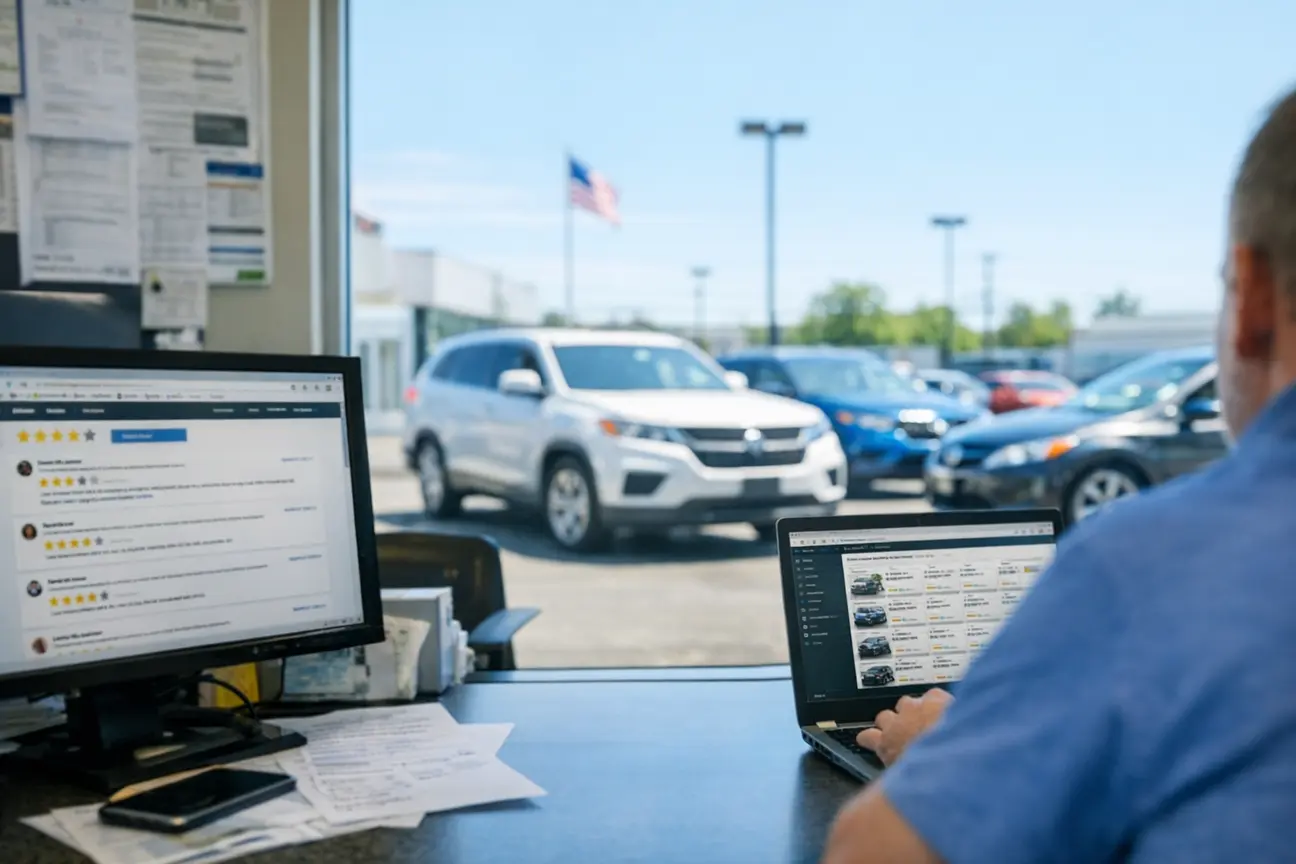
- Reviews and reputation: Treat Google reviews as the primary focus (roughly 70% of effort), then diversify to DealerRater, Cars.com, and grassroots channels (local Facebook groups, Reddit). These signals help AI systems establish “consensus” about who to surface locally.
- Foundational SEO + human expertise: Build authoritative, human-authored pages that demonstrate real experience (e.g., lease vs. buy guidance, service info, local market context). The recap emphasizes search engines and LLMs are rewarding content with clear human expertise.
- Inventory volume and visibility: When shoppers query for specific vehicles, prices, and distances, whoever has the most matching inventory tends to rank higher—often favoring large third-party aggregators. Maintain clean feeds and smart syndication to ensure coverage.
- Measure AI-driven demand: Quantify how much traffic and conversion you actually receive from AI surfaces and budget accordingly—avoid shifting spend based on hype.
- Blend paid and organic: Use nimble, short-term paid campaigns while compounding long-term organic gains instead of treating paid and SEO as interchangeable.
- Expand geographic reach with content: Publish genuine, human-written landing pages for target markets and support them with internal linking from related content.
What to De‑Prioritize
Avoid over-indexing on tactics that show limited real-world lift:
- Overhyped “GEO” technical checklists: Schema overhauls, robots.txt tweaks, and similar technical fixes have minimal bearing on how modern AI tools parse local dealership pages.
- Expecting an abrupt behavior shift: As shoppers get closer to purchase, they rely more on traditional search; plan for a gradual migration, not an overnight pivot.
- Short-cycle SEO judgments: Expect ~3 months for new content to materially register and ~12 months to properly evaluate performance; 30-day evaluations risk cutting initiatives just as they start to work.
Evidence and Examples Cited
The recap highlights data points and field observations underpinning the guidance:
- Across 150 dealerships, traffic from LLMs—led by ChatGPT—was about 0.5% of the opportunity compared with organic search.
- In a live test to find a nearby Ford F‑150 quickly, successful participants used traditional search rather than LLMs.
- A mid‑Michigan Ford store, 30 miles from the nearest major market, held an all‑in search budget under $10,000 and sold 12% more vehicles in 2025 by pairing steady SEO with agile paid campaigns.
- Dealers expanding with human-generated geo pages saw position-one coverage grow from a small “backyard bubble” to broader regional visibility over ~18 months.
Advertising and Platform Outlook
AI search appears to be converging on formats similar to Google’s vehicle listing ads. Early moves (e.g., checkout partnerships) hint at future inventory-feed integrations. When these pathways open, the biggest winners will be dealers with robust inventory feeds, clean data, strong content, and solid organic foundations.
Action Checklist
Use this to align near-term execution with long-term positioning:
- Reviews program: Set review volume/response-time targets; request from every customer; reply to all reviews; diversify to second-tier and community platforms.
- Content plan: Publish human-authored pages on buying advice, service, and local market pages; cross-link supporting articles to geo targets.
- Inventory ops: Maintain accurate feeds (pricing, trim, mileage, photos), fix duplicates/mismatches, and syndicate strategically to third parties.
- Measurement: Tag and track LLM referrals; compare conversion quality to organic and paid; budget to channels proving ROI today.
- Timeline: Commit to 12 months for organic programs; set 90‑day milestones for content publication, internal linking, and technical hygiene.
- Paid + organic coordination: Use paid to capture short-term demand while organic content compounds reach and authority.
Bottom Line
Fundamentals still carry most of the load. Traditional search remains the primary driver for bottom-of-funnel shoppers. Reputation and clear, expert content help both search engines and AI tools decide which dealerships to show. Track real AI-driven demand, keep feeds and listings healthy, and be ready to plug into inventory integrations as they become available.