
Overview
Colorado’s Motor Vehicle Dealer Board voted 6-2 to grant Scout Motors a state dealer license, allowing the Volkswagen Group–backed startup to sell vehicles direct-to-consumer via company-operated retail locations. The license, which covers new, used, and wholesale sales, runs through October 31, 2026, making Colorado one of the first states to formally authorize Scout’s direct-sales model.
What the board decided
- Scout is not a “same-line” manufacturer as Volkswagen, Audi, or Porsche, despite Volkswagen Group’s financial backing.
- Scout qualifies under Colorado law to operate outside the state’s traditional franchise dealership system.
- The license permits new, used, and wholesale transactions, giving Scout flexibility for inventory and trade-ins.
- The approval was by a 6-2 vote and is valid through October 31, 2026.
What it means in Colorado
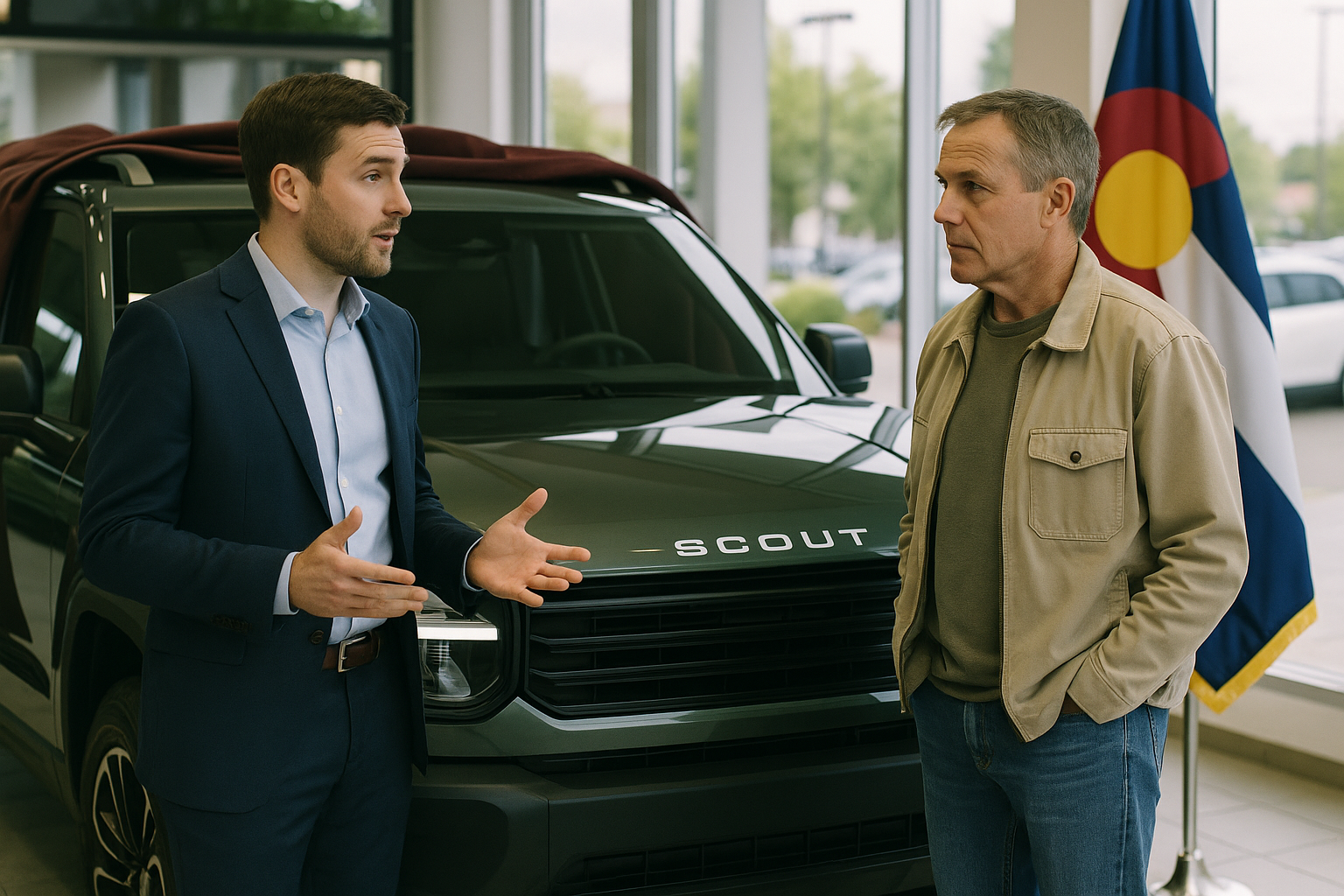
Scout can open company-operated storefronts and customer experience centers, with Denver identified as an early target market. The company has not disclosed how many sites it will open or precise timelines.
- Company-owned locations are expected to handle booking, test drives, purchases, and deliveries under one brand.
- Scout says it plans to streamline purchasing with digital tools and company-run locations, and to build a nationwide service footprint (as reported by the article).
Broader legal and policy context
Dealer associations continue to challenge direct-sales efforts by manufacturers and affiliated startups across the U.S. Trade groups in California and Florida have filed legal actions aimed at blocking Scout’s approach. In Colorado, a bill that would have limited direct sales stalled earlier this year, leaving current law intact and guiding the board’s decision. Dealer representatives in Colorado are weighing potential appeals.
Product plans and classification questions
Scout has unveiled two U.S.-focused vehicles: the Traveler SUV and the Terra pickup. The company is developing an extended-range electric system that uses a gasoline engine as a generator, a design that dealer groups argue may complicate eligibility for EV-related exemptions in some states. How regulators classify such vehicles could influence Scout’s ability to use EV carve-outs elsewhere.
Timeline and next steps
- Production is planned to start at a new South Carolina factory in late 2027, so Colorado sales volume may be modest until manufacturing ramps.
- Scout will need to build out retail and service operations, comply with state consumer and warranty laws, and secure license renewal beyond 2026.
- Potential appeals in Colorado and ongoing cases in other states will shape the company’s broader rollout.
Key takeaways
- Colorado approval grants Scout an early foothold for direct sales under a standard dealer license.
- The board treated Scout as distinct from Volkswagen, avoiding legacy franchise constraints.
- Dealer groups remain opposed and are pursuing challenges in multiple states.
- Product classification—especially for extended-range electric tech—could affect regulatory treatment.
- Store openings and customer support ahead of 2027 production will be key milestones.