
Summary
China’s fast-growing EV makers are expanding abroad just as major U.S. automakers scale back ambitious EV plans, reshaping global competition, investment priorities and market share.
What changed recently
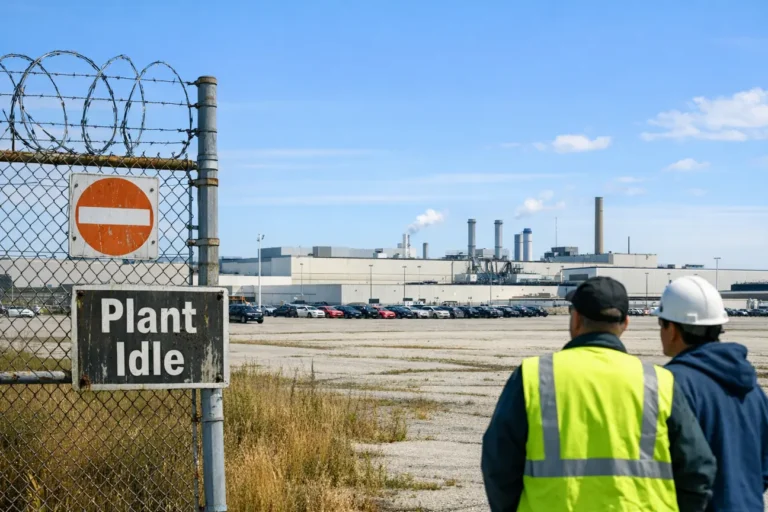
- Stellantis recorded a roughly $26 billion charge tied to a sweeping overhaul that includes pulling back on EVs; shares fell more than 20% as CEO Antonio Filosa said the company misread the transition’s pace.
- GM and Ford booked multibillion-dollar EV write-downs and are reweighting toward higher-margin gasoline trucks/SUVs.
- Tesla ceded the global EV sales lead to BYD and canceled the Model S and X to repurpose Fremont capacity for humanoid robots, while cutting prices on remaining models to defend share.
Momentum shift toward Chinese brands
- Chinese automakers’ global presence has surged on the back of sustained government support, vertically integrated supply chains and execution speed, with exports ramping as China’s domestic market saturates.
- S&P Global Mobility estimates GM, Ford and Stellantis fell from 21.4% global market share in 2019 to 15.7% in 2025, while BYD and Geely rose from under 3% to about 11.1%.
- Dataforce reports Chinese brands rose from near zero in Europe in 2020 to nearly 10% of new-car sales by December.
- Canada most recently removed 100% tariffs on vehicles imported from China amid a trade dispute, aiding expansion in North America beyond the U.S.
EV sales and forecasts
- GlobalData: EV sales in China rose from about 572,300 in 2020 to 4.95 million in 2025; outside China they grew from under 33,000 to more than 474,000 over the same period.
- GlobalData forecasts Chinese EVs reaching roughly 6.5 million units worldwide by 2030 and nearly 8.5 million by 2035.
U.S. policy and market reset
- Washington imposed 100% tariffs on Chinese-made EVs; industry groups urge further limits on Chinese state-backed automakers and battery firms entering the U.S.
- After a period of heavy EV spending tied to policy incentives, U.S. makers are trimming lineups, delaying launches and reducing targets; cumulative write-downs at GM and Ford exceed $27 billion, with Stellantis adding a €22 billion hit.
- As incentives waned, U.S. EV share slipped from 10.3% of new-vehicle sales in September to an estimated 5.2% in Q4, per Cox Automotive.
Competitive strategies
- GM is “right-sizing to natural demand,” pushing for a level playing field via tariffs to offset Chinese subsidies, and preparing for intensified competition.
- Ford is pivoting to smaller, simpler, more efficient EVs aimed directly at Chinese rivals, calling it a “Model T moment.”
- U.S. startups Rivian and Lucid continue to chase profitability, emphasizing software and autonomy amid slower demand.
- Analysts warn that if Chinese brands find ways around tariffs, the competitive threat to traditional U.S. automakers will grow, especially in a mature U.S. market where newcomers must take share from incumbents.
By the numbers
- Big Three global share: 21.4% (2019) → 15.7% (2025 est.).
- BYD + Geely global share: <3% → ~11.1% (2019–2025).
- Europe: Chinese brands ~10% of new-car sales (Dec, from near zero in 2020).
- U.S. EV share: 10.3% (September peak) → ~5.2% (Q4).
Outlook
Tariffs are slowing Chinese brands’ U.S. entry in the near term, but cost advantages and rapid product cycles underpin continued gains abroad. In a flat U.S. market, any successful Chinese entry would likely come at the expense of existing brands. Execution on cost, product-market fit and policy will determine whether U.S. automakers can defend share as Chinese EV makers press forward.
Note on an unverified claim
The article includes a claim that Elon Musk combined his artificial intelligence company with SpaceX in what it calls the biggest merger in history. This claim is unverified by reliable public reporting and should be treated with caution.