
Executive Summary
Auto dealers are deploying AI-driven phone and messaging tools to shorten hold times, reclaim advisor capacity, and extend coverage beyond business hours. Volkswagen of Oakland restructured its service workflow by removing its BDC, adding advisors, and layering automation to route routine tasks to AI while ensuring complex questions reach experienced staff quickly.
Key Points
- Problem: Average service customers wait about nine minutes to reach someone; advisors juggle in-lane customers with incoming calls.
- Restructure: Calls now go directly to service advisors for diagnostic and vehicle-specific concerns; routine scheduling is offloaded.
- AI’s role: Automates simple queries, booking, and after-hours coverage; escalates complex issues to humans.
- Impact: Reported ~40 advisor hours saved on calls in two months, translating into more time for high-value work.
- Messaging shift: Texting outperforms outbound calls when permissioned—early campaigns show 30%+ response rates.
- Measurement: Prioritize minutes saved and missed-call reduction over set/show/CSAT, which are influenced by many variables.
- Staffing: Automation complements, not replaces, advisors; it raises service expectations (speed and availability).
- Buying advice: Validate vendors via peer references and real-world integrations, not just demos or feature lists.
What Changed at Volkswagen of Oakland
- Removed the BDC; added two service advisors to focus expertise on the drive.
- Routed calls straight to staff who can handle diagnostics, parts, and complex questions.
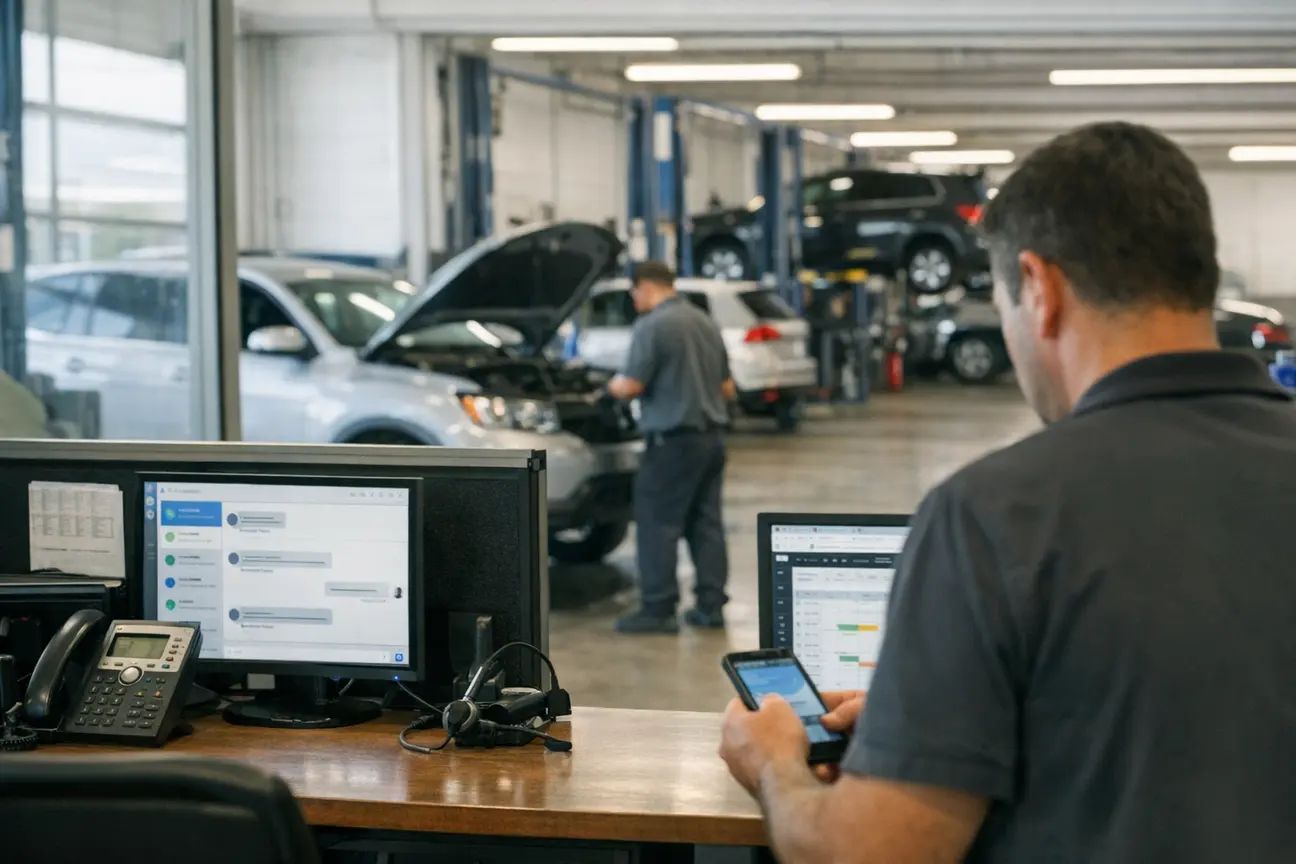
- Used AI to handle routine scheduling and FAQs, especially during peaks and after hours.
- Shifted follow-ups and scheduling to texting with clear identification and consent, enabling entire transactions in a concise message flow.
Why Texting Over Calls
- Outbound voice suffers from low answer rates, spam labeling, and regulatory limits.
- Texting lets customers respond on their own time and complete scheduling in a few messages with an audit trail.
- Targeted, permissioned messages about overdue service or recalls drive higher engagement.
Impact and Metrics That Matter
- ~40 hours of advisor phone time saved in two months, increasing capacity for complex diagnostics and customer conversations.
- Reduced hold times and abandoned calls; better coverage during peak and off-hours.
- Track: minutes saved, missed-call reductions, time-to-answer, and completion rates for AI-handled tasks.
Practical Steps for Operators
- Map call flows: separate routine scheduling/FAQ from complex diagnostic inquiries.
- Define escalation rules so AI hands off seamlessly to the right advisor fast.
- Start with high-volume, low-complexity tasks (appointments, status checks, FAQs).
- Implement consented texting with clear sender identification and purpose.
- Measure outcomes: minutes saved, missed-call rate, time-to-first-response, after-hours coverage.
- Vet vendors by speaking with active dealer users about day-to-day performance and integrations.
Bottom Line
Responsiveness wins: answer in seconds, be available beyond business hours, and reserve human expertise for complex, high-value interactions. A thoughtful division of labor between AI and advisors reduces friction, protects revenue, and meets rising customer expectations.