
Key takeaways
- 48‑volt low‑voltage architecture will underpin Ford’s next‑gen Universal Electric Vehicle (UEV) platform to cut cost, weight, and complexity.
- Ford plans a $30,000 small electric pickup launching in 2027 in the U.S., with the Kentucky plant identified as a launch site.
- The initiative is part of a $5 billion program through 2027 aimed at pushing EVs toward price parity with gasoline models.
Why it matters
Ford is retooling its EV strategy amid softer U.S. demand and changing incentives, targeting cheaper, easier‑to‑build vehicles that can compete with Tesla and fast‑growing Chinese brands.
Market context
EVs accounted for 10.3% of new‑vehicle sales in September before policy changes, then fell to an estimated 5.8% in Q4, according to Cox Automotive. Ford recorded $19.5 billion in write‑downs tied largely to earlier EV plans but is doubling down on a leaner platform to regain momentum.
The 48‑volt shift
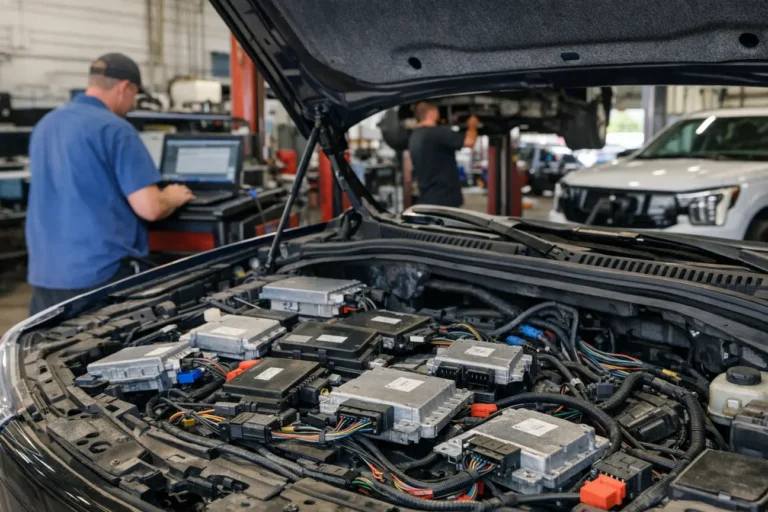
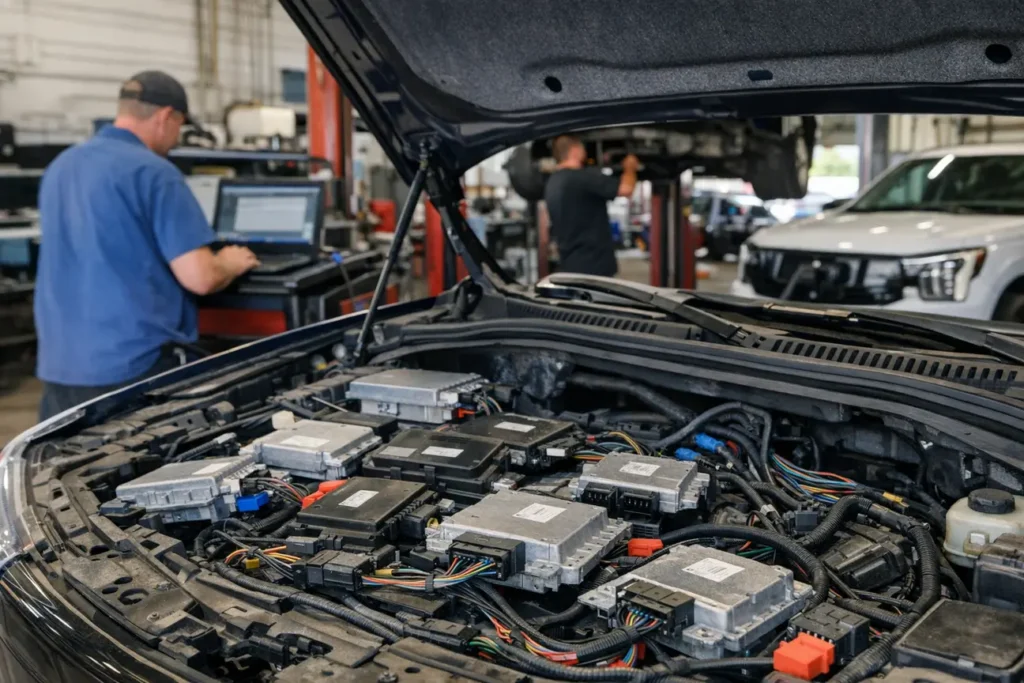
Moving from 12 volts to 48 volts enables smaller, lighter wiring, greater electrical bandwidth, and fewer failure points. The traction battery becomes the primary source for onboard systems, while new ECUs step down to 12 volts where needed.
- Upcoming midsize electric truck: wiring harness >4,000 feet shorter and 22 pounds lighter than Ford’s first‑gen electric SUV.
- Benefits cited: reduced wiring, improved efficiency, simplified assembly, and lower costs.
Manufacturing and design efficiencies
Ford is applying techniques popularized by Tesla, including large aluminum gigacastings, to streamline structures and cut parts.
- Forthcoming pickup: two large front and rear structural castings versus 146 components on the gasoline Maverick.
- Targeted plant and product gains: 20% fewer parts, 25% fewer fasteners, 40% fewer workstations dock‑to‑dock, and 15% faster assembly.
- Ford says its aluminum castings for the new EV are over 27% lighter than those on a Tesla Model Y (Ford’s claim).
- Added focus on aerodynamics and internal “bounties” to spur efficiency.
Product roadmap
The first UEV product is a $30,000 compact electric pickup slated for 2027. Ford has not disclosed the name, range, performance targets, or volumes. Early renderings show a slab‑sided, aero‑minded design to reduce drag and simplify construction.
Competitive dynamics
Tesla introduced 48‑volt low‑voltage systems to U.S. consumers with the Cybertruck in 2023. Elon Musk shared a 48‑volt “how‑to” in 2023; Ford says it had already chosen the approach but the document helped align suppliers.
Profitability and risks
Ford did not provide updated profitability targets. It maintains that common‑platform scale and UEV efficiencies are designed to bring EV costs closer to gasoline vehicles (Ford’s goal), but battery costs, commodity prices, supplier readiness, and factory utilization remain key variables.