
Summary
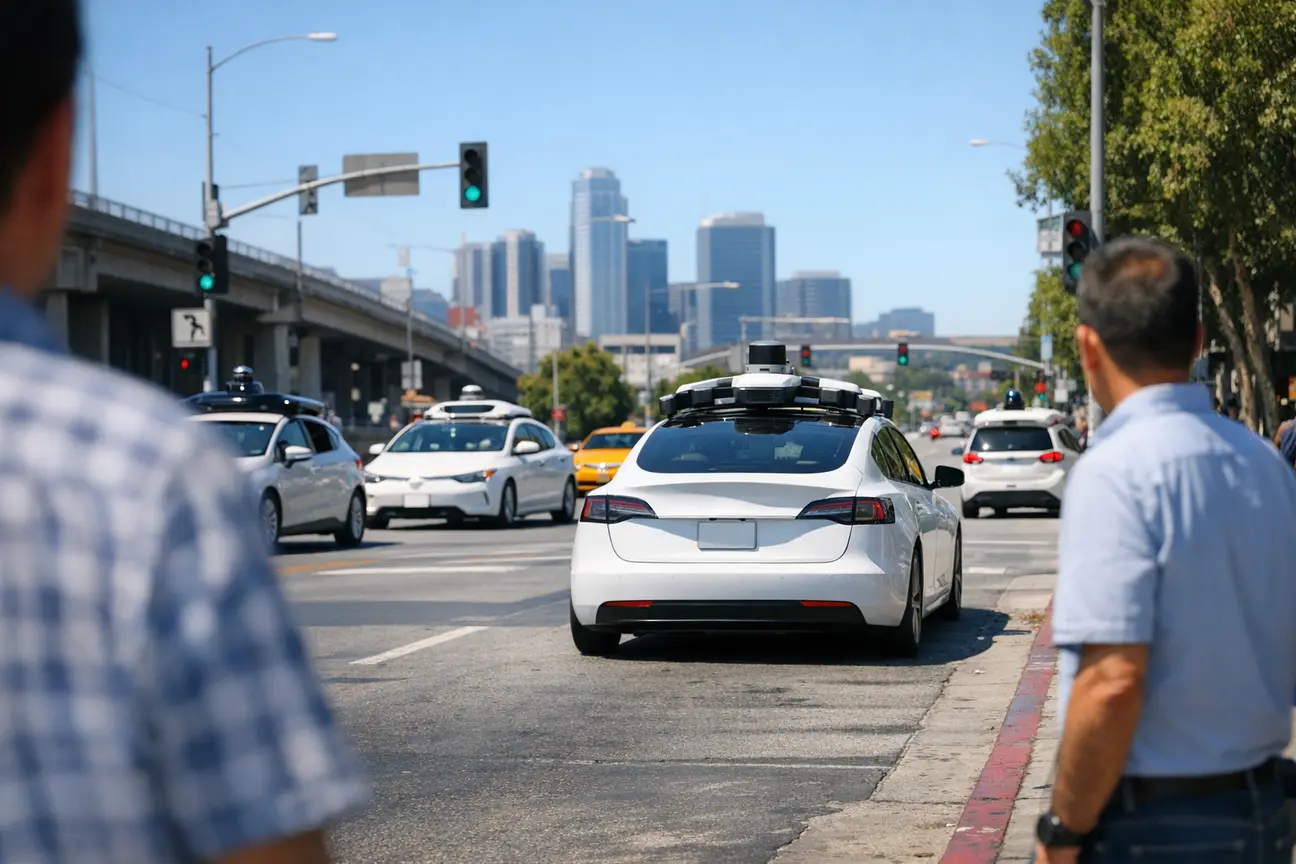
Elon Musk said Tesla aims to have a widespread driverless robotaxi network across the U.S. by the end of 2026, adding that service would be “very, very widespread by the end of this year” during remarks at the World Economic Forum in Davos. The plan builds on limited pilots, notably in Austin, while navigating competition and a complex regulatory landscape.
What’s new
- Musk’s latest timeline targets a U.S.-wide robotaxi presence by end-2026, with broad availability “this year.”
- Tesla launched its first robotaxi service in Austin in June 2025 with safety supervisors; Musk now says some rides there operate with “no safety monitor.”
- VP of AI software Ashok Elluswamy said rollout will start with a mixed fleet—some unsupervised vehicles alongside monitored ones—with the unsupervised ratio increasing over time.
Track record and context
- Past targets slipped: in July 2025, Musk predicted autonomous ride-hailing for roughly half the U.S. population by year-end (did not happen).
- He projected “500 Robotaxis” in Austin by end-2025, later revising to about 60.
- In 2019, he was “very confident” Tesla could roll out robotaxis by 2020.
Regulatory landscape
- Tesla faces a patchwork of state and local rules that govern testing and deployment.
- In California, Tesla lacks permits to test or operate without a human at the wheel; regulators last year found Tesla engaged in deceptive marketing about driverless capabilities.
- San Francisco hosts a Tesla human-driven ride-share, but Tesla is not authorized there for driverless operations; separate permits are required, and services can be curtailed if safety concerns arise.
Market and competition
- The article reports Alphabet’s Waymo dominates U.S. driverless ride-hailing, expanding to five cities by end of last year and launching in Miami on Thursday.
- Amazon’s Zoox entered driverless service in 2025 with purpose-built vehicles.
- In China, Baidu’s ApolloGo is scaling across several cities.
- Tesla is shifting from selling cars with driver-assistance to dedicated robotaxi services and infrastructure, adapting its existing vehicles and software.
Consumer sentiment
Surveys from the Electric Vehicle Intelligence Report indicate Americans remain skeptical of robotaxis, with safety a top concern—an adoption hurdle as companies scale rider programs.
Operations today
Tesla’s Austin pilot began with safety supervisors and is now described by Musk as having at least some trips without a safety monitor. Elluswamy’s comments point to a mixed fleet approach, expanding unsupervised trips as confidence and regulatory approvals grow.
Open questions for 2026
- Which cities come next, and on what timeline.
- The planned mix of supervised vs. unsupervised operations and total fleet size.
- Permitting in stricter jurisdictions and ongoing compliance reporting.
- Safety performance, rider trust, and how quickly Tesla can scale beyond Austin.
Beyond robotaxis
Musk also said Tesla’s Optimus humanoid robots would be sold to the public by end-2027 and claimed AI could be smarter than any human by the end of this year or next.
Bottom line
Tesla’s robotaxis remain in limited markets, with gradual increases in unsupervised operations where permitted. Achieving a “very, very widespread” U.S. network by year-end 2026 will hinge on regulatory approvals, safety performance, and rider adoption amid active competition led by Waymo.