
Summary
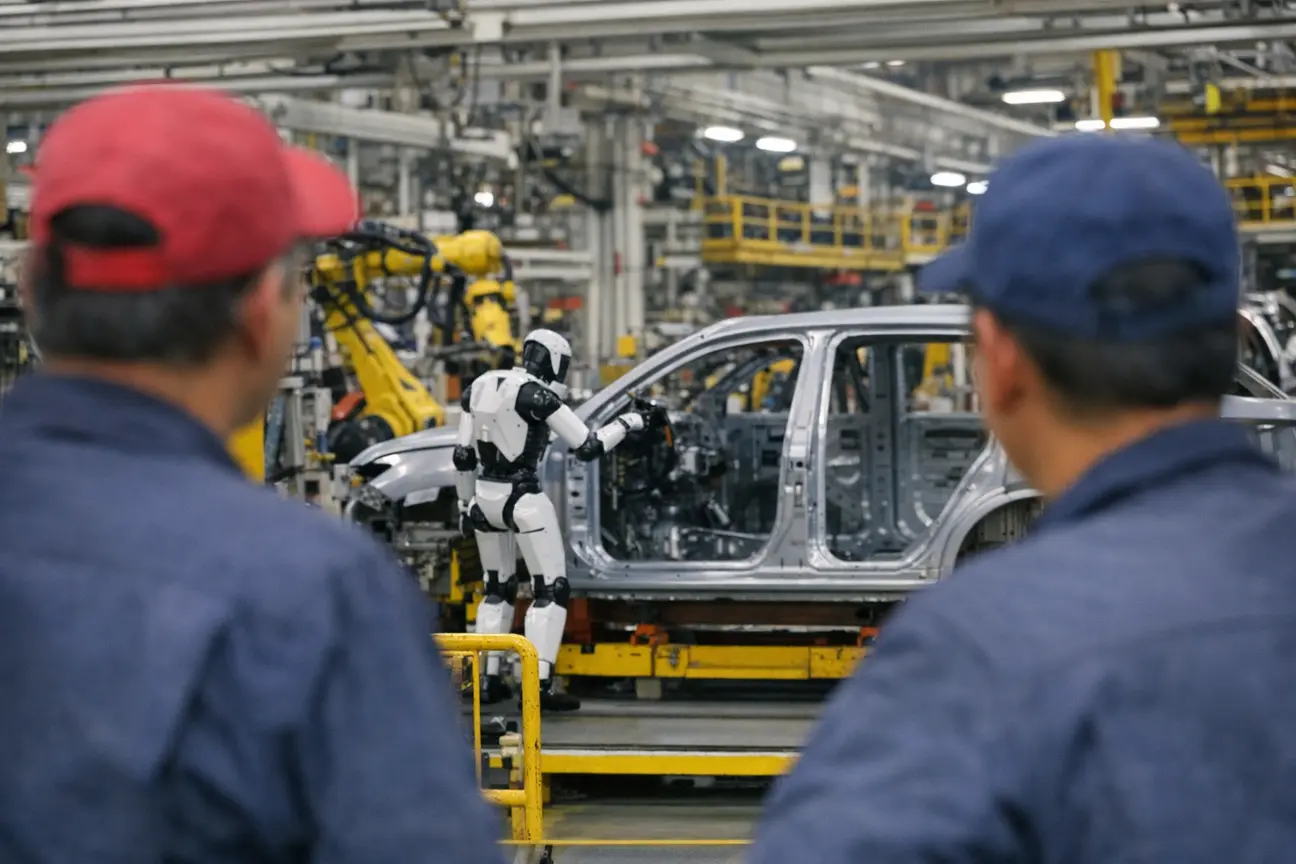
Hyundai Motor’s South Korean labor union warned the company against deploying humanoid robots on factory floors without prior labor consent, arguing the plan threatens jobs and coincides with a broader shift of production to the United States.
Key developments
- Hyundai targets initial factory use of humanoid robots in 2028, starting at its new plant in Georgia, with expansion to other global sites.
- The group aims to build a facility capable of producing 30,000 humanoid robots annually by 2028.
- The union insists new tech can be introduced only under a formal labor-management agreement and warned of potential “employment shocks.”
- Investor reaction has been positive, with Hyundai shares hitting record highs; Hyundai did not immediately comment on the union’s letter.
Union stance and demands
- Opposes unilateral rollout, framing it as cost-cutting that could reduce staffing and erode job security at Korean plants.
- Links U.S. capacity expansion—especially the Georgia complex—to pressure on domestic output and workloads at two factories.
- Calls for negotiations on scope, pace, and safeguards, including impacts on job classifications, training, and safety.
- Signals readiness to use contractual and legal channels to delay or shape adoption until agreements are in place.
Company plan and context
- Boston Dynamics’ Atlas humanoid was showcased at CES, with Hyundai positioning it as production-ready for tasks requiring human-like mobility.
- Hyundai and affiliate Kia, the world’s third-largest automaker by sales, are expanding North American manufacturing to serve a key market and navigate trade measures.
- The Georgia plant is slated to reach 500,000 vehicles per year by 2028, which the union says is already weighing on Korean operations.
Implications
- Labor relations: Expect tough negotiations over technology governance, job protections, and phased deployment.
- Operational strategy: Hyundai’s robot program outlines a concrete path to integrate advanced automation into mass production.
- Workforce impact: Potential role reshaping and retraining needs across Hyundai’s global production network.
- Market dynamics: Continued investor interest in efficiency and new revenue streams from robotics.
What to watch next
- Terms of any labor-management agreement covering robot deployment in Korea.
- Details on specific tasks assigned to humanoid robots, site-by-site rollout, and effects on staffing levels.
- How Hyundai balances U.S. expansion with commitments to domestic employment.