
Executive summary
An industry executive argues that U.S. dealers should stand up dedicated buy centers and use AI to source vehicles directly from private sellers in 2026. The piece contends this structural shift will protect margins and scale used volume by reducing auction dependency and associated costs. It emphasizes autonomous teams, tech-enabled verification and remote inspections, and clear KPIs. Note that the article is an executive perspective without independent data or case studies, and its cost figures are presented as claims from the author.
Key claims from the article
- Build a standalone buy center with staff whose compensation is tied solely to acquiring cars from private sellers, not trades or auctions.
- Auctions are increasingly costly and competitive; back-end costs per auction buy routinely exceeded $1,000–$1,500 in 2025, with domestic shipping/logistics reaching 15%–25% of hammer price (claim).
- Gross profit per used vehicle retailed fell 9.2% YoY to roughly $1,306 in Q3 2025, partly due to auction competition (claim).
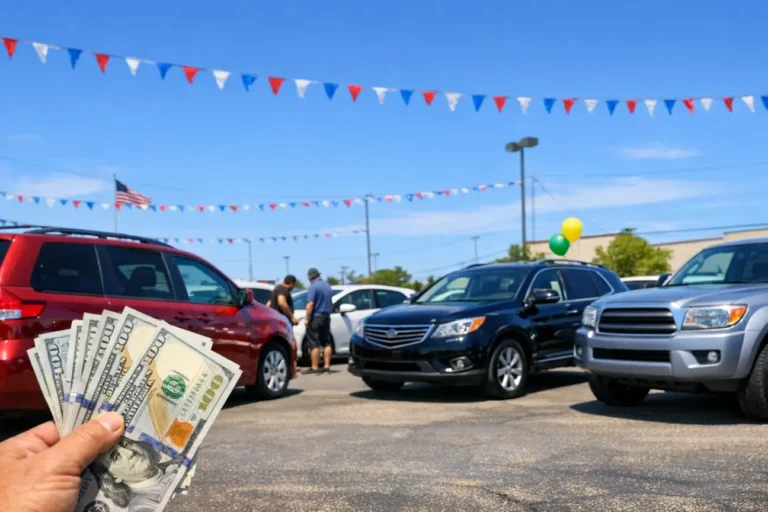
- Private-party sourcing can create a steadier, higher-margin pipeline aligned to store needs if run like a sales operation with proactive “hunting.”
- AI should support identity/title verification, fraud prevention, secure document handling, and smartphone-based self-inspections to enable firm, remote offers.
- Success requires leadership, compensation plans, KPIs, and playbooks for outreach, appraisal, and contracting.
What this means for dealers
- Consider reallocating budget from wholesale fees/transport to in-house acquisition staffing and tooling.
- Treat local private listings and past-customer outreach as primary channels for inventory, not secondary.
- Adopt a defense-first risk posture to protect against fraud and reassure consumers on data privacy.
90-day implementation blueprint
- Days 0–30: Define and staff
- Appoint a Buy Center Manager with clear P&L and quality accountability.
- Hire 2–4 Acquisition Specialists, 1 Appraisal Desk Analyst, and 1 Title/Admin coordinator.
- Set compensation tied to acquired units, quality (turn/recon), and compliance.
- Select initial markets and vehicle profiles (age, mileage, trims) aligned to retail strategy.
- Days 31–60: Tool and train
- Implement identity verification, title/lien checks, e-sign, secure document vault, payments, AI-guided self-inspection, and CRM/SMS integration.
- Build scripts and playbooks for outreach, offer presentation, objections, and contracting.
- Establish KPIs and dashboards; schedule daily standups and weekly reviews.
- Days 61–90: Launch and iterate
- Activate lead sources: local marketplaces, social, past customers, service-lane, community groups.
- Run A/B tests on offers, messaging, and appointment strategies.
- Tighten appraisal guardrails based on early recon surprises and turn data.
Core roles and compensation levers
- Buy Center Manager: volume, gross/turn, recon variance, compliance.
- Acquisition Specialists: lead generation, close rate, cycle time, unit quality index.
- Appraisal Desk: market pricing, risk scoring, offer governance.
- Title/Admin: lien payoff accuracy, doc completeness, cycle time.
- Comp mix: base + per-unit + quality kicker (e.g., bonus for units retailing under X days and within recon budget).
Process and technology workflow
- Lead intake: omnichannel forms/chat/SMS with PII minimization.
- Identity/title checks: IDV with liveness, DL/registration capture, lien status, stolen/brand checks.
- Remote self-inspection: guided photos/video, wheel/tire, VIN, odometer; AI for image integrity and condition cues.
- Appraisal desk: real-time market comps, options/mileage adjustments, risk/recon estimator.
- Offer: transparent, time-bound, fees disclosed; digital e-sign for bill of sale, odometer disclosure, payoff auth.
- Payment & logistics: secure ACH or cashier’s check at pickup; mobile notary as needed; on-site or at-home pickup.
- Intake & recon: condition verification, discrepancy handling, fast-track to frontline.
KPIs to track
- Acquired units/week and mix vs target profile.
- Acquisition cost per vehicle (marketing + labor + tools).
- Lead-to-offer and offer-to-close rates; median cycle time from lead to contract.
- Recon variance vs estimate; days to frontline; 30/60-day turn.
- Front-end gross per retail unit; wholesale unwind rate.
- Fraud flags prevented; data/privacy incidents (target: zero).
- Seller satisfaction/NPS and review velocity.
Risk and compliance guardrails
- Data privacy: GLBA Safeguards Rule, state privacy laws (e.g., CPRA/CPA/VCDPA). Limit data collection, encrypt at rest/in transit, least-privilege access.
- Fraud/KYC: liveness and doc authenticity checks; OFAC screening; watch for VIN/title anomalies.
- Payments: verified payoffs, secure funds flow, audit trails; handle negative equity disclosures.
- Titling: state-specific forms, branded/salvage title procedures, odometer compliance.
- Transport: insured carriers; chain-of-custody documentation; post-pickup condition reconciliation.
Economics (illustrative, based on article claims)
This scenario uses the article’s claimed ranges for auction-related fees and shipping/logistics purely for illustration; actual results will vary.
- Assume auction fees/recon add $1,000–$1,500 per unit (claim).
- Assume shipping/logistics equal 15%–25% of a $15,000 hammer price = $2,250–$3,750 (claim).
- Potential avoided wholesale costs per unit if sourced locally: roughly $3,250–$5,250 before any incremental buy-center costs.
- If your in-house acquisition cost per vehicle (marketing, labor, tools, light transport) stays below this avoided-cost band, margin protection improves.
Risks and limitations
- The article provides no independent studies; figures may be optimistic and author-affiliated.
- Lead-gen costs and seller expectations can erode savings; shallow local supply for certain trims may persist.
- Quality control: remote inspections reduce but don’t eliminate reconditioning surprises.
- Operational load: recon capacity and titles desk must scale with acquisitions.
- Auctions still fill gaps (rare trims, specific OEM cert needs, fleet lots).
Decision checklist
- Define target vehicle profiles and monthly unit goals the buy center must deliver.
- Approve staffing and comp plan tied to quality, not just count.
- Select risk, inspection, e-sign, and payment tools with strong security posture.
- Stand up KPIs/dashboards and governance cadence before go-live.
- Pilot in 1–2 metro zones, then expand based on unit quality and turn.