

Overview
Technology is accelerating information flows in the used-car market, making pricing more transparent, shifting where profits are earned, and compressing margins. Scale and operational execution increasingly determine performance across manufacturers, dealers, lenders, leasing firms and service providers.
How technology changed channels and data
- Listings and transactions moved online, connecting buyers and sellers across geographies and producing continuous data.
- Near real-time tracking of supply, demand, time-to-sale and advertised prices via marketplace scraping and analytics (e.g., Auto-1, Auto Trader, Indicata).
- Trust tools: high-resolution imagery, standardized condition grading, mobile capture apps and AI-assisted photo/condition assessment.
- Data-centric models pioneered by players like CarMax demonstrate that better datasets yield more accurate valuations and pricing.
Why it matters upstream
- Residual values drive leasing economics: conservative forecasts inflate monthly rates; optimistic ones risk future write-offs.
- Closer-to-live signals improve underwriting, end-of-term planning and remarketing strategies for lenders and lessors.
Behavioral shifts across participants
- Traders buy more confidently from unfamiliar fleets or private sellers with uniform condition data.
- Private sellers access trade buyers via platforms; private buyers commit with more assurance, sometimes sight unseen.
Market outcomes and operational focus
- Price convergence from shared information tightens the spread between buy and sell prices, compressing margins.
- Profit pools shift to operations: efficient reconditioning, disciplined preparation costs and faster stock turn.
- Scale advantages grow: larger operators amortize data/valuation tools, standardize logistics and reconditioning.
- Smaller dealers face tougher competition against tech-enabled, process-tight rivals.
Limits, shocks and recent context
- “Black swan” factors—policy shifts or OEM pricing moves—can rapidly reframe resale values beyond what models anticipate.
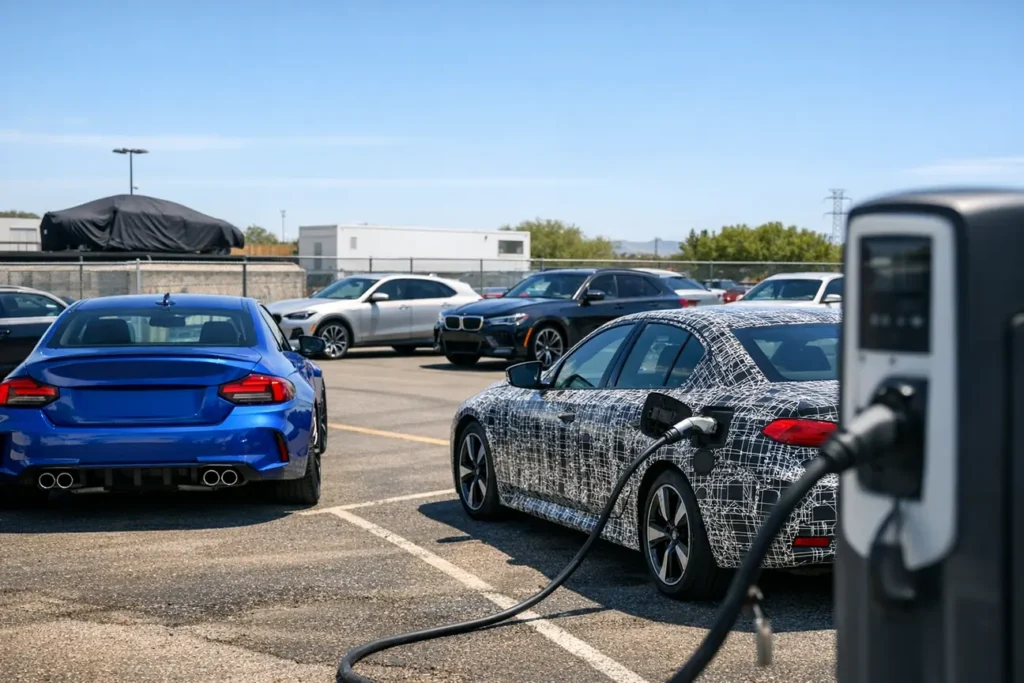
- Post-pandemic: initial shortages lifted values; more recently, EV oversupply depressed prices even as data capabilities advanced.
Practical implications for the trade
- Invest in data pipelines, valuation models and channel integrations.
- Improve appraisal accuracy with standardized condition capture and AI-assisted imaging.
- Adopt dynamic pricing with disciplined review cycles to shorten mispricing windows.
- Optimize preparation and reconditioning flow; measure and improve time-to-list and days-to-sell.
- Build contingency plans for policy/OEM moves that disrupt segments or powertrains.
Bottom line: used-car markets now operate on faster cycles and finer detail. Information edges decay quickly, so data fluency plus operational discipline—more than geography or episodic pricing wins—define sustainable performance.