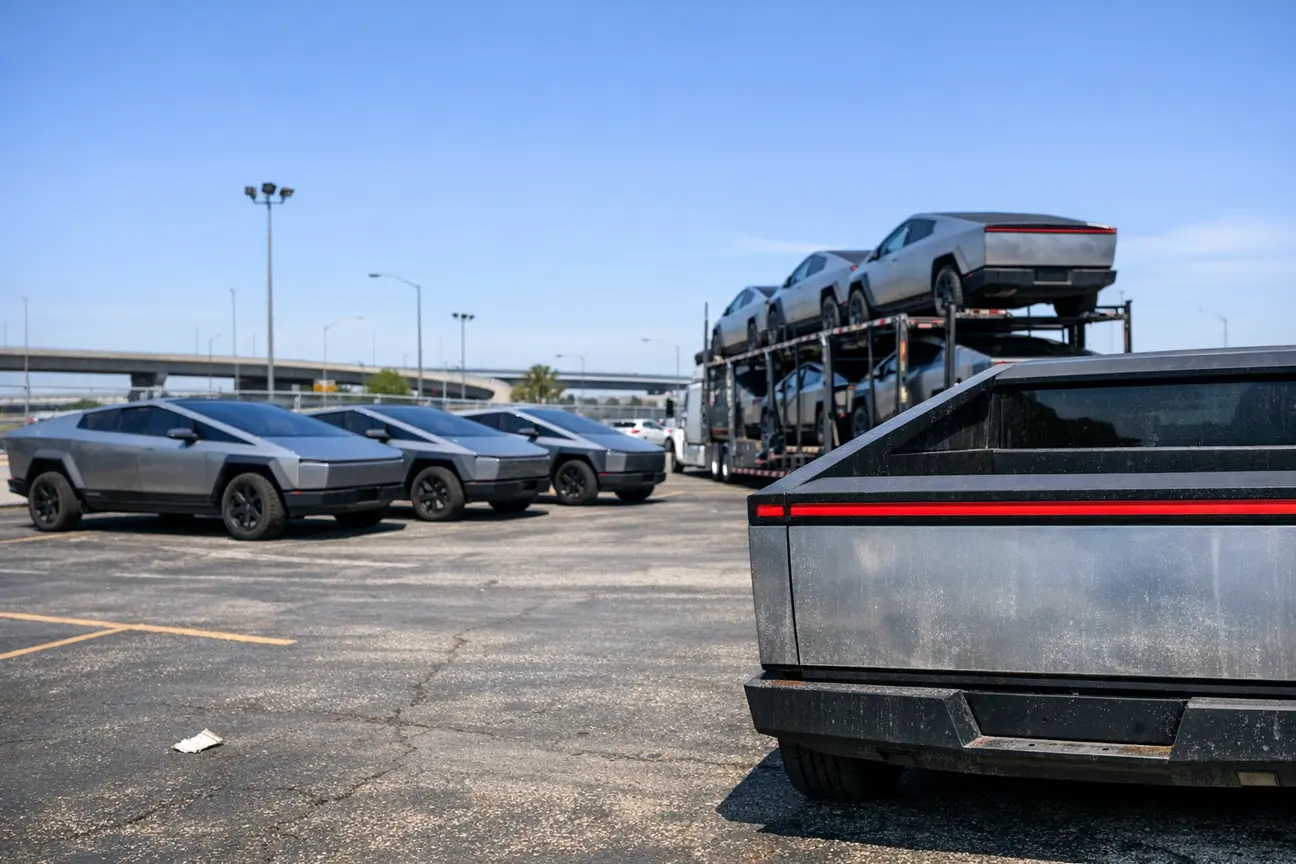

The Drive’s Downshift newsletter reports that Tesla’s Cybertruck experienced a roughly 50% sales drop in 2025, with “about 20,000” units sold in its second year. The outlet contrasts this with a strong 2024 debut, when it says the Cybertruck quickly became the best-selling electric pickup in the U.S. It characterizes the decline as “a colossal flop” and the largest year-over-year drop among EVs currently on sale, though the brief does not provide causes, detailed breakdowns, or comment from Tesla.
Key takeaways
- Reported 2025 Cybertruck sales: ~20,000 units, about half of the prior year’s total (per The Drive).
- The Drive claims the truck led electric pickup sales in 2024 and calls the 2025 decline the largest YoY drop among on-sale EVs.
- The brief offers no regional/global breakdowns, trim mix, production-rate context, or Tesla response.
Why this matters
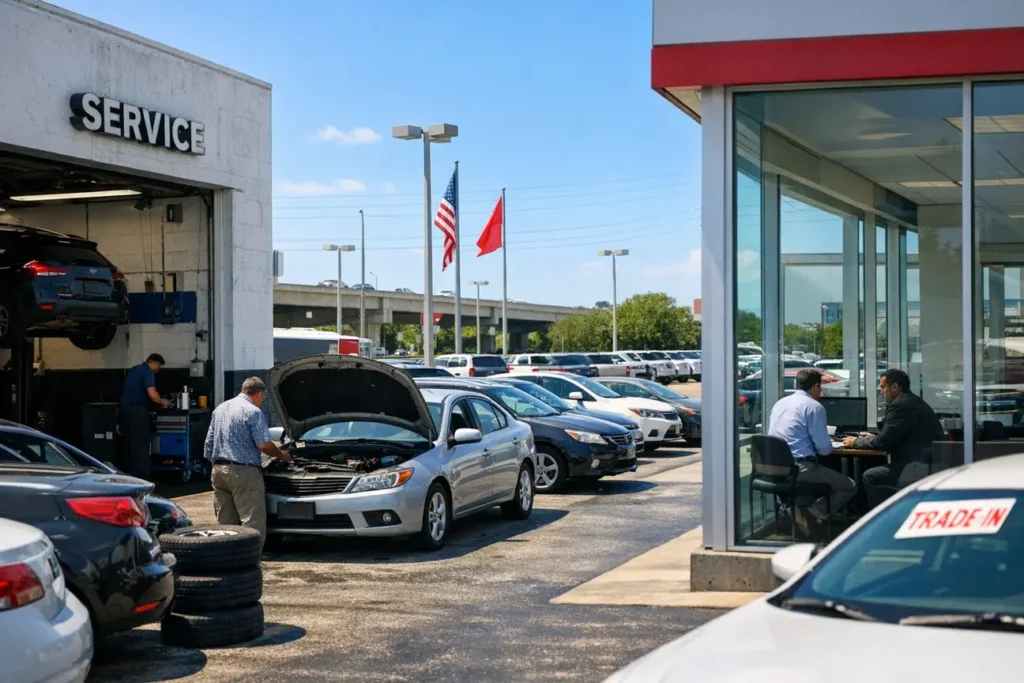
Tesla’s direct-to-consumer model centralizes any response to soft demand—pricing, incentives, inventory listings, or delivery timing—on Tesla’s website, rather than through dealer-level discounting. That differs from franchise dealer systems, where a 50% drop typically triggers local incentives, financing offers, and inventory-clearing tactics.
How Tesla’s model shapes the response
- No dealer lots holding Cybertruck inventory; inventory risk sits with Tesla.
- Any adjustments (price changes, financing, delivery windows) are uniform and immediate online.
- Tesla has a track record (2023–2024) of moving list prices and finance offers up or down in response to demand.
Broader EV market context noted by The Drive
- Mazda reportedly delaying next-gen EVs to 2029, emphasizing hybrids instead (indicative of softer EV demand, per the brief).
- Analysts/dealers are skeptical of Jaguar’s upmarket, low-volume EV strategy.
- Volkswagen’s ID Buzz is said to be a sales success outside the U.S.
- Kia is developing an electric halo model (name undecided).
Additional Cybertruck context
- Early quality scrutiny: an April 2024 U.S. recall of ~3,900 Cybertrucks for an accelerator pedal cover issue, per federal filings.
- Price positioning is fluid: Tesla’s frequent price/financing adjustments can spur orders or protect margins, with implications for residual values and used pricing.
Implications for shoppers
- Franchised dealers (non-Tesla): slower EV sales can mean more negotiable prices, waived add-ons, and stacked incentives.
- Tesla buyers: negotiation isn’t typical; watch for website-listed inventory, shorter delivery windows, and company-set price/financing shifts.
What’s unknown from the brief
- Regional sales breakdowns and production rates year over year.
- Trim mix and whether output was dialed to match orders.
- Any current Tesla pricing changes or backlog updates tied to the 2025 slowdown.
- Comparative sales versus Ford F-150 Lightning or Rivian R1T.
What to watch next
- Official or third-party 2025 sales data to validate the reported ~20,000 figure.
- Tesla website signals: price moves, financing offers, and delivery timing shifts.
- Dealer activity around competing electric pickups (marketing emphasis, incentives).
- Policy changes (tax-credit qualification and application) that can influence EV demand.
The Drive’s report is a concise snapshot highlighting a notable reset for a high-profile model amid an EV market still finding equilibrium across products, pricing, and retail channels.