
Market reaction
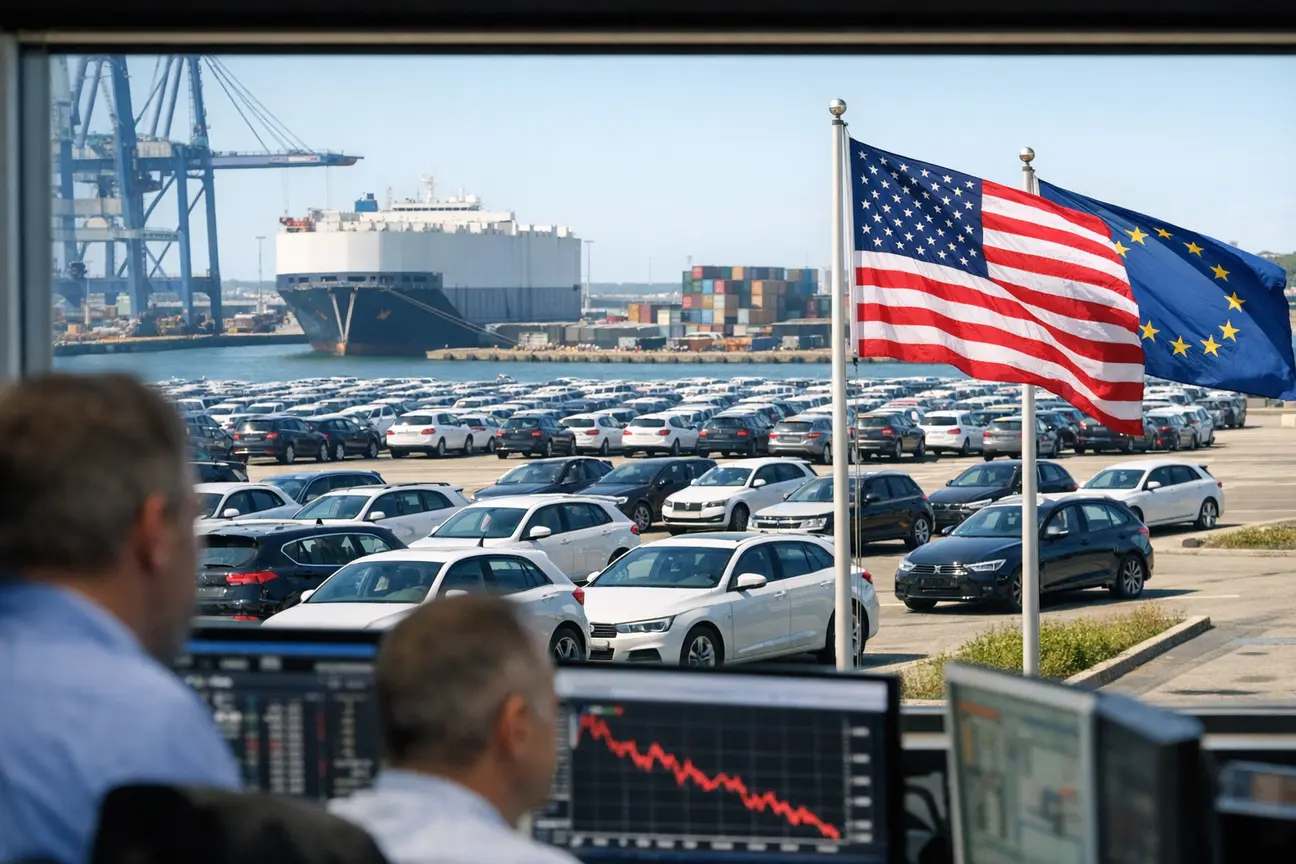
European auto stocks declined after a new U.S. tariff threat. By early afternoon in London, the Stoxx Europe Automobiles & Parts index was down about 2%, with marquee names underperforming.
- Volkswagen, BMW, Mercedes-Benz Group: down ~2.5%–3%
- Porsche: down 3.2%
- Ferrari: down ~2.2% (hit a 52-week low)
- Stellantis: down ~1.8%
Tariff details
President Trump pledged to impose a 10% U.S. import tariff by Feb. 1 on goods from eight European countries, rising to 25% by June 1.
- Targeted countries: U.K., Denmark, Norway, Sweden, France, Germany, the Netherlands, Finland
- European leaders plan emergency talks to consider a response
Why autos are vulnerable
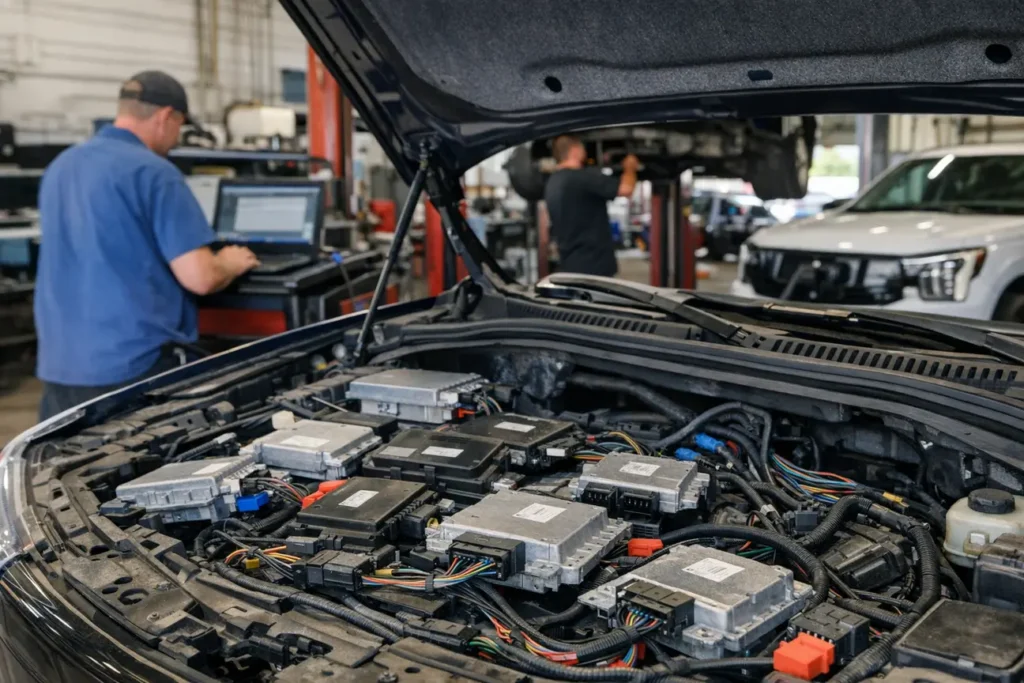
Automakers’ highly globalized supply chains move vehicles, engines, and components across borders multiple times, so even modest levies can cascade through model lineups and parts catalogs, complicating build locations, shipping routes, and pricing. The sector is already managing electrification, emissions-driven model cycles, and rising competition from Chinese brands.
Company exposure and operations
Volkswagen, BMW, and Mercedes-Benz maintain extensive European production and meaningful U.S. sales, plus North American plants to hedge currency and trade risks. Nonetheless, transatlantic flows of parts and subassemblies remain integral, so new levies on countries such as Germany, France, and the Netherlands could pressure pricing and dealer margins.
Porsche’s decline tracked broader German weakness; Ferrari’s 52-week low signaled pressure on high-end brands; Stellantis’s drop highlighted complexity for groups that span European marques and U.S. nameplates with tightly interlinked logistics.
Dealer and supply-chain implications
- Dealers may face shifting allocations, delivery timing, sticker prices, and incentives
- An escalation from 10% to 25% midyear intensifies mid-cycle planning and inventory decisions
- Suppliers could see rapid renegotiations on pricing and schedules, straining smaller firms
Political backdrop
The tariff threat was linked to a push to bring Greenland, a self-governing Danish territory, under U.S. control—an unusual context that adds uncertainty to transatlantic ties. Inclusion of the U.K. broadens potential disruption across manufacturing networks that don’t map neatly to political borders.
Market psychology and commentary
Rob Brewis of Aubrey Capital said tariffs are a blunt tool whose market impact often fades as companies find workarounds or policymakers tweak measures, but he still sees autos as among the most exposed sectors—especially given competition from Chinese players.
Price action suggested early sell-offs were partly tempered by dip buying and short covering, yet the autos sector continued to lag broader markets.
What to watch next
- Details from Washington and European capitals on scope, exemptions, grace periods, and product lists
- Automakers’ adjustments to midyear production, sourcing, incentives, and model mix for North America
- Supplier negotiations and any signs of bottlenecks or cost pass-through to retail prices