
Summary
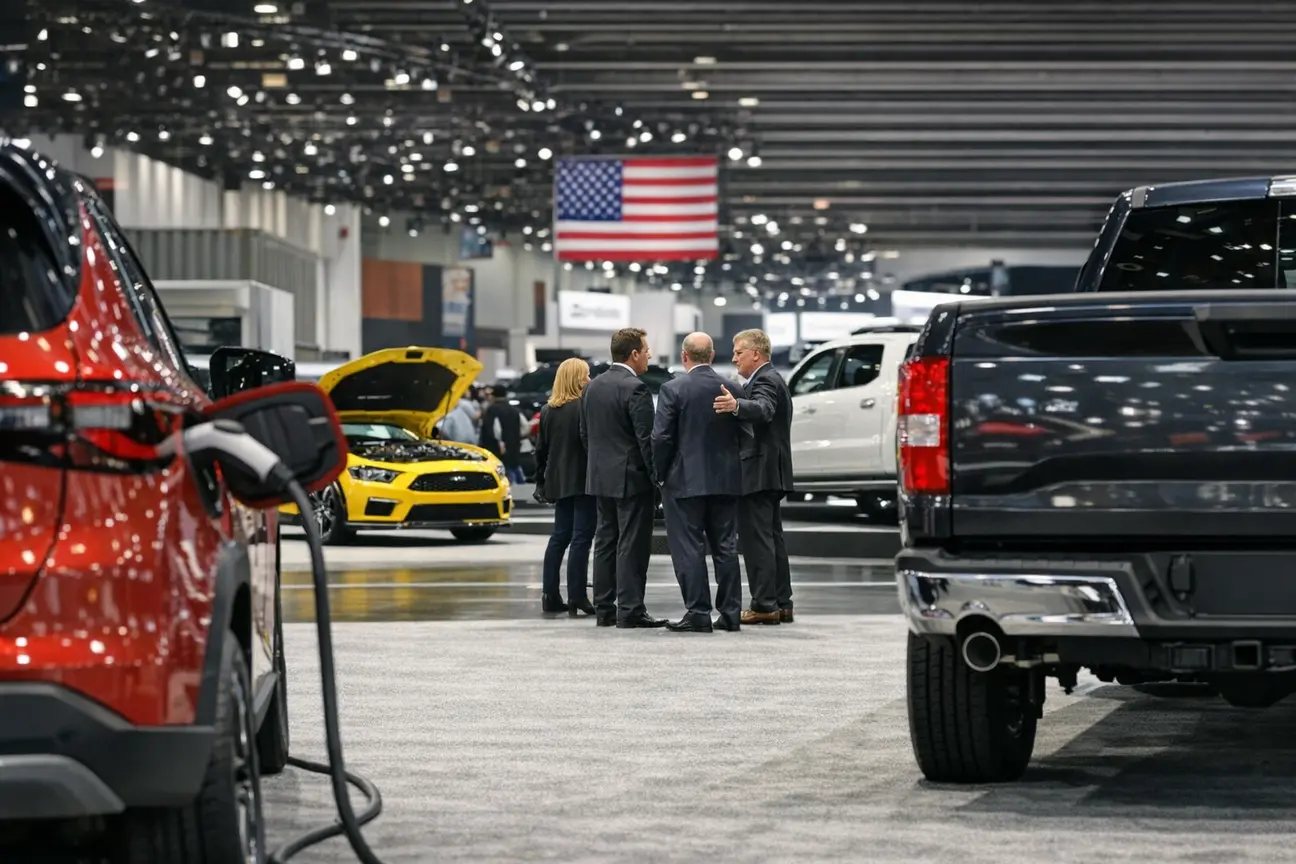
Top Trump administration officials used the Detroit Auto Show to promote rolling back electric-vehicle requirements and tailpipe emissions rules, arguing deregulation will lower sticker prices and expand consumer choice amid affordability concerns.
What changed and why
- Administration seeks to scale back Biden-era fuel economy and emissions standards to let automakers build more of what consumers prefer and reduce record-high new-vehicle prices.
- Officials Transportation Secretary Sean Duffy, EPA chief Lee Zeldin, and USTR Jamieson Greer emphasized that the approach is pro-choice, not anti-EV.
Policy actions to date
- Signed legislation eliminating the $7,500 federal EV tax credit.
- Rescinded California’s EV rules that several states had followed.
- Canceled penalties for missing fuel-efficiency requirements.
- Imposed tariffs on imported vehicles and parts; Greer says effects aren’t reaching consumers.
- DOT proposed rolling back fuel-economy standards; EPA expected to finalize a rule eliminating tailpipe requirements.
Projected impacts
- DOT estimates average up-front vehicle costs fall by about $930.
- Looser standards could increase fuel use by up to 100 billion gallons through 2050, adding as much as $185 billion to Americans’ gasoline costs.
Supporters’ arguments
- Mandates inflated prices and narrowed choices; market demand—especially for trucks and SUVs—should guide production.
- Lower compliance costs may enable more budget-friendly models and help curb inflation pressures.
Critics’ arguments
- Rules would boost gasoline demand, benefit oil companies, and raise total ownership costs for households over time.
- Environmental groups and Democrats plan to challenge the expected EPA rule and push for stronger standards.
Market context
- Average new-vehicle transaction price hit $50,326 in December (Cox Automotive), driven by pickups/SUVs and fewer entry-level models.
- U.S. auto sales rose 2.4% in 2025 to 16.2 million vehicles despite higher rates and prices.
- Automakers stress the need for regulatory stability given long retooling cycles and investment planning.
What’s next
- EPA’s tailpipe decision is pending; DOT’s fuel-economy proposal faces public comment before final action.
- Key questions: whether lower upfront prices outweigh higher lifetime fuel costs, and how tariffs ripple through supply chains.