
Summary
Automakers enter 2026 recalibrating strategy amid tariffs, cooling EV demand, and a pivot to software. Expect increased emphasis on hybrids and efficient internal combustion engines, selective EV investments, accelerated software-defined vehicle initiatives, and expanded use of generative AI across products and operations—all while navigating regulatory shifts and consumer privacy concerns.
What’s Driving Strategy Shifts
Regulation
Planned rollbacks of U.S. corporate average fuel economy standards could give truck- and SUV-heavy OEMs more room to prioritize higher-margin segments and rebalance powertrains toward customer preferences.
Demand and Pricing
U.S. demand currently leans about 62% to ICE and 9% to EV, with affordability pressures persistent as average new-vehicle prices surpassed $50,000 in September 2025. The cost gap with EVs is steering capital toward hybrids and efficient ICE.
Tariffs and Trade
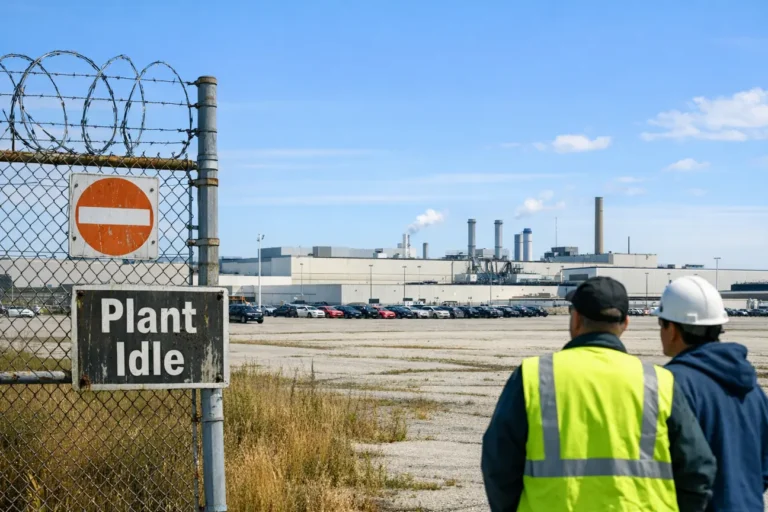
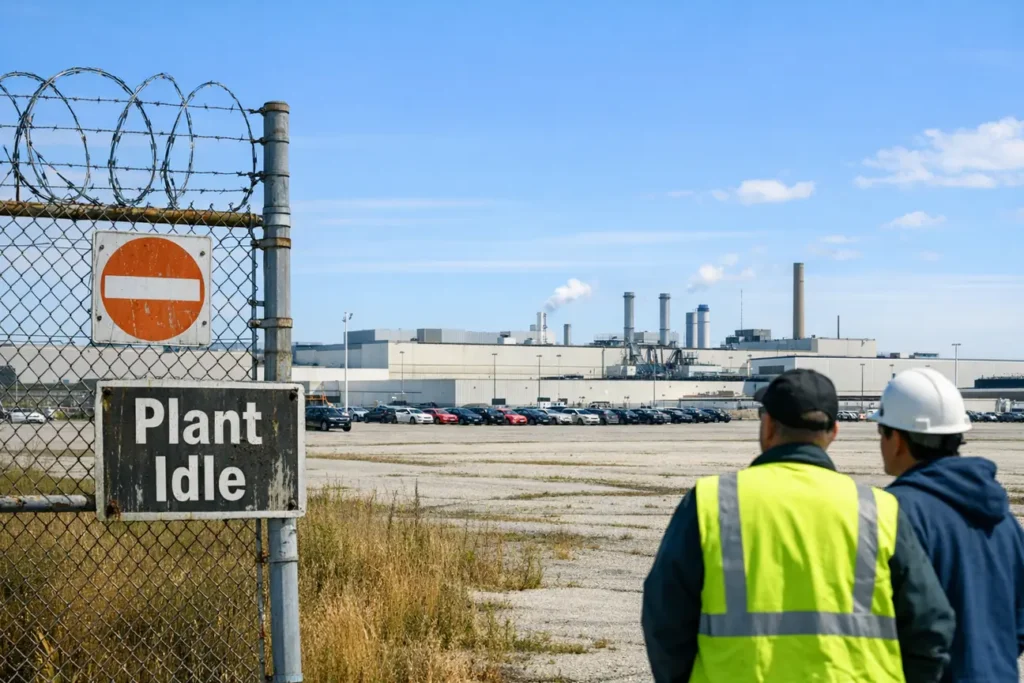
New tariffs on imported parts raised costs and disrupted sourcing. GM’s Q3 2025 net income fell 57% year over year, including $1.1 billion in tariff costs, and the company urged suppliers to remove China-sourced parts. Uncertainty around tariff policy and the future of USMCA complicates long-cycle sourcing and plant decisions.
How Automakers Are Responding
Powertrain Mix and Product Plans
- GM: $4 billion U.S. manufacturing investment spanning ICE and EV; $888 million to Tonawanda for next-gen V-8s for full-size trucks/SUVs.
- Stellantis: Canceled fully electric Ram pickup; moving to a range-extended hybrid replacement.
- Ford: Prioritizing extended-range hybrids, smaller/more affordable EVs, and efficient ICE trucks by 2030 to improve resilience and returns.
- Hybrids as bridge: EY projects hybrids at 34% of U.S. passenger-vehicle sales by 2034; sales expected to exceed 3 million units in 2026. Several OEMs (e.g., Honda, Toyota, Ford) shifted 2025 spending to expand hybrid output.
Software, Generative AI, and SDVs
- In-vehicle AI: GM plans conversational AI integration and a centralized computing architecture starting in 2028; model-specific generative AI features are in development.
- Consumer data concerns: Deloitte’s January 2026 study shows high discomfort with data use—synced devices (62%), in-cabin cameras (58%), and location data (58%), challenging monetization of connected services.
- Operations: AI targeted at synthetic data for AV training, predictive maintenance, quality control, and supply-chain planning to drive efficiency.
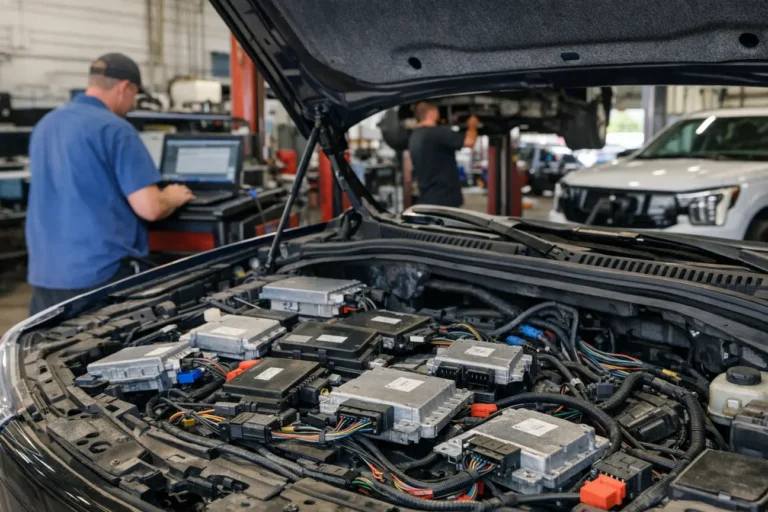
- Software-defined vehicles: Personalization, app-like services, and over-the-air updates are central. 52% of U.S. consumers would keep a vehicle longer if it receives regular software updates, potentially dampening new-vehicle turnover while boosting lifecycle value.
- Risks: Software issues were a major driver of U.S. recalls in 2025, highlighting integration complexity and quality/safety trade-offs.
Risks and Open Questions
- Policy volatility: Changing CAFE standards and tariff regimes can quickly alter product economics and sourcing timelines.
- Tariff pass-through: OEMs absorbed many 2025 costs, but more increases may flow to consumers, pressuring demand.
- Privacy and pricing: Reluctance to share data and pay for digital add-ons could limit revenue from connected services without clear value and transparency.
- Supply chain inertia: Re-sourcing away from entrenched Tier 1 networks and relocating factories often exceed political cycles.
Outlook for 2026
Expect OEMs to double down on hybrids and efficient ICE to fit customer budgets and evolving standards, harden supply chains against tariff risk, and advance AI and software platforms to enable personalization and continuous updates. Success will hinge on policy outcomes and consumer acceptance of data-enabled features. More hybrid programs and SDV architectures are likely to be detailed as the year progresses.