

Overview
An industry playbook argues that U.S. auto dealers can turn 2026 headwinds—tariffs, shifting supply chains, and rapid advances in AI—into margin opportunities by moving early on pricing, inventory mix, and data integration. Published Nov. 25 on Digital Dealer by Sanjay Varnwal, co-founder and CEO of Spyne, the guidance positions the coming year as a reset for competitive advantage if dealers act before manufacturers and rivals.
Forces Shaping the 2026 Retail Landscape
- Tariff volatility: Recent policy moves are reshaping costs and pricing. The article cites doubled U.S. duties on steel and aluminum to 50% and extension of that rate to hundreds of additional categories (e.g., chassis brackets, structural components, exhaust parts), covering more than $200 billion in trade and lifting assembly costs. Dealers are urged to build tariff sensitivity into quarterly pricing and procurement so they can adjust retail prices quickly and capture margin during cost resets.
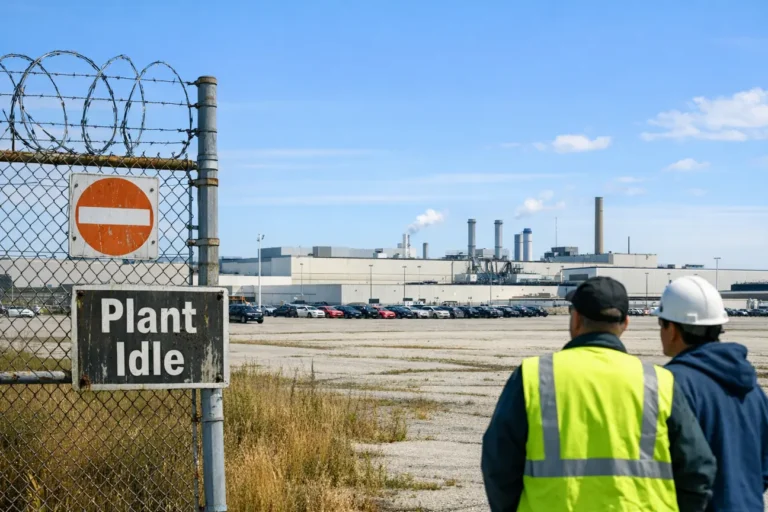
- Supply-chain reconfiguration: Semiconductor fragility persists; a disruption at Nexperia reportedly threatened up to 40% of global discrete components, prompting real-time production and allocation tweaks. In parallel, reshoring signals (e.g., Stellantis’ $13B U.S. expansion, Volvo localizing EV production) point to regionalization that could aid dealers by late 2026 and beyond. Dealers should map emerging supply corridors, rethink logistics partners, and ramp service capacity near future hubs.
- Supplier fragility: Tier 2/3 suppliers face rising material and energy costs and may encounter liquidity crunches or bankruptcies. Dealers should push for upstream visibility via automaker field teams, seek early warnings, co-run scenarios, and preemptively front-load or substitute parts to avoid shortages.
- Affordability pressures: With inflation and higher borrowing costs, demand is tight; tariffs alone could trim U.S. auto sales by roughly 1 million units through 2025–26, according to a cited estimate. Protect margin by leaning into model/trim discipline, emphasizing higher-trim vehicles with strong resale, calibrating used portfolios for price-sensitive buyers, and using real-time pricing tied to local demand.
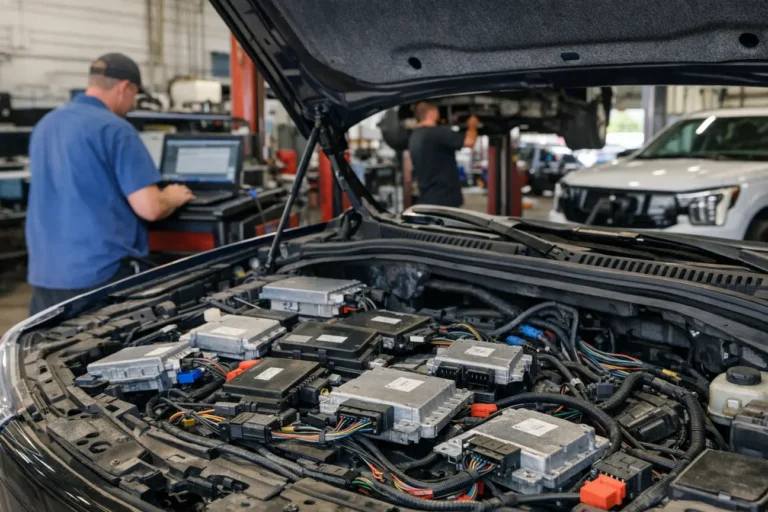
- Data-driven operations: AI can forecast micro-trends, enable dynamic pricing, automate online merchandising and imaging, and predict fastest-selling units and trade-in shifts. AI agents across recalls, service, and parts can lift productivity. Integrating DMS, CRM, and analytics into a real-time “command layer” shortens reaction times.
- Regional realignment: As manufacturing localizes to reduce tariff exposure, new clusters may lower logistics friction for nearby retailers. Dealers that align geographically—investing in service bays, satellite lots, and coverage where supply will be reliable—can become preferred partners and “geo-hedge” their retail footprint.
Six Focus Areas to Defend and Expand Margin
- Build tariff intelligence into pricing to manage 5%–10% cost swings and convert volatility into pricing power.
- Track reshoring moves, logistics signals, and chip alerts to stage inventory where supply will be most resilient.
- Push for supplier visibility upstream through automaker channels to preempt parts shocks.
- Shift model mix toward margin-dense trims and value-holding used inventory to protect profit if volume dips.
- Use AI across imaging, pricing, and demand sensing to speed reactions and improve inventory turnover.
- Align geographically with emerging manufacturing corridors to build natural supply advantages.
Why Acting Early Matters
The playbook emphasizes moving before formal allocation changes or incentive updates. Dealers that wait may end up reacting to competitors who already repositioned inventory, marketing, and service capacity. The guidance frames 2026 less as a volume chase and more as a year to widen the operating gap via scenario modeling, dual sourcing, regional partnerships, and a living, store-level tariff playbook.
Context on the Author and Company
Sanjay Varnwal is identified as co-founder and CEO of Spyne, described as an AI-native automotive retail technology company operating across multiple regions. The bio claims more than $25 million raised and tools that can cut dealership operating costs by up to 70% while doubling customer inquiries through digital experiences.
Bottom Line
Build pricing and procurement agility, diversify supply risk, and embed data-driven decision-making to defend margins in a slower, more volatile market. Groundwork laid now—especially around integration and regional positioning—can determine which retailers benefit most as new U.S. capacity and parts flows come online.